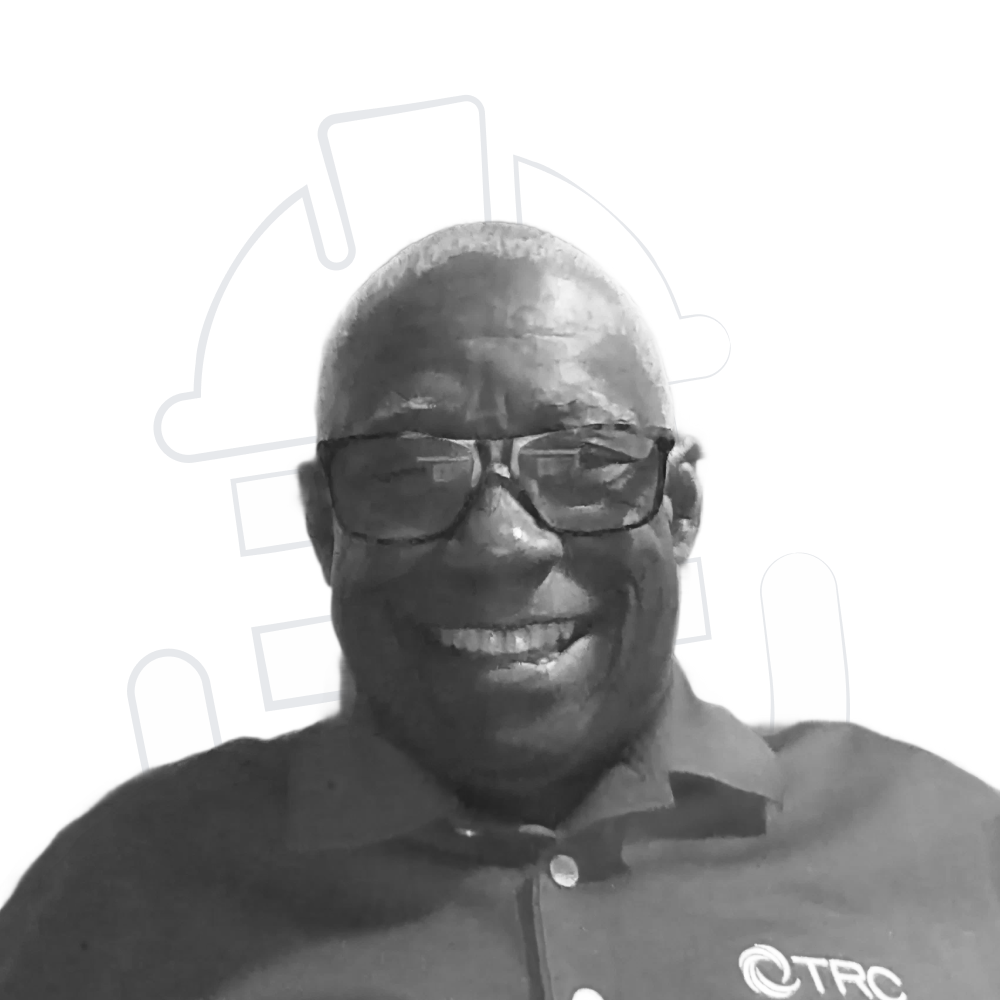
Hari Vasudevan (00:02) Okay, welcome to a new episode of From Boots to Boardroom. Not every leader sits in a corner office. From Boots to Boardroom shares the journeys of those who power America. From the job site to the boardroom, leading with grit, tenacity, empathy and vision. Hope you'll find the show to be educational, entertaining, eye-opening. and entrepreneurial. Presenting sponsor of the show is Cairo AI, digitize work and maximize profits. For more information, visit Cairo.ai. Today's guest is Reggie Comfort. Reggie was born and raised 30 miles north of Texas A University. He graduated from Calvert High School. He attended the University of Houston, graduated with a BS in Electrical Engineering in 1978. My friend, that was before I was born. He received his professional engineering license from the state of Texas in 1983. Reggie interned at Houston Light and Power, the predecessor company to Centerpoint Energy, for four terms. Reginald Comfort (01:14) Thank you for that, Harry. Hari Vasudevan (01:30) and eventually worked for Centerpoint Energy for several years after that, immediately after graduating from college. During his storied career, Reggie worked in several areas of Centerpoint Energy, distribution engineering, substation engineering, substation construction, and he eventually retired as a director in February 2019. Reggie is currently with TRC Companies. Reggie Comfort. Welcome to the show. I appreciate you taking your time to come to Boots to Boardroom. Reginald Comfort (02:08) Glad to be here, Harry. Hari Vasudevan (02:10) Yes, sir. Yes, All right. So let's let's get started here. Right. So, you know, I really want the listeners to get a feel for who the person is, who Reggie Comfort is. Right. Give us a little bit of a background quickly of your â“ origin story and how you got into the industry. Reginald Comfort (02:33) Well, as I said, I was born and raised in a little small community 30 miles north of Texas A and I say that because people don't recognize my hometown. â“ I grew up in that area, â“ and I stayed there until I was â“ 18, of course, and then came on to college. â“ Both my parents were school teachers in the small community. My mother was third grade teacher and my dad taught high school and eventually he became elementary principal of the school over, you know, that's about 40 years. And one of the things that my dad would always tell me was you got to have a good education so that you can get a good job. Now of course this was in the mid to late 60s when he was telling me this. Hari Vasudevan (03:09) Wow. â“ Reginald Comfort (03:30) â“ And one thing he said is whatever you do, don't be a school teacher because they don't, you know, your mother and I can make a decent living for you and brother and sister, but they don't pay well. don't get opportunities on all that. Great. Hari Vasudevan (03:47) And things haven't changed 40, 50 years later. Reginald Comfort (03:49) Yeah, unfortunately, that's exactly right. So one day he was looking through the Houston Chronicle. That's the paper that we would get. They'd get that paper on the bus station, on the Greyhound bus every day coming from Houston. And the one ad section in those days would display all of the job openings and starting salaries. So he calls me over to his chair and he shows me the newspapers is here pointing toward engineering. engineers. Look at all these pages and pages of ads looking for engineers. That's what you need to do. Hari Vasudevan (04:26) And when was this? year was this? 19. Reginald Comfort (04:28) This is 1968. I don't need to know how old you were here. You weren't born here. That's all right. 1968. We were at the height of the space program in those days. The Apollo program was going. I had a teacher that always wanted us to keep track of the activities of NASA. We cut out clippings and we would discuss them in our science class every week. Hari Vasudevan (04:37) 1968, okay. Reginald Comfort (04:56) I grew up thinking that, I'd like to design the instrumentation in these spaceships. That'd be nice, and that's kind of fitting toward electrical engineering. So that's what I said I wanted to do. So I knew sort of at an early age I wanted to be an electrical engineer and designing panels for â“ spaceships or airplanes. And I was looking at the ability to make a good living like my dad told me to. Hari Vasudevan (05:18) Wow. Reginald Comfort (05:25) So that's what I had, that's what I kept. â“ Hari Vasudevan (05:33) That's truly a, you know, I definitely did not know that. obviously most listeners would not know that, right? So it's interesting to know, peel back the onions and go back early in your life to see how you pursued engineering, electrical engineering. So your dad had a role to play obviously, and the NASA â“ space program had a role to play. I mean, obviously Houston was a major hub. from an engineering standpoint and so all these things culminated in you becoming an engineer graduating of the University of Houston I guess right. Awesome. Reginald Comfort (06:10) Right? University of Houston was a large contributor of the NASA program at the time. When I got there and started going into the building, mean almost every professor was working on some project for NASA, control systems, whatever. â“ So I thought, you know, programming, that was the thing that was going on at that time. Hari Vasudevan (06:35) it. Okay, so you graduated out of college and then you I mean during college obviously you interned with Centerpoint Energy or back then Houston Light and Power right. Let's kind of stay in that time in your â“ college right. So how did you decide to intern for Houston Light and Power because that obviously had a huge role to that played in you going full-time to Houston Light and Power. So give us that story there. Reginald Comfort (07:03) It was a chance happening. It was almost the end of the â“ freshman term. â“ It was around April of that year and I was in the dorms. and we had â“ one of the guys a couple of doors down while we were just â“ playing around and goofing off on a Saturday afternoon, he came in and said, I mean, I got to get ready to go to my interview. He says, what interview are you talking about? You're just a freshman. And he says, well, actually we were going into our sophomore year. And he says, well, I'm getting ready to co-op or intern for this company. â“ And â“ it was set up at the time in the college that he was going through. And this guy was, he was a computer science major. So the computer science department had set up a â“ opportunities for â“ students to enter. And they had a relationship, the university did, like a lot of universities, had relationships with a lot of industrial partners. And so I got that idea from him. the next, on Monday morning, I went to the College of Engineering where I was enrolled in. And I inquired about the intern program, or what we called it in those days, cooperative education. So he sent me down, â“ the administrator, and we went through my background and what my interests were and what my roles and responsibilities would be as an intern or co-op. student and he gave me a list of â“ companies that I could go and intern with. â“ NASA wasn't on list at the time so I said okay well what else is around and so it was either so there were utilities and there were gas companies â“ that you could have gone to work with and for whatever reason I picked Houston Lion Power Company I was interested in generators also at that time so I went and interviewed with them and Well, next thing you know, I got a job offer to go to work for them that summer. And that's how I started the program. It was just by chance. If that guy had not come in, I wouldn't have known about the intern program. It was a great program then. The college was very supportive of getting students interconnected with the areas that they were interested in. We had a lot of guys that interned at â“ Floor, Brown and Root. â“ Hari Vasudevan (09:29) You Reginald Comfort (09:47) And those were long lasting relationships. Some of them went on to work there like I did at HL &P. Some of them moved on if it didn't work out. So I give credit to the school and the partnerships that they have with the local â“ industry leaders. So that's how I got into it. And then after that, I just kept going back one department. For each term, I co-opted or interned in four different departments in engineering. And that's how I got to know them. Hari Vasudevan (10:11) Yeah, that's great. Interesting. Interesting. You know, who is that guy who â“ helped you with that chance? Do you still keep in touch with him? Because I want to go and thank this guy and the reason is simple. Because you know, I'll tell you why. Because that chance played a role in helping me get a contract with CinePoint Energy, with ThinkPower Solutions and then with Cairo. It still plays a role, my friend. Reginald Comfort (10:34) Hahaha How about that? How about that? â“ about that. You know what? â“ I talked about him recently with my old dorm roommate and college roommate and all I can remember his first name was Michael. He was from San Antonio and shortly after that semester we all kind of broke up and moved away. You know different dorms or he moved off campus. don't remember. I didn't keep up with him. But yeah. Hari Vasudevan (11:18) you know if he's listening if he's listening thank you Michael right so â“ it's it's good stuff so that's a super great segue right so let's get into your career â“ Houston Light and Power and then obviously Centerpoint Energy you you've done a lot distribution substation engineering side â“ for time substation engineering construction was together so you were director there â“ you know walk us through some of the most Reginald Comfort (11:20) you Hari Vasudevan (11:47) â“ challenging aspects of your career at Centerpoint, something, a few moments, a few key moments that absolutely stand out, right? For example, from my side, I worked with you at EEI and we had breakfast one day and that led to you trusting me to introduce me to your folks, Eric Schenegel and Jeff Depard back in the day and helping me get a contract and things like that. So that is really a game-changing moment. So what are some of the key moments in your career that you can help our listeners, can educate them about your career progression and key aspects of your career? Reginald Comfort (12:35) Well, one of the earliest things and one of the things that â“ really helped me early on and then later on in my career was â“ connecting with â“ one or two of the engineering leaders at that time. â“ You've got to understand the era that I was in. I graduated in the late 70s, 1978. â“ the industry as well as my company was first, you they were going through an opportunity, looking for opportunities to bring minorities into the program. â“ Let's just say they were open to the idea. Well, not everybody was open to the idea. I mean, I got into the... company. was very fortunate. My last intern program, I really got along very well and I learned a lot from this lead engineer. And he wrote a pretty good recommendation for me. And when I interviewed with him, â“ the interviewer brought this up and I got a job offer before I graduated from college. had two semesters left. Because primarily due to the relation relationships of people that I developed with. But when I got to the company, I ended up working for a supervisor that â“ were not used to people of my background. And as a result, I did not, I was not open to, even though I was there, he didn't give me lot of opportunity to learn and grow. Fortunately, he got a job because he was also a like a square peg in a round hole there as well. was an electrical guy but he was really more mechanically based and he got frustrated and so he left. I got a new supervisor and that, that area was one of the greatest and the best things that ever happened because this fellow that I got was brilliant. He understood the electrical system big time. had just received his master's in electrical engineering. He had worked in the field. He understood the system. And he encouraged me to... learn as much as I could about this business, learn as much as I could about what makes this place work electrically as well as â“ operationally as well as relationships wise. He always told me to take the initiative, take the bull by the horns. I will always remember that. And if you see something that needs to happen, go after it. â“ Don't sit back and wait â“ for someone else to do something. You do it. And â“ he says that will always serve you well. Do your job. Do your job and the rest will take care of itself. And that's what... Hari Vasudevan (15:41) Interesting. Reginald Comfort (15:44) That's what I learned and that's what I did. So, irregardless of attitudes that I may have experienced, it didn't matter because I was going after the task at hand. And by God's grace, I was able to make some successes. First thing I did was I grabbed everything that he had written and I read through them. I studied them. He encouraged me to go to the library, so I went out and got volumes of â“ old articles. You don't learn a lot. everything you need to learn in college, right Harry? You learn it after you get into the industry and so that's exactly what happened with me. He encouraged me to know your trade and so that's what I did. I fielded â“ my coffers with old Hari Vasudevan (16:17) Yeah, absolutely. Reginald Comfort (16:37) Sorry about that. I live near an Air Force base. I filled my coffers with old articles from the American Institute of Electrical Engineers and then IEEE. He had written papers, so that's exactly what I endeavored to do. And what I was doing was preparing to go to the field to work because when you got to the field and working with the line crews and working with customers, industrial as well as commercial customers, you had to know electrically, in theory at least, how this stuff is supposed to work. And that time with him really prepared me to do that. Take the bull by the horn, take the initiative, learn as much as you can learn and do your job. Hari Vasudevan (17:31) Do your job. You you read that all the time about Bill Belichick, the great Bill Belichick. I don't like the Patriots, but you know, I'm jealous of the championships they won, right? That's what he used to say apparently, right? So let's go back to the late 70s. Obviously, people were not used to seeing people like you. Must have been difficult, obviously, right? I can only imagine because, you know, now I go to conferences. Reginald Comfort (17:40) Mm-hmm. Hari Vasudevan (18:00) Now it's changing a little bit, but you know, 10, 15 years back, yeah, 10, 15 years back, I used to stick out like a sore thumb. I turned that into an advantage, honestly, right? Everybody knows me just from my first name and things like that. So what are some of the challenges that historically in the industry people like you faced, right? And African Americans and other minorities and Reginald Comfort (18:02) changing a little bit. Yeah. Hari Vasudevan (18:29) What are some of the things, I think you articulated that beautifully already, but how can we attract more people from different backgrounds to our really flourishing industry, especially in the age of AI? There's so much need out there. How can we attract more people to our industry? Reginald Comfort (18:48) â“ That's a tough question, Harry. â“ I think it begins early on. mean that's what happened with me, right? I mean the impetus to get going in this business came from an inspiration that I got at an early age. â“ And I think it has a great deal to do with, what I didn't mention was my school years. After my dad had pointed the direction for my career at the time, I liked science, but I didn't care that much for math. â“ And if you're an electrical engineer, it's all about the math. So I had a middle school math teacher that, bless her heart, she was a very nice lady, but she didn't know how to teach mathematics. So fortunately for me, when I got to high school, I had great teachers. I had an Algebra 1, Algebra 2, and Analytic Geometry teachers that turned the light on for me. And that just really invigorated my interest to keep moving and go into this. gave me confidence to go into the school and keep going. So it starts I think at that you gotta have some direction and stipulate at an early age. Hari Vasudevan (20:08) Good teachers. mean, honestly, it's about good teachers opening up the world of opportunities to everybody and exposing them how actually different jobs in different industries work ultimately. Those are the key aspects. Reginald Comfort (20:13) Yeah. Yeah. Right, right. So it starts with that, but then you gotta get encouragement. So I I try to participate in situations where you go and you talk to the kids and you make them aware and you let them know what's available to do. And you continue to encourage them because it's hard work. You know, if you want to go to a field, you know, every now and then you got a group of folks in the population out there that just catches the subject matter. Not a problem. They hardly ever need to do any kind of studying. Gifted folks. Well, wonderful. And we need them. But then you got guys like me that, OK, I need to work. If I'm going to understand this, I need to go at it. And I need to be ruthless about it because this is what I need to advance. and you continue to encourage them to do that. the thing is, I used to have this philosophy about, it's, and it meant a lot to minorities in those days to be able to go in and get a white collar job, right? So, â“ I said being an engineer is more than â“ carrying a briefcase and putting on a three-piece suit. You had to, you had, there had to be substance. So it gets back again to letting him know the importance of learning your trade. So everyday grind at the end of the day and what is, and that what matters is making a difference. I think. Hari Vasudevan (21:56) Every day grind at the end of the day. Yeah, well, every day grind and showcasing it to be in a cool way too, right? Because you you got you got kids watching, you know, basketball, football, soccer, all these kind of things, and then it's cool. But you know, you gotta also help them understand that hey, these guys are slinging the ball in the football field today, but it takes years and years of practice to be able to do that. Engineering is no different at the end of the day. It's like reading and math and. everyday grind and then maybe one day you're wearing a coat and a suit and presenting in a conference but it's at end of the day it's a there's no difference between the everyday grind of anything you do in life right. Reginald Comfort (22:40) It's hard work, it has tremendous benefits. â“ You can be proud of that you can â“ work toward. It's a message but I guess what I'm saying is not always a popular message but it will resonate with those that need to resonate with that audience to it. Some kids don't like to worry about that. They don't want to work. They want to be able to get out there and do the easy thing. Well, success is not easy, right Harry? I mean, yeah. Yeah. Hari Vasudevan (23:15) 100%. I can tell you that 100 % right. So but chance plays a role and you know meeting people absolutely I do believe in that in the sense that you you got to know when you're getting lucky and you got to take advantage of that right. let's get into â“ safety, the reliability aspects of our wonderful industry. Reginald Comfort (23:22) Or absolutely, absolutely. Hari Vasudevan (23:42) We've invested, I'm just looking at my notes here, we've invested $1.3 trillion in the grid since 2014, about $178 billion just in 2024, right? And we're on track to invest another trillion dollars through 2029. Obviously part of it is because of the advent of AI, how power is just being consumed so much and... And there's obviously the storm aspects of it. You know, you have to build back stuff that has been broken down by storms and things like that. But you know, resiliency metric remain the same, meaning six hours out is just on an average by customers, right? For customers across the US, sure. You know, it does change regionally with or without storm. All these things does change. But you know, what's your take on how and what can be done to improve? reliability, resiliency and affordability to grid as we kind of continue to invest heavily in our beautiful grid. Reginald Comfort (24:50) We'll make sure that I stay on point with this, Harry, â“ when I talk. This whole thing about performance, circuit performance measurements started in my career in the mid to late 80s. What happened over time was technology changed â“ by, you know, you know, for the end user and that meant that equipment sensitivity continued to grow and get more and more â“ Hari Vasudevan (24:54) We'll do. Reginald Comfort (25:20) responsive to what was going on with the power grid. Back in the 60s and the 50s, mean, you could have all kinds of things going on and it was anticipated that, well yeah, I'm going have a... if the lights go out and you're reading the paper up under the lamp, okay, fine, let's do something else. No big deal. In fact, when I grew up, it was coming for like twice a year. My little hometown would completely lose power during a thunderstorm. â“ it was anticipated that, well, they'll be back tomorrow to fix it. So we went to bed early. No big deal. Hari Vasudevan (25:58) You Reginald Comfort (25:59) But today, that's certainly not the case. And people's expectations have grown. Equipment is far more sensitive. And so the importance of having a strong, durable power system has grown as well. It's so important that we stick with that. The safety thing â“ was, at least for Centerpoint, our huge power company was adopted by, you know, during the deregulation. That's the system average. Interruption Duration Index, where it looks that every year an average customer is going to see so many minutes of outages. That was developed by the state of Texas, or at least in Texas, of course it's used nationally, but Texas has this requirement for all utilities to report on their circuit performance using SATI as a measurement goal. So, and they have the 10 % worst circuit list, says that we are to present to them 10 % of our circuits that are worst performers and to make sure that the next year when we report they better not be on the list again. You need to go ahead and get that addressed. Hari Vasudevan (27:17) This is you guys, when I say you guys, the utilities report to ERCOT, or the state of Texas. Reginald Comfort (27:26) In the state of Texas, the IOUs. Now, municipals and co-ops, they could adopt if they want, but the IOUs were put on that mandate that they had to do. they won't. No, you report it to the commission, public utility commission, right? And the commission evaluates. So you had a system SATY that you have to maintain. And if you don't maintain that, you are subject to penalty. Hari Vasudevan (27:38) And you reported to ERCOT or to the State of Texas? Commission. Okay, Got it. PUC, okay. Reginald Comfort (27:54) So they put that on us during the time that, during 1999 or at the beginning of deregulation because the concern was when we deregulated, utilities were no longer putting money back into the system. So it's so important now that we do that. So what used to be okay is not okay anymore for, for reliability purposes but also for regulatory purposes. Now at the same time this was going on we were trying to figure out how are we going to do this. Because when this was introduced I think the HL Power Company had somewhere probably around 11 to 1200 circuits. So that's 120 of those circuits have to be the worst performers so they picked the worst 120. So the idea was that you had to be on â“ on alert to make sure that we have a plan to make this to improve these circuits. So we had to come up with methodologies and ways to capture where the problems were. What we call was our root cause analysis approach. You had to find out what the issues were, had to catalog those issues, and you had to come up with methods to correct those issues. Which meant that you needed to have a trained eye looking at this. And once you understood what the problems were, then you needed to make sure that they were taken care of in a very organized and very â“ efficient â“ manner. Otherwise, you wouldn't get to do the work. So a lot had to do with understanding the problem, focusing on the solutions, and getting the solutions â“ done in the field. That took organization, that takes effort, and it takes, again, knowing what you're looking at and looking for. And it's been a challenge because, for various reasons, various reasons that I go into. I think one of the issues. Hari Vasudevan (30:11) Give me the top two reasons. Reginald Comfort (30:15) top two, Challenge number one is â“ being able to maintain the focus and getting it done. Organization, â“ the plan that the company puts forth to do this work. Who's going to do it? How is it going to be done? And â“ what methodology are you using for work management to get it done? I'll put that into one category. â“ Challenge number two is â“ the number of folks or people that are actually going to do the work. When we started out with reliability concerns back in 1999, we had a lot of guys in the field that wore Houston Lion Power Company shirts. Hari Vasudevan (30:45) Yeah, okay. Reginald Comfort (31:06) and they were in trucks. had engineers that were â“ looking at this issue that we were trying to get after and do. And it was primarily an engineering construction focus. But as time went on, the number of people in the field diminished because of various reasons. It was conflicting. â“ goals here. I'm trying to reduce my O &M, but I'm trying to the same time maintain reliability. And they said, no big deal. We can reduce the guys in the field, but we can backfill them with contractors. Well, that's easier said than done. And then the other piece is, well, who's looking at this? Who's managing the work? And so you have the issue of that that comes up. If you bring in people that are not familiar with what you're trying to do. Hari Vasudevan (32:00) You can hire contractors to manage contractors. Reginald Comfort (32:06) You have contractors to manage contractors. Or you can get, even internally, Harry, sometimes you can get â“ business majors and â“ communication majors to come in. All of sudden you give them operations jobs and say, now you need to take care of this because you're grooming people, but you're bringing them in the areas that really require a more focused look that they don't have. They don't have the background. And I'm sorry to say that. That happens a lot. Hari Vasudevan (32:36) You know, what you said is actually interesting, right? Because â“ we'll kind of touch on this and then go to the next topic here. But essentially, you have the need to reduce O and at the same time maintain reliability and the resiliency. â“ So you hire contractors and essentially to keep the contractors on your projects. you have capital projects which become a little bit more expensive because you know you got to get these guys on as consultants, you're wearing the TRC shirt out there, and then that in turn affects affordability of the system. There's a balance that we need to drive in the industry. Is that a fair way to look at it? Reginald Comfort (33:27) That's a fair way to look at it, I believe. There's a lot of â“ moving cogs in this process. You've got contractors, engineering contractors, that certainly know how to address the issue, as long as you give them a good scope of work to do this. But, and then you gotta give them â“ timelines and you gotta give them some leeway to get things done once they turn in. Hari Vasudevan (33:58) Scope, schedule and budget, then, you know, to your earlier point, a communications major can't necessarily give that scope, schedule and evaluate the budget. Reginald Comfort (34:09) Well, I mean, it's going to be an effort, Harry. â“ You've got capable people, no question about that. They're good, well-meaning people. But â“ where is the emphasis? Where is the drive? You've got to keep your focus going on with what you're trying to achieve. That goes all the way from the people trying to maintain the work internally, but also works into the procurement group as well. You've got contracts, you've got things that need to be executed, and if they're not done in a timely fashion, if the focus goes away, if the contractor that you're trying to hire starts to get â“ confusing guidance from the company that they're working for, it... it can all sort of take away from this massive effort that we're trying to get done. It's focus and then work execution. Because a lot of times what will happen is I'll have a circuit that I've already identified the problems. And I've determined what needs to be done. â“ Hari Vasudevan (35:07) There. Reginald Comfort (35:23) But by the time I get around to doing the work, I got new problems. Because the problems that I was trying to solve in the first place didn't get done because the work didn't get executed. And now I got new stuff on top of that to deal with. I got to go back and re-evaluate because I couldn't get the work done on time. Hari Vasudevan (35:28) Yeah. Yes. No. You know, I think it's a good point. So challenge is the focus. Number one, challenge is focus. Number two is â“ actually doing the work, executing the work, having competent people do the work. And I believe this is where our common friend, your former pro TJ at Centerpoint, Eric Easton, that's his current role, right? VP of â“ grid investment and strategy. That's pretty much what he's doing is so that he, Centerpoint at least can invest in the grid in a... in a manner where the balance between reliability, resiliency and affordability is met. And know, as you know, he's doing a phenomenal job. So let me let me get to the next topic, if I may. Right. We talked about AI and the impact on the grid. But where do you see AI for a guy who has been in the industry since 1800? Where do you see AI? Where do you see AI making a big impact in the next 10, 15, 20 years? Reginald Comfort (36:45) Wow. So that's another... Well, yeah, well. I was a relay engineer for a long time, â“ When you, what a relay engineer does is he anticipates a problem that will happen inside of a substation or on a distribution line. And then it says, and then they go through different scenarios. If this happens, if this happens, we need to do this. If this happens, you need to do that. So you learn through relaying, protective relaying and programming the devices what to look for. â“ If you see this, if you see that, if you see that, then you do this. If you see that, if you see that, if you see that, then you do this. that. That's, to me, what AI is all about. is an establishment of rules that you come up with and you teach a system to identify what those rules are and then to execute â“ based off of that. But it takes a person to be able to understand that â“ upfront before they can establish these rules that the machine will utilize. So, if a person, but again, it takes a person to understand it. If you try to come in and use an AI before understanding it, then you're going to potentially misapply a scheme to do what you wanted it to do. What you think you wanted it to do because you didn't program it right. The reason you didn't program it right is because you didn't understand what was going on to begin with. The reason you didn't understand what was going on to begin with is because you didn't take the time to learn it. So in one way, AI is going to be tremendous â“ in that â“ it can help us â“ come to conclusions and affect solutions much quicker. But in another way, I am very concerned because of the fact that a lot of young people or people coming in today don't want to take the time to learn the fundamentals because they claim, don't have time to learn that. Well, if you don't have time to learn it, how are you going to effectively apply it? Hari Vasudevan (39:13) Yeah. Yeah, no, no, no, actually, it's good to say, know, senior in the way in which you look at it, it's AI is going to be both a positive as well as something we got to look at cautiously, but it's it's going to be here. It is here. And yeah, it is here. Reginald Comfort (39:14) Does that make sense, Harry? you It's here. it's great stuff. But the people that... But be careful how you use it. Don't let it substitute for the general understanding of how things work and what needs to happen. Because what if it breaks down? What if it makes the wrong decision? How are you going to correct it? It's sort of like the old calculators. Okay, so when... Hari Vasudevan (39:33) Yeah. Reginald Comfort (39:56) Before calculators, Harry, we had slide rules. That was one of the first things that I learned how to operate when I got to my first class in engineering back in the 1880s, as you would say. So we didn't have... Hari Vasudevan (40:09) Yeah. Reginald Comfort (40:12) calculators. Calculators came about the same time I was in college. By the time I graduated, TI had come up with this SR50A programmable calculator. HP had calculators as well. â“ They were helping us compute. Now you've got calculators. If you were trying to come up with some means to draw a graph and you needed to come up with calculations to be able to do that. they ain't computers, jaw graph, failure and everything. â“ Hari Vasudevan (40:47) It's interesting you say that because the audio listeners can't look at it, but this is the calculator that I use pretty much for my PE exam. It is a TI-36X. â“ Reginald Comfort (40:57) So what is that one, Harry? 36x. It's got a display based off of what you you punch in. Now show us a new calculator. Hari Vasudevan (41:09) You know it's interesting I was about to get there because you know I my son is in seventh grade I bought him a calculator before the school year and I was telling him you know you're using a more advanced calculator in seventh grade than what I currently use today what I used to pass my PE exam right it's it's it's you're right it's totally nuts as to how â“ things have evolved and you know you got to get your fundamentals Right, no doubt about it from that standpoint. So that's great. let's go ahead. Reginald Comfort (41:43) No, that was it. That's the old guy giving his deal. I applaud it, but I'm concerned that â“ people are not going to take the time, they're going to even take less time to learn how things work. And if we have a bunch of people walking around that don't understand how things work, because they know all they can do is push a button, it's not the right... it's going to get us in trouble if you understand what I'm trying to say. Hari Vasudevan (42:10) Yeah, yeah, I know. You know, now I want to get into the passion aspect of Reggie Comfort that I know, right? People have told me at Centerpoint that â“ when you were at Centerpoint, you know, you used to your lawns and then you see something on the circuit or you had an idea, you call them, leave a voicemail. You've acknowledged that yourself. Now you're walking your dogs and you see a circuit, you see an issue, you kind of call the hotline, I guess. Let people know obviously that shows passion, dedication and you know, to make sure that the company that you work for and the community is taken care of, right? I mean, really in many ways you're taking care of reliability at a personal level, right? So â“ tell us about that and what is the advice for young people that you would give those who hear the story about you? Reginald Comfort (42:57) Right. Wow, I think it goes back to the early input that I got from one of my two mentors. â“ This is an asset that we're responsible for. We design it, we operate it, and we maintain it. he had this little snippy thing. You build it like you operate it like you design it. You design it like you operate it based off of how you want it to perform. So he told me one time, own the wires. Own the wires that deliver the product. And that's the attitude that I took. I had three years working in the field as a young engineer after I went through the learning process. And I learned so much â“ out there. But as a result, â“ I took, I took. an interest and I took responsibility for making sure that the system was operating within the parameters that it was designed to operate in. And that stuck with me. And it also let me see what could be done to improve things and what should be stopped to improve things. And I always used to say, if I ever got into a position of responsibility, I am going to look to work to implement some of these things that I see and the problems that exist. And that was one of the things that kept trying to drive me to try to go higher in the organization. When I get there, or if I ever get there, these are some of the things that I'm going to put in place to make happen. An example, we had a engineering planning department that goes through the motions of laying out a new circuitry, understanding what the loads are, modeling the loads, and â“ looking at it from the perspective of what they used to call balanced three-phase load conditions. Everything nice and perfect. But then we had an operating department, which was me, that actually had to go out and operate that stuff after it was built the way that the planning department told us to build it. So there were changes that needed to be implemented over time. There were things that needed to be incorporated as we were out there trying to operate the system. we would turn around and give that information to the planning department but all they cared about was balance load flow. I mean look, it ought to work after we do this. Don't worry about it. And so the operating people wouldn't, the planning people wouldn't always get and take into account the things operations was telling them. Hari Vasudevan (46:04) Yeah. Reginald Comfort (46:12) So Harry, one of the first things I did when I became manager of distribution engineering, I made it a requirement that the planners would send their preliminary plans through operations to look at and review. And that operations would give them feedback at that time on dealing with problems that were occurring operationally that they didn't see. And they would not issue a plan until everyone had an opportunity to tie into it and buy into it. made them incorporate some of the things that we needed to have done. So that was one of the changes. Yeah, exactly. Exactly. Exactly. I can't, and I know we're probably running out of time, I was working in system protection doing protective relaying work and a lot of things that we had to do Hari Vasudevan (46:49) So you essentially bridge the gap between planning, engineering and operations, which is super important at the end of the day. Reginald Comfort (47:10) relaying fed into â“ getting a substation built â“ and getting it done. So I had the electrical systems people giving feedback to the substation engineering people on how to size relays, what the panels ought to look like, what the programming ought to be, on and on and on. The problem was is they were out of sync. When the substation people got time to build or design a substation, they asked for the systems people to give them feedback. Well, systems people wouldn't do that because they were busy handling operational issues. And then when they finally got around to it, the panel is already built. The relay panel of the rack is already built. Now they come in and want to make changes because they were out of sync. Well, when I became manager of substation engineering and system protection, I made the system protection people to stop and look and give the feedback to the substation folks before they started their design so that it would be incorporated and changed and we wouldn't be doing rework. So that's some of the problems that I saw when I was working these different areas but when I got to be in Hari Vasudevan (48:14) Yeah. Reginald Comfort (48:27) â“ leadership I addressed them. Hari Vasudevan (48:27) Yeah. Interesting because you know, Eric Easton, â“ Wes Paxton, and these two guys were in engineering and construction respectively. I worked with those two guys and work on exactly one of the issues that they had with the panels coming in, how you know there's lack of communication with now. I mean the program that we put together. Brought â“ ops and engineering together every quarter, right? Lessons learned. brought standards into place as to how you can actually improve standards based on feedback from engineering as well as operations. And you know, if I remember my numbers right, the cost went down by 41 % and the quality went up by about the same 40 or 45%, something like that within a period of one or two years. And we actually presented that. These are real numbers by the way. We presented that center point. in ThinkPower when I was back in the day there, â“ in Cairo. We presented that at SEE, EEI, and â“ maybe IEEE, I don't know. But we presented in different countries. So I know exactly the issues that you're talking about. So let's kind of go to one final question before we go to rapid fire, right? â“ For young people, who's just starting out in their career, even people who have been a few years in the industry, what is the greatest setback you've had in your career, lessons learned, and what can others learn without doing the same mistakes? Reginald Comfort (50:19) Well, I got disappointments that I can â“ relate to and talk about â“ that â“ I can elaborate on. One of my assignments, when they sent me, they came and got me and told me they wanted me to go and manage substation engineering and construction. The VP knocked on the door of my other VP and Reggie's got the relay protection background. worked in substation. I need him to come manage my substation engineering and construction. So I went. The VP got me in the office and said we need to work on the construction folks and do everything we needed to do to make them as efficient as contractors. And this is before we started contracting out substation construction. He said you need to do what you can do to drive cost out and also make improved efficiencies. So I started on that effort around â“ September 2002. â“ We needed outages, so outage management had to be taken care of too because we weren't requesting outages to work on these substations in a timely and organized fashion. So I had taken a class in project management and resource allocation at a graduate level as a post-baccalaureate work and I had this book. on how to actually model work processes. I called some guys in and to a long story short, we began to model our work. What were the steps required? We actually did a critical path method to look at various types of work that was repeatable. How to add a new power transformer, how to increase or add new circuits, what are the steps that you take? Based off of that, we were able to come up with a good start and stop â“ work duration. And also we could predict when the outages would be needed and what the duration of those outages would be. We put that system in place and after one year and a lot of people cursing at me. We got it done and we were able to instill in the pride of the workers that by gone if we did it this way no contractor could touch us and we were just as efficient or more efficient than the competition. That's how we viewed it in those days. So we got everybody going, got everybody excited, we got the crews excited and energized, and on January 1st we launched. January 1st, 2004 we launched the new model. And everybody was giving each other high fives and yeah we can do this, we can get this done. About six months into it, I get a new boss because my VP told his boss that we were driving costs out of the business, we were doing what we needed to do, and no thanks, I'm not going to lay off anybody like what you're asking everybody else to do. We're not doing that in transmission substation. Well, they got my VP's boss upset. So he sent in a guy that worked for me. And Harry, Harry, he said one of things we're going to do after he had been there a month is we're going to outsource all this construction. I said, you're going to do what? We're going to outsource all the construction. He repeated it. And I said, have any idea the work that we put in to revamp in this group? He didn't know and he didn't care. All he was there to do was to do what my VP said that we weren't going to do. Hari Vasudevan (54:09) Why is that? Yeah. Reginald Comfort (54:24) And that is get rid of these guys on the dock. Harry, Harry, that hurt me to the core. Hari Vasudevan (54:28) Yeah. I know I'm laughing here, but that is nuts, honestly. I that's how organizations work, unfortunately, right? Everybody has agenda, there's politics, and it's like, you work two years, and it's like, you know what? I don't care, man. I got to do what my boss is asking me to do. Reginald Comfort (54:41) Exactly. Yeah, because the senior VP is mad at my VP because he wouldn't outsource. He comes down and he completely does away with all the work and all the activity and all the effort and no one cared. So anyway, I had to regroup Harry because I needed a job. I needed work. And we had redone engineering to support construction. Hari Vasudevan (54:55) it Yeah. Yeah. Reginald Comfort (55:22) And â“ so I had to regroup and pivot and turn, start talking to contractors quickly because I had a schedule to put in place. Fortunately, I could still lay the job out and determine the outages and set the schedule. They didn't take that away. Whether you liked them or not. So that was one of the most major setbacks in my career. Hari Vasudevan (55:34) whether you like them or not, whether you like them or not. You got to work. Yeah. What is the lessons learned there? I what can you what can you share with the young person coming up? It's like, hey, deal with the politics of companies. Reginald Comfort (55:51) That's exactly the situation. That's exactly what you have to be able to do. â“ Because what's the alternative? What's the alternative? You just walk away. You still got so much invested. The people, when you do a thing like that, what? Hari Vasudevan (56:01) Yeah. Yeah. Hey, you know what? I got an advice for young people listening to this. Like, hey, go be an entrepreneur. Just don't put up with politics, right? Reginald Comfort (56:16) hahahaha Well that works Harry, that works at least. Now you call the shots, right? But that goes on all the time in major corporations. got hen fighting at the upper levels. You know, you got it. It's a part of it. And people are constantly having to deal with â“ new people coming over them with different... Hari Vasudevan (56:27) All right. Reginald Comfort (56:50) Agenda is different, whatever, whatever, and you've got a job to do, and you need to do that job. You have that choice. Hari Vasudevan (56:59) Awesome. Lose it. Let's get to rapid fire. Are you ready to go? Where's that? I'm not seeing your sweat yet. mean, where's the traditional Reggie kind of rubbing his head? I'm not seeing that yet. I've seen you, â“ Anyway, all right. Pro sports, college sports. Reginald Comfort (57:10) â“ Reggie Robin, where'd you get that from? Where did you get that from? You've been talking to people too many times. Pro Sports, Kansas City Chiefs football. Hari Vasudevan (57:34) You're more specific about that. All right. â“ Reginald Comfort (57:37) Yeah. College sports, I'm going to still cheer for my University of Houston Cougars. Hari Vasudevan (57:42) Got it, got it. You know, they're a good team to cheer for. Basketball, they've got a pretty good team there. â“ Yeah, you're right. So I know your wife is â“ into, or was into refing, refing for basketball, right? So that's great. So â“ favorite Super Bowl, you know, the Chiefs, how many have they won? Three? Three Super Bowls in the last five years, something like that? Is that right? Reginald Comfort (57:47) and basketball of course, yeah. Yes, he's. I think they've, I know they won two, maybe they won three. â“ Of course they lost last year. â“ Hari Vasudevan (58:09) They want me. Yeah, two before that and then one couple of years before that. So three, three and five years, not bad. Reginald Comfort (58:18) in five years. But I want to go all the way back to the Dallas Cowboys and the Pittsburgh Steelers. That was before you were born too. no, 1979. Hari Vasudevan (58:27) 95? my God, that's the steel curtain, right? Reginald Comfort (58:34) still curtain they they beat the Cowboys big they couldn't do it. I mean, Pittsburgh dominated. It was a good game. Hari Vasudevan (58:43) Interesting, Favorite, favorite head football coach. Reginald Comfort (58:49) Favorite head football coach? â“ I'd like to say it was Jack Pardee. Jack Pardee was the old Houston Oilers coach before they blew up and destroyed themselves in 1993. Hari Vasudevan (58:58) Interesting. Interesting. So this was the war and moon era of spoilers. Reginald Comfort (59:09) was a war in moon era. But Jack Pardee, â“ he came in and changed a bunch of stuff. He couldn't help it that the team did what they did. I mean, he put everything in place, but you know. Hari Vasudevan (59:14) Got it. Got it. I know the answer, but let me ask you anyway. Pat Lickenholms or â“ Josh Allen? Reginald Comfort (59:27) Patrick Mahomes. Hari Vasudevan (59:30) Who's going to win the Super Bowl this year, Reginald Comfort (59:32) â“ shoot. â“ Who's going? One week into the season. Can't sit chiefs. Hari Vasudevan (59:35) just once one week into the season. It's gonna be tough. I if they win, I'll invite you back to the show. Reginald Comfort (59:47) They got a running game now. They got their running back there. If he will warm up and start giving my homes more of â“ a combination threat from the backfield, he can do his thing. So that's what I'm thinking. I could do wrong, of course, right? Hari Vasudevan (59:52) It's, you know. Yeah, I've got. I've got I've got. Yeah, it's true. I've got my homes in my fantasy football. He's my quarterback, so he better do well, right? So â“ so Travis Kelsey or Taylor Swift. Reginald Comfort (1:00:15) Yep. What? Hari Vasudevan (1:00:23) Taylor Swift or Travis Kelce? Reginald Comfort (1:00:26) What are you asking? Hari Vasudevan (1:00:29) Who do you root for? Reginald Comfort (1:00:32) Well, there are a couple, A roof for both of them. I hope it works. Hari Vasudevan (1:00:36) Okay. Okay. All right. So, you know, you're... I'm going to give you a new position of responsibility. Reggie, you're the mayor of Houston, the great city, Houston, Texas. One day. Just one day. Right? Reginald Comfort (1:00:53) â“ Hari Vasudevan (1:00:59) What are you going to do to address any issues that you think is out there? Reginald Comfort (1:01:08) I'm going to go and have a heart to heart with Lena Hildalgo, the county judge, and come up with a city and county plan on dealing with the top five issues working together. I'm not going to be political about that. I think it's ridiculous that the two leaders are not working as well as they had in past. that's my first... That's the other thing to tell people and that I learned is you got to make sure you're collaborating with your team members. Hari Vasudevan (1:01:48) I think, you know, honestly, you can get the job done here. You know, I'll tell you why. Because if you were able to bring engineering and construction together and planning together, I think you can, you can bring these two guys together. That is true. Reginald Comfort (1:02:01) Well, it's easy when they work for you, It's easy when they work for you. You will come in with, this is how we do it. That's based off an old song from the 90s. This is how we do it. Hari Vasudevan (1:02:11) Yes, it is true. Got it. What you know, a final question for you. You know, your â“ Reggie, Reggie Comfort is a US president for a day. Reginald Comfort (1:02:29) gosh. U.S. President? Hari Vasudevan (1:02:30) What are you gonna do, my friend? Reginald Comfort (1:02:33) What am I going to do? What am I going to do? â“ gosh, Harry. One of the things that's on my radar now is I am going to propose vaccinations and science that will help the American people. We need a healthy environment, and we need a healthy group of people to be able to do the daily work. So I'm going to promote that. I'm going to be out in front. I'm going to be saying that it's important starting with our children and it's important with the workforce. We all saw what happened when â“ we couldn't work, when we had to go off somewhere. Could you imagine? Look at how the economy suffered and we're still dealing with that. You asked me for one thing, Harry. That's one of the things I do. I got so many of them. Hari Vasudevan (1:03:25) I know, I know you do. Reginald Comfort (1:03:27) I'd like, yeah, give me that job for like a couple of weeks here. I'm gonna need more than one day to straighten this stuff out. And we're gonna do, and Carrie, we're gonna do what I always say, we're gonna do what makes sense. We're not gonna do stupid for stupid. Right, some people, I mean, we're gonna do what makes sense. Hari Vasudevan (1:03:35) You You That is good. That is good. My friend. That's good. All right, my friend, Reggie Comfort, I deeply, deeply appreciate you coming on the show. And honestly, I say this to you privately and now this is going to be public. Honestly, you know, I owe a lot to you. You trusted a young man back in 2013, gave an opportunity. Reginald Comfort (1:03:49) Anyway, well you asked. Hari Vasudevan (1:04:15) when you are in position of responsibility at center point. â“ I grabbed it, you know, I took some notes here. Somebody told you to grab the bull by the horns. I grabbed the bull by the horns. I know. Reginald Comfort (1:04:26) You took the initiative. The things that you were saying when we talked made sense. I liked what you were saying. You took the initiative and danged if you didn't do it. Hari Vasudevan (1:04:38) I know and you know what now you know â“ both companies I founded one I still run have a contract with Centerpoint ThinkPower Solutions and Cairo AI so we're we're still thanks to your the college you know a darn buddy of yours Michael thank you Michael I'm at Centerpoint Energy you take care my friend yes sir Reginald Comfort (1:05:00) you All right, Harry, thank you. Thank you for the opportunity. All right, take care.