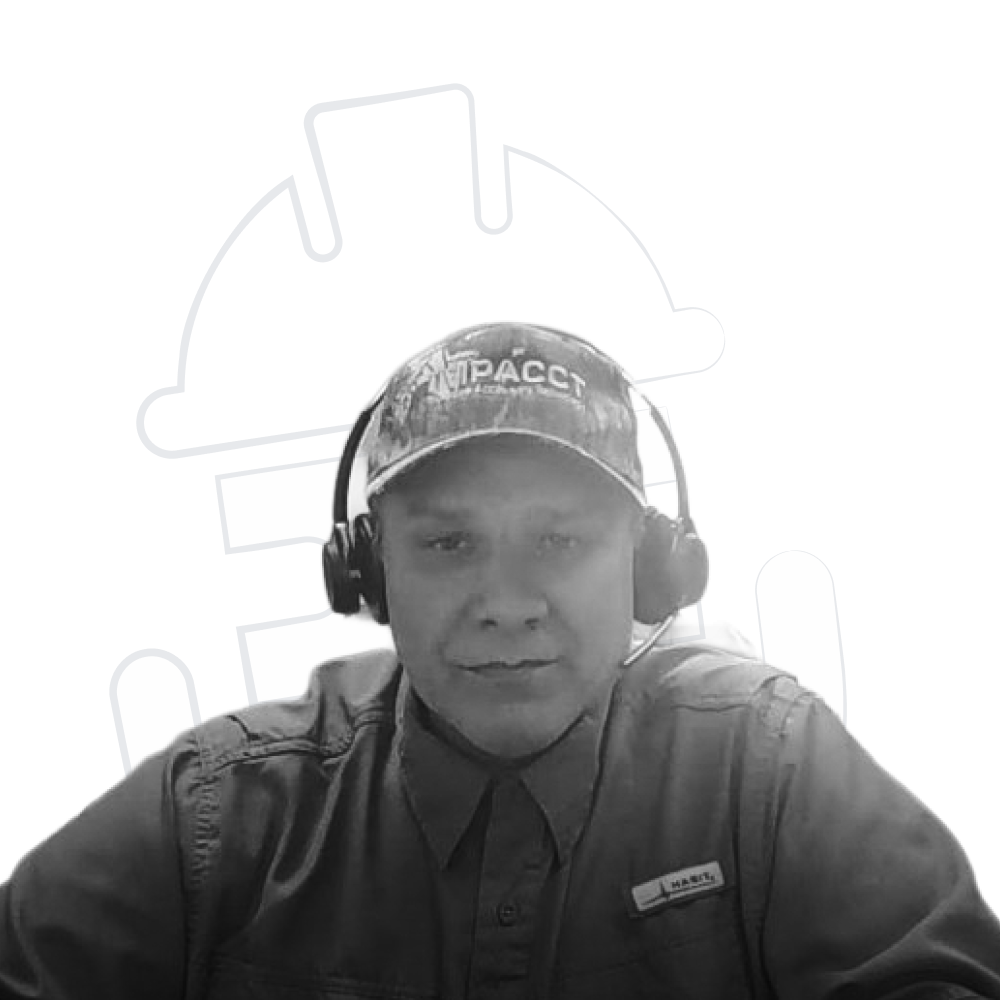
Hari Vasudevan (00:01.708) All right, we're ready to go. Welcome to a new episode of From Boots to Boardroom. I'm your host, Hari Vasudevan, founder and CEO of KYRO AI. Previously, I was the founder and CEO of ThinkPower Solutions. The show shares the educational entertainment in entrepreneurial journeys of those who power America. Presenting sponsor for the show is KYRO AI, digitize work and maximize profits. For more information, visit KYRO.ai. We couldn't have a better guest for this show. It's my good friend, Greg Smith. He knows all about how to digitize work and maximize profits and save ratepayers money. Greg Smith has more than 20 years of experience across manufacturing supply chain and electric utility operations. Over the past decade, with his current utility, Greg has led everything from fleet and supply chain to transmission and vegetation programs under FAC 003. For the last five years, he's been all in on vegetation management, and I know that. He truly brings a moneyball mindset to what's traditionally been a biologically driven field. By the way, I love the movie Moneyball. When he's not working, yeah, I love it. When he's not working, you'll find him outdoors hunting, fishing or spending time with his family. So, Greg. Greg Smith (01:37.295) Excellent movie. Hari Vasudevan (01:53.066) Welcome to the show my friend! Greg Smith (01:53.349) Yes, sir. Well, I'm happy to be here. Thank you for the invitation and I'm excited to chat today. Hari Vasudevan (01:59.756) Awesome. So let me start out with a very difficult question. If there's only one thing you would do, it be hunting or fishing? Greg Smith (02:05.104) Okay. Greg Smith (02:10.723) I would definitely be more on the hunting side for sure. Now my dad is very disappointed in that response because my family is all about fishing. They like hunting, but fishing is the thing. But that's the path I followed growing up. Hari Vasudevan (02:14.56) Interesting. Hari Vasudevan (02:26.836) What's the coolest place you're ever hunted in? Greg Smith (02:30.291) the coolest place I've ever hunted, I would have to say it's in Idaho. and it's in back country, like, high, high altitudes, national forest. Like when you're in there, if there's, there's no coming out unless you're on a helicopter. So you got to stay on your feet or, or get out through emergency protocol. Hari Vasudevan (02:54.734) Alright, so you know what? I'm sure those hunting experiences shaped your leadership style. What experiences, both personally, professionally, after my hobbies, whatever, shaped your leadership style, you will, Greg? Greg Smith (03:13.199) Yeah, so that's kind of a loaded question, Hari. I have a long background in leadership. Just to give you a foundational idea of where it started, when I was 15 years old, I was in the Boy Scouts. There was a group, okay, excellent. Yeah, so I got my Eagle Scout way back in the day, but when I was 15, there was a group of men in my hometown and they put together, Hari Vasudevan (03:26.03) Got it. Me too, by the way. I was the college too. Greg Smith (03:41.499) They put together a week long leadership training camp when I was 15 and I went as a participant. It was based on an organizational or actually marketed leadership strategy for business. And I wish I knew the name today, but I mean, I was 15 years old. So all of the principles they taught for that whole week were actually marketed and successfully sold on a platform for executives all around the world. And so I remember coming home from that leadership aspect and it foundationally, I think it looked at performance measures and it looked at service oriented leadership. So it really taught two things. How do you make the people that you're leading effective? And then how do you measure performance to motivate results? Because If you look at like sports as an example, the reason people are out there is to get across the goal line. So how do you define the goal line and how do you measure the progress and make it fair so that everybody feels accomplished? And then two, two years after I was a participant, I went back as a counselor. And then I also went back as, as, as part of the presidency and leadership team that organized that week long camp out. So, so I would say Boy Scouts. my relationships with adults and then mentorship through organizational structure since I was as early in my twenties. So. Hari Vasudevan (05:15.266) Yeah, no, awesome. That's great. That's great. So, you know, let's kind of delve into vegetation management. That's your sweet spot that we want to talk about today. You know, you know this. Wedge management is one of the what I think is three foundational aspects of any utility. One is asset inspection, which you do, if I remember right. The second, I think, is wedge management, which both are very much interconnected. Right. Greg Smith (05:24.613) Yes, sir. Greg Smith (05:38.896) Yes. Greg Smith (05:44.56) Yes, sir. Hari Vasudevan (05:45.291) The third is storm response, which are interconnected to the first two, right? Really, all those three are super interconnected and they're, you know, the cost, the rate payers, a lot of money, right? And if done right, there can be a lot of savings, right? Where do you think AI will impact vegetation management? How can AI revolutionize Greg Smith (05:48.543) Yes, sir. Yes, sir. Greg Smith (06:02.917) Yes, sir. Hari Vasudevan (06:15.24) utility wedge management in your opinion. You're in the business. What you take on that? Greg Smith (06:20.495) Yeah, so that's a great question because we're at the precipice of answering that question. I think everybody's at the front end of that question and we're all trying to sit there and go, what does this bring to the table? So as I look at AI, really when you're looking at vegetation management, you're looking at an aspect of work and really when you're looking at storms, you're looking at an aspect of work and then structural integrity, you're looking at aspects of work that aren't predictable. Because when you look at what is predicted, everything is predicted to be stable under almost every circumstance based on an engineering platform when the system was designed, if that makes sense. So really what you're looking for is the unexpected, right? You're looking for things you can't predict because if it was predictable, it was probably addressed in the design. AI has the ability to look at significant swaths of data and then model that information and boil it down into what's critical so that then you're making decisions based on the information, is humongous, right? Think about having 12,000 structures to inspect and you're trying to find which one is gonna cause the next outage. Yes, or hundreds of thousands. Yeah, so the manpower, the mind power, the data manipulation it takes by a human Hari Vasudevan (07:35.798) or hundreds of thousands for... Greg Smith (07:46.555) to facilitate and answer that question. Hopefully we can model AI so that it can be aware of what we're looking for. And then we can just throw information at it through our day-to-day protocols and data collection. And then AI is saying, have you looked here? Have you looked here? Have you looked here? So really it can just narrow that search that we spend hours and hours and hours in spreadsheets, in data sets, in softwares that basically collect and archive data. Hari Vasudevan (08:17.142) They don't give you business intelligence. I thought you love spreadsheets. Greg Smith (08:19.408) Yes. Greg Smith (08:22.967) I love spreadsheets, but I would love it better if a computer was telling me, at this cell. Because then I could go from there backwards instead of from the big picture to the little one. Yeah. Yeah. Hari Vasudevan (08:29.838) Right, no, fair enough. Hari Vasudevan (08:35.054) Yeah, fair enough on that. You know, honestly, you know what you're saying makes a lot of sense, right? Because if you think about it, the utilities have poured, if I remember right, about one point three trillion dollars since 2014 to improve the grid, which is necessary, right? I think one hundred and seventy eight hundred eighty billion in the box just last year alone. Right. And, you know, if you look at recent Edison Electric Institute data, there's going to be another trillion dollars in investments between now and twenty Greg Smith (08:54.748) Mm-hmm. Hari Vasudevan (09:04.11) 29 if you think about it, right? That's insane. I obviously, I can't read any major newspaper today without reading about AI at least once a week, right? If not, the frequency is even more, right? But still, the reliability metrics, if you look at it, has barely budged, right, across the country. I there's many reasons to it, Storm being one of them. Greg Smith (09:05.7) Yes. Greg Smith (09:16.646) Yes. Greg Smith (09:32.059) Mm-hmm. Hari Vasudevan (09:32.481) I mean if you take it out, maybe the reliability metrics have significantly improved. But the reality is Tom has impacted reliability and wedge management clearly comes into play there. So, you know, I know very well, Eric Easton Centerpoint Energy, they're doing something really cool with LIDAR. I know you guys talk and things like that. You know, they've figured out at least in a pilot basis where Greg Smith (09:55.655) Mm-hmm. Hari Vasudevan (10:01.112) They're able to potential fuse outages during a storm with almost 80, 85 % accuracy, able to mobilize crews there before a storm, proactively do wedge management and reduce the impact of outages and things like that, right? So the main reason I'm kind of giving this prelude is LIDAR, which I know is close, near and dear to your heart. What's your take on LIDAR? How do you get better value out of it? Greg Smith (10:14.193) Mm-hmm. Greg Smith (10:31.345) Well, I think AI is the answer to that question when you really look at it. So LIDAR is a great starting place and then a good security blanket over time. But when you look at the cost per mile, cost per structure, cost per span, LIDAR is a really expensive way to collect information. The other thing about LIDAR, when you apply it specifically to vegetation management, Lidar doesn't see a tree until it is a tree. So when you talk about the development of a tree, it goes through stages before it becomes a tree. So on a right away, brush is anything smaller than five inches or less than 12 feet. Well, that's could be a lot of trees. Lidar doesn't see that, right? When you talk about the cost of vegetation management, it's most cost effective to manage trees before they become large or significantly dense. So if you're utilizing LIDAR over time, you're... Yes. Hari Vasudevan (11:24.238) Yeah, so you know, I want to jump in there. Yeah, if I may, let me just jump in there just for the listeners here. I'm looking at the KPMG data. The cost of veg management, which you know very well, Greg, is $5000 to $8000 per mile. That's a lot of money out there. And you know, think about it, that's across the country. There are regions which are more expensive, clearly regions which are less expensive. I just jumped in just to give people a Greg Smith (11:37.787) Mm-hmm. Greg Smith (11:41.649) Yes. Greg Smith (11:47.719) Mm-hmm. Hari Vasudevan (11:54.507) Idea as to how much we're talking about we're talking about hundreds of thousands of miles of transmission line distribution lines in five to eight thousand dollars per mile in the cycles which we'll get into or you know once every four months every five years So you're talking about a lot of edge management a lot of money That's being spent in which management keep going Greg. Sorry Greg Smith (12:15.911) Yeah, and what's interesting about what you just shared, that $5,000 $8,000 is representative of size and density, which is also representative of the lidar use. So if you wait to identify vegetation and manage it at lidar stages, what you just said is true, $5,000 to $8,000 a mile. What I'm finding, as we collect data and we manage size and density information through other alternatives, which are before the lidar thresholds, we're getting significant savings on the cost per acre cost per mile. And when I say significant, I'm talking in some areas to your point, less vegetation, less density, less prolific growth, less water. We're seeing $6 an acre. In areas like New York, where you have tall growing trees, dense forests, conditions that produce big plants, less wind, less storms, right? down to $150 an acre. And we think we can get to around the $50 an acre mark. So just think about the difference between spending $50 an acre to manage the same trees that people in the industry are managing with $5,000 $8,000 per acre. And to me, that's where the models we've been using as it relates. And we're not into AI yet, but Hari Vasudevan (13:34.232) Jeez. Greg Smith (13:43.661) as it relates to real-time data collection and analysis and then measure of performance like I spoke to before, if we set the right measures, measure the right performance, get the right information in a timely manner, we can address these threats long before the costs escalate to $5,000 $8,000. Hari Vasudevan (14:01.848) How do you do that? I mean, that's actually the obvious question. How do you do that? Because a lot of what you said is, I learned this term from you, which is how to look below the grass, right? Before something actually grows from that less than five inches, which you just said to something fast growth and impacts distribution transmission line. How do you target size and density? How can that be fueled by AI? Greg Smith (14:13.904) Yes. Greg Smith (14:22.79) Mm-hmm. Greg Smith (14:31.493) Yeah, so the neat thing about data and change management in AI, this is what's exciting. Transmission systems are static. So when you really look at that initial data collection, it's how do you leverage data over time and then collects large swaths of information and comparatively manage it over time. That's AI specialty, right? AI can take target data sets and take new data and quickly give you information based on performance. This is where you were, this is where you are, this is where you can be, correct? The longer you collect those data sets consecutively over time, the better AI can actually manipulate the data and give you better information, right? Because it's called learning, right? These systems actually auto-correct. They say, I was wrong last time, this is why I was wrong, and it starts giving you better data. So we've actually been doing that. in partnership with ThinkPower Kairos since about 2018. And what I'm finding is specifically to answer the question below the grass. So the first time I'm there, if I can identify the threatening species that have caused my systems globally, and I understand where they live, so imagine having a 106 mile line, correct? and I'm targeting 15 tree species specifically in this geographic region, well, 108 miles is a lot of acres. It's almost 2,500 acres, right? So if I pretend like all of those species live in every acre, that's really expensive work. But if I can eliminate 2,000 acres, narrow it down to 500 acres, and then start to manage those 500 acres with the appropriate cost structure, to where they match the 2000 acres because integrated vegetation management teaches us that we can change biodiversity. We can change plant structure. We can change environmental structure. And so we simply start with LIDAR, identify where's our biggest threats. Then we go to those threats with the appropriately sized crews. We limit the acres those crews are working in. Greg Smith (16:44.655) And then we follow through over time and we start looking below the grass because once you do something, it doesn't go away. These are 100 year old systems, 50 year old systems, 30 year old systems. They don't disappear. They move to a new stage. so instead of using LIDAR to see something that's at grass or at shrub level, for instance, we were on our system down in College Station here recently, just this past week. We have six month old trees that are 12 feet tall and eight feet tall and four feet tall. Well, that's not normal growth structure. So I understand what I have below the grass is dormant root structure that's producing fast growing tall trees. So my cycle approach needs to shrink because if I leave a tree that grows that fast in six months for four years, I have a 25 foot tall tree and I'm back to the five to 8,000 cost threshold to manage. Right now I can go do a Hari Vasudevan (17:17.902) Hmph. Greg Smith (17:42.375) targeted basal application and kill that with a $70 an acre cost. Hari Vasudevan (17:48.511) as opposed to It's clearly the five to eight thousand range if you're talking about it at stage. So, you know, let's, you know, for the listener here who may not know about cycles, right, but you are still in the industry and you know for the average you're listening to the show, can you quickly give them an idea as to what wedge management is? Greg Smith (17:50.119) waiting four years and having a 25 foot tall forest. Yes. Hari Vasudevan (18:17.782) What are you referring to when you're talking about fixed cycle versus condition-based planning and things like that? Greg Smith (18:25.285) Yeah, so when you look at a cycle approach, it's picking any poor period of time and saying, I'm going to address the vegetation issues on this right away corridor. Again, 108 miles, 50 miles, sometimes it's 300 miles. You're essentially saying, I think that on a four year cycle, if I come here once every four years, I can address everything I need. The concept comes back to efficiency and cost, right? Well, I only have to run that crew. It's localized. They're doing the same thing. Correct. Well, the reality is if your vegetation profiles over 108 miles aren't consistent, sometimes you're going loaded for bear bear to shoot a squirrel, right? Which it's overkill, right? And then other times you're going loaded for squirrel and you got a bear. So because that 108 miles isn't consistent, You're basically either overspending or underspending, which causes future overspending because you didn't address the problem and you paid for someone to get there. So these cycle based approaches aren't addressing the whole problem. They're catching what they can catch. And then we're having to go back over and over and over as these issues escalate and size drives cost. Density drives cost. Time drives size and density. Right. So the longer I wait, the more expensive it inevitably is. Hari Vasudevan (19:43.811) Yeah. Greg Smith (19:54.727) So when you look at a condition-based approach, and I'll give you a specific example, this past year we went out and we did herbicide on our right of way. We did 262 miles of herbicide. And we broke it down into about 10 mile stretches a day. Sometimes it's six, sometimes it's 15, but on average it's 10 miles a day, right? If I look at the 262 miles, it took 21 days to facilitate that work, we used 260 gallons. Well, the data I have from collecting information while the process was happening shows me that 96 gallons happened in 12 miles. So when you spread 260 gallons over 262 miles, it doesn't sound like a big problem. But when you understand 96 gallons happened on 12 miles, you quickly understand where your target area is for work next year and where you need to escalate effort. Hari Vasudevan (20:34.422) Hmm, wow. Hari Vasudevan (20:48.854) Yeah, clearly. Greg Smith (20:53.351) I had two other places that equated to about 20 and 40 gallons in a 10 or 12 mile stretch. So again, next year, I restructured my plan. And in those areas where I had elevated threats and indicators, I'm addressing it with an elevated response so that we don't see that get out of hand and grow to a higher cost. again, instead of addressing it at my $14 per acre cost, which was my 2025 cost, Next year, I'm probably going to do a $60 to $70 an acre cost in those acres. So it represents about 36 miles of the 262. And it's because the information I have helps me understand size density, correct, in a timely manner because we did this in April, right? So worst case scenario, if I'm back next April, I have 12 months of growth or 12 months of biologic time. when you look at the plant progression. So if I get there within 12 months of the time I was there, it's safe to assume that my cost shouldn't escalate significantly from what I did last year. So again, that's AI. I'm doing this manually. If AI was looking at my data, it would quickly be able to calculate and say, here are the areas you need to address. This is where you applied. Yes. Hari Vasudevan (22:02.934) Yeah, yeah, no. Hari Vasudevan (22:14.146) Yeah, you're doing that math manually on the back end of it. Greg Smith (22:19.065) I'm using software to collect the data, right? So we can teach AI to do what I'm doing in spreadsheets, and I can quickly have that information next day, right? Hari Vasudevan (22:21.014) Yes, that is important. Hari Vasudevan (22:29.772) Yeah, I think that's where the agent TGI comes into play, which we've talked about offline where you're able to query information from different sources of data. And in your case, it's LIDAR, KYRO, and you may still have one or two spreadsheets. So some agent going in and getting information from all those and spitting out the information that you're looking for, which helps you make better decisions at the end of the day. Greg Smith (22:33.062) Yeah. Greg Smith (22:45.446) Mm-hmm. Greg Smith (22:58.567) Mm-hmm. Yes, sir. Hari Vasudevan (22:59.662) So essentially what you're saying is, based on fixed cycle approach, the cost can be high, but the data can be used to actually go into a targeted condition based approach and target more of a size and density below the grass approach. Is that a reasonable way to put it? Greg Smith (23:25.477) Yes. Yes, exactly. So when you look at the fixed versus conditioned, in my conditioned version, I'm going to look at 262 acres, but I'm boiling down to 35 acres of actual focused work while managing the rest of the acres or miles with the appropriate level of work at a very low cost. In a cycle-based approach, I am approaching the whole system like it's one. I'm spending the same price on a agriculture acre as I am dense tree and forest acre, right? And I'm not even guaranteeing that the people and equipment I sent there can address everything that's there, which means eventually I have to come back. The other thing I'm seeing is industry-wide, we're not using good field tools to report this information. So we don't even know where those places are when we're done with the work. Like literally we do the work. We find those places, we don't report it. And so we have to go back and rediscover what we already drove past and identified last year during the work. Whereas using the KYRO tool, it's offline, it's field capable, my people are reporting in real time, right? When they're done with their work, I have indicators for the work I need for next year already. Hari Vasudevan (24:46.702) Do you know of a good field data collection tool, Greg? Greg Smith (24:51.675) I didn't until I met ThinkPower. KYRO. Yeah. Yes. Yeah. But, but honestly, KYRO, KYRO is, has, you know, I've been in, I've been in real time work situations. I come from supply chain. So when you think about Hari Vasudevan (24:55.598) What is the new name of that tool to use? Let's use that please! Greg Smith (25:17.991) automation of software warehousing and logistics is where it all started. Think about barcoding in a grocery store, correct? So I've been around this technology since I was in my twenties. And I've always challenged executives because I'll go to them and I'll be like, hey, we need to automate our warehousing processes. It saves time, it saves money, it creates accuracy, which makes the business more efficient. And they'll be like, prove it. And I've said, OK, two of you go to the grocery store like Hari Vasudevan (25:24.162) Yes. Greg Smith (25:47.437) One person pick up an apple, a banana, and a cabbage and go to the register with a checkbook. And the other guy grabbed three candy bars and a credit card. Tell me who gets through the line first. That's as simple as what we're talking about is if you give people the right tools to do the right kind of work while they're working. So this isn't additional work. This isn't a piece of paper that gets filed and gets scanned and gets inputted into a spreadsheet and somebody's got it in a file location. This goes into a data set where you've normalized the information, you've set us a performance standard that says, is what I expect. I want to know if it doesn't do what I expect, right? Which is AI, correct? So now every acre has a performance measure. That 96 gallons over 12 miles didn't meet our performance standards, so we automatically go. We have an indicator. Hari Vasudevan (26:31.298) Yeah, Greg Smith (26:43.451) How do we want to respond? We look at the photos from the field inspections and we go, more herbicide. Well, what's the appropriate threshold? Is it foliar, is it basil, is it two people, is it six people? We have all that information as a result of the field activities because we collected the information while they were. Hari Vasudevan (27:04.566) Essentially, I really you're talking about garbage in garbage out and if you don't have the right data, literally everything you're talking about in terms of AI doing your analysis and giving you the insights to make better decisions is just not possible, right? You need to have good LiDAR data. You need to have good field data collection, reliable data collection because you know LiDAR cycles are, you know, let's call it as Greg Smith (27:07.887) Yes. Greg Smith (27:21.895) Yes, sir. Hari Vasudevan (27:33.358) once a year maybe right? Greg Smith (27:35.751) I see him, the most frequent I generally see him is four years. Hari Vasudevan (27:39.862) Yeah, no, some very few utilities do once a year, but literally once every four five years is more common, right? Greg Smith (27:43.91) Yes. Greg Smith (27:47.355) Yeah, California you see the once a year, but not outside that state very much. Hari Vasudevan (27:51.873) I know. So, you you're doing that. So let's call it as once every four years for the sake of this question. Between 2025 and 2029, you still need to know what is happening to your growth. And somebody is going to go on the transmission line doing asset inspections. We talked about how asset inspection, wedge management, STOM, these are all interconnected, right? So if you're able to collect the data really accurately, reliably and map it to your LIDAR data, Greg Smith (28:12.038) Yes. Hari Vasudevan (28:20.96) and then help make decisions, you have a much better odds of making a much better decision that's going to impact reliability, right? Because for the average Joe out there, let's kind of delve into that, if you will, Greg. I'm an average Joe, I'm not in the utility industry. Why the hell do I care about veg management? Hey, you know what, somebody comes to the trees, how does it affect me? Greg Smith (28:32.71) Yes. Greg Smith (28:50.447) Okay, to answer that question specifically, it's about land use, right? So traditional cycle-based approaches, you do one thing every four years, so I like to apply it to your backyard. So think about you as a resident owner with a backyard. If you only went in your backyard once every four years and addressed your vegetation issues in your backyard, you would have foundation issues, you would have sidewalk issues, you would have... deck issues, would have flower bed issues, and the cost to restore the damage you've done by neglecting it for four years, you can probably quickly figure that out in your head, because you mow your yard how often. Hari Vasudevan (29:32.366) I'll tell you more important thing, my wife would probably leave me. Greg Smith (29:36.667) Yes, right. So if you look at traditional aspects of vegetation management on right-of-ways, it wouldn't even be acceptable in your backyard, correct? So when you talk about land use, why it matters to you is we're running across people's properties. All utilities have shared easements on private, commercial, public lands, right? Hari Vasudevan (29:48.302) That's true. Greg Smith (30:02.531) Shouldn't the utilities be treating those properties based on their land use? So if you have wild spaces, what kind of wild space do you want? Do you want messy trees, ugly trees that have been sprayed, killed, cut, are growing out of sorts? Or do you want something that supports what's in that space, in that wild space for birds, for deer, for bears, for bobcats, whatever? whatever is in that space, shouldn't we be looking at it and going, how do we produce not only a safe overhead environment for our wires, but what people use this for on the ground? Well, useful, right? Yeah, yeah, who cares what it looks like? Like if you look at prototypical utility responses, we're simply facilitating or encouraging the most aggressive Hari Vasudevan (30:43.468) more aesthetically pleasing. Great. So yes, absolutely. Greg Smith (31:01.857) non-residential vegetation on the planet to grow in these spaces because we attack it and we kill everything. Well, what's going to come back? The most aggressive plants, the plants with the most seeds, the plants with the strongest root systems, right? We're essentially going out there and inviting these monoculture environments. All aspens, all alders, all locusts, all this, all that. What we really need, and you can look at it with the pollinator aspects of endangered species today, right? What we really need is biodiversity and cultural land use. So what I'm finding with some of our approaches where we're in the space and we're going, hey, people ranch here. They want grass and we're managing it to grass. Guess what they're helping us do? they're helping us manage it to grass. And so my cost structure reduced because my landowner is facilitating the same activity I am and we're collaborating, right? If we're in a wild space and they're hunting, we're like, well, what feeds deer? Don't attack those plants, attack the plants that don't feed deer, right? If we're in meadow environments with flowers and weeds and productive plants that produce berries that feed birds, Hari Vasudevan (32:00.879) Yeah. Greg Smith (32:22.055) We're trying to facilitate or mimic that response because again, we're managing from the standpoint of I'm not just managing trees anymore because I've taken it from trees and I'm trying to transition it to something and we're actually managing the land use now. We're managing the environment. We're not just there's a lot of trees here, let's kill trees. So and we're doing it at a lower cost than people are managing just trees. Hari Vasudevan (32:45.314) Yeah, yeah, I know. Hari Vasudevan (32:50.742) No, I mean, it's such an important piece of the puzzle. And, you know, if I'm an average Joe, the other way I'm looking at it is you have these publicly well-known disasters. You got Maui storms, you got the, you know, the California storms, you know, where you live up in the Texas Panhandle. You had some recent issues with veg management, right? So all these impacts. Greg Smith (33:03.27) Mm-hmm. Hari Vasudevan (33:19.006) rate payer cost, somebody pays for it, right? And ultimately you also have outages in reliability metrics and issues that creep up, right? Those are all important metrics because if you look at the California storm, some sea hook fell that got into some veg management that was vulnerable and you know major fire broke out. Same thing with Maui, if you will, right? Disaster, Rahena, fire out there. So maybe those are all important metrics too. Would you not agree on that? Greg Smith (33:22.341) Yes, sir. Greg Smith (33:28.059) Mm-hmm. Yes, sir. Greg Smith (33:40.303) Mm-hmm. Mm-hmm. Greg Smith (33:49.093) Yeah, yeah, I think all of those things play in. The aspect when you speak to fire specifically moves away from the vegetation and more to the structural maintenance management side, but it also moves to concepts of management that need to be addressed because they've never been questioned, which is off-rideaway management. So when you look at rideaway, an effectively managed rideaway for a transmission system is a fire corridor. because it's low growing plants, right? Where does fire thrive? Right? High combustible, small stem size, dense vegetation, grass, shrubs, right? Weeds. So, right aways are going to be fire corridors, but that kind of fire is good because it stays low to the ground and it burns out quickly. So, the part that I think nobody's talking about, and I'd like to see the industry move towards this, is that transitional boundary. Hari Vasudevan (34:27.438) Got it. Greg Smith (34:46.641) from the easement to private, which we don't have rights to, right? How do we keep that fire corridor from making a bigger fire as it transitions off right away, which is a transitional plan and we would need rights and permission and collaboration from the landowners to manage that type of activity. So if you think about like a pine tree, a pine tree needs to be cleared up to 12 feet off the ground, right? And if you just cut the lower limbs off, they don't regrow. That's a one-time activity, but you would have to do that to every pine tree as you transition for a specific distance away from the right away, which would then create a better fire corridor. So those, those fires, when they hit a right away, which shrink, lose heat, burn fast, but then not transition to the other side because they have nowhere to go. Hari Vasudevan (35:37.987) That's, you know, honestly, I had never thought about it. And that is the reason why you're an expert in the industry. So, you know, the the low brush area, high density area in the right away, it makes a lot of sense. But the fact is you do transition into private land and you don't necessarily have access to control that. What is the best way to do that? mean, honestly, from an expert standpoint, how would you really handle that given that you don't have control to get into their property. Greg Smith (36:11.899) Well, there's some people in California already producing the solution and they're just collaborating with landowners. They're going to landowners. saying, Hey, you and I have the same problem. Do you want fire on your property? And they're like, no. And they're like, this is what it takes to eliminate this threat from this area. Can we do it? And these landowners are all actually going, yes, please do. I can't afford to do that. So I think there's a collaborative approach and it's beneficial to both sides, right? It protects the utility from a liability standpoint. It's not, there is cost, there is cost, but the cost benefit over time. Because again, if we manage these spaces appropriately, eventually we can move from the applied, like cutting, spraying, removal to biologic and cultural. So. Hari Vasudevan (36:42.52) massive library, massive outages. Greg Smith (37:04.731) Yeah, initially we have to do some work, but if we stay on it and we manage that transition, I identify it as ground cover conversion. Over time, either the landowner can do it with his lawnmower or the deer do it by eating plants that are sticking up. Mice do it by eating seeds and grasses and shrubs and plants that don't cause catastrophic fire events actually block the problem. Hari Vasudevan (37:29.548) Yeah. No, it's honestly it's a massive issue if you think about it. Just the, you know, storm outages alone, if I remember right, it's about 150 billion bucks a year for Americans at the end of the day, right? The cost of it, right? Now it's not, obviously not every storm outage cost is attributed to veg management, but fairly substantial if it is, in veg management is integral to, you know, having limited storm damage, right? Everybody knows that. So it's a... Greg Smith (37:38.332) Mm-hmm. Mm-hmm. Yes. Greg Smith (37:47.207) Mm-hmm. Greg Smith (37:57.67) Mm-hmm. Hari Vasudevan (38:01.151) That's an interesting piece. So you're saying that LIDAR can actually be used, LIDAR and AI can actually be used to break the cost barrier, if you will, with better data collection, better analysis and things like that. Is that right, Greg? Greg Smith (38:06.95) Mm-hmm. Greg Smith (38:15.621) Yeah, so you take LIDAR initially and that helps you prioritize. Then you move it to these real-time data collection platforms where you're in the field and you're actually tracking it from where you identified it through LIDAR. Hey, this is a problem area. And you're managing it through that transition. LIDAR becomes over time less and less critical. It becomes a necessity because things do change and you're always looking for that change management. But again, it... adds to that AI approach because between the lidar, so instead of having every four years, every six years, right, this lidar picture, you also have data in between. you're actually, again, if you look at AI and its capabilities, you're feeding it more data and it's learning. So through every lidar set, every four to six years with all this data in between, AI could become ultra intelligent, right? Ultra useful. Hari Vasudevan (39:10.456) Yeah. Greg Smith (39:13.509) We just basically feed that machine over time and eventually it's, I almost imagine it being predictable, whereas today it's not even imaginable as to how you predict it. To your point with what you said about predictions of fuse failures, right? If we have the right data, it's easy to say this is what leads to a fuse failure. Age, weather, exposure to sun, and then AI knows. Hari Vasudevan (39:26.146) No, no, 100%, 100%. Greg Smith (39:42.299) These are the ones that have failed in the past. This is where we have exposure to sun. This is where we have exposure to weather because we can take the data and go, what's driving this failure? Hari Vasudevan (39:50.499) Yeah, yeah, no, it's great stuff. You you obviously work with a lot of people in the industry. So what is the, what are some of the implementation guidelines, considerations that you would caution people? Greg Smith (40:06.503) So again, think if you're looking at a solution that incorporates any type of software approach, the biggest thing you have to understand is what result you're pursuing and what measures help you understand the performance of that result. Because I think with our data approaches, Hari Vasudevan (40:25.198) just goes back, goes back to your original leadership. What are you measuring? What is the outcome that you want, essentially? Yes, what is good? Define good. Greg Smith (40:29.542) Yes. Greg Smith (40:33.016) What is good? I had a guy tell me, he said, if it can't be measured, it can't be done. And that sounds super simple. But how do you know where the finish is unless you've set a parameter that defines a finish line? So if it can't be measured, it can't be done. So I think with data, a lot of times we have no clue when done is. Like we're just collecting information and collecting. And we have scays of data. What is it? What is it telling us? What do we know? Like, yeah, from a compliance standpoint, I can go back in time and show, look, I was there. What does that mean? Yeah. Hari Vasudevan (41:06.806) And honestly, you said... Hari Vasudevan (41:11.096) Yeah. What does it mean? mean, the scores terabytes and terabytes of data that is out there can never be used. Greg Smith (41:16.624) Mm-hmm. Yeah, who would watch soccer if you didn't know who won after 60 minutes? Right? So we have to set, so the advice I would give is understand what performance is, understand what measures drive performance, understand who is available to collect that performance information and when, and then outfit the people in the field and require them to collect that measure on a frequency. that can drive performance. So if you look at what we've done with KYRO, we simply have developed very structured data sets for activities. And when we do these activities, we collect consistent information. And then over time, the information either tells us, are we doing good? Or the information you're giving us isn't good enough to tell us that. And then we change the data set, right? Because we either find out we don't know. Or we find out we know and we improve and we find out how we find out better. So you can be in the wrong place, but if you don't know where done is, you'll never get anywhere. You'll just have a lot of history. You'll be able to answer audit questions. Yep, we did that. And three years ago, like we said we would, right? That's what most of our data is driven towards today. Chain of custody, proof that we did something. Information that proves that our program is being followed. It doesn't prove our program's good. It doesn't prove that what we're doing is effective. It doesn't prove that Yeah, it just proves that we did it right. It's done. We spent the money Yeah Hari Vasudevan (42:51.948) Yeah. They're doing something. That is so true. What are some of the staff training and operational challenges that people should take into account when you're introducing these data collection tools, LIDAR, as you're embarking on your AI journey and things like that? What are some of the considerations from that standpoint? Greg Smith (43:19.301) Yeah, so when you talk about software in the world we work in specifically, which is vegetation, the biggest issue is people that use chainsaws don't want to be tech guys. So just imagine that, right? So you really have to be sensitive to the fact that this has to be something that these guys that don't want to be tech people can do. So the thing I've seen that's been effective with the KYRO system Hari Vasudevan (43:32.76) Fair point. Greg Smith (43:47.759) is everybody's got thumbs and that everybody's got phones. KYRO operates a lot like applications all over the planet that people are using their thumbs with already. So when I give it to a person that mows yards or sprays trees or cuts trees and I say here and they start moving their thumbs and it works, that overcomes a lot of the issue. Secondly, these guys don't want to be babysat. They didn't go out into the wilderness to cut trees so they could tell people what they're doing every 10 minutes. Right? They're kind of independent people. Hari Vasudevan (44:22.542) They want to be, honestly, I deal with these guys, I've dealt with them all my life. They want to be out there. They don't want to be in the middle of a city. They don't want to talk to people. You need people like that, honestly. mean, you need those people to do their work. Greg Smith (44:29.68) Yes. Yes. But they don't want to feel like you're putting them on a leash, right? Because that's why they're in these jobs. They want to be free. So then it drives to how do you get them to believe in the tool? And again, it comes back to performance. Everybody wants to be successful. Everybody wants to be good. If you can set them up to understand this helps you be successful, this is how. When you tell me this, you've done a good job. Hari Vasudevan (44:38.958) Yes. Greg Smith (45:01.807) Instead of when you've, yes, instead of when you've told me this, you're exposed to danger because you might be in trouble. You say, look, when you've told me this, you've done your job and it's good enough. And we're gonna celebrate you because the reality is if you told them to do their own thing, you find that out and that's a good thing, right? It doesn't need to be a stick. So the biggest thing is you've got to implement these tools so that people feel like they're winning, right? Hari Vasudevan (45:02.112) measurable. Hari Vasudevan (45:21.794) Check. Hari Vasudevan (45:29.134) you know, make it easy for them to listen. Something I've driven across the companies I ran because the companies I ran either are companies like KYRO, which is field data collection software or companies like ThinkPower, which has a heavy field workforce. Right. I say that knowledge workers are in the office. Right. In this case, it's you. Right. And me. And then you have people in the field who Greg Smith (45:38.501) Mm-hmm. Greg Smith (45:51.239) Mm-hmm. Hari Vasudevan (45:58.503) like you just described, they do what they do out there in the field. Who makes the money for the company? It's the guys in the field. They don't want to moonlight as knowledge workers. What has become over last, know, candidly, last several decades since the proliferation of software is the people in the office, they kind of put more and more Greg Smith (46:06.47) Yes. Greg Smith (46:13.445) Yes. Hari Vasudevan (46:26.798) responsibility and the guys in the field and the softwares are oftentimes designed for the super user in the office, right? And somebody who purchases software, they go to school, they learn a lot and all these kind of things and then they have these hours and hours of training in how to use the software. They're super proud of the decision they make to buy the software. Greg Smith (46:37.839) Yes. Greg Smith (46:54.087) Mm-hmm. Hari Vasudevan (46:56.536) But guess what? The guy in the field who's in your world wheels a chainsaw, he's trained to do that. He's trained in safety. He's trained in how to keep his crew safe and human performance and all these kinds of things. And then he or she doesn't really have hours and hours of training in the software nor are they interested in that, right? All that they want to do is take their phone, open it up. Greg Smith (47:02.555) Mm-hmm. Greg Smith (47:11.003) Mm-hmm. Greg Smith (47:20.475) Mm-hmm. Hari Vasudevan (47:24.332) look at their app, open it, use it, and really for 10 seconds go back to using the chainsaw. Right? But you know what what do we do? We make their job complex because we want to make our job easier because it's a recipe for disaster. Right? The way I've always run companies is hey who makes the company money? Like I said, the guy in the field. Greg Smith (47:30.511) Yes. Yes. Greg Smith (47:40.568) Yes. Greg Smith (47:45.169) Yes. Greg Smith (47:52.924) Mm-hmm. Hari Vasudevan (47:53.903) Who is harder to train? It's the guy in the field because they're all over the country. Well, who's easier to train? It's the guy in the office because quick brown bag lunch and lunch, get everybody together or zoom meeting. They're out there. Let's make it easy for the people in the field to use software that they're able to give you the data that you can rely on with a high degree of certainty. That way you can use the data to do your work effectively. Right. Greg Smith (48:00.645) Hmm? Greg Smith (48:05.018) Yes. Greg Smith (48:11.707) Yes. Greg Smith (48:22.715) Mm-hmm. Hari Vasudevan (48:23.648) And I know that's exactly how you think and operate. And that's why we love working with you, right? Because it's like, hey, make it easy for the people in the field. Help them give me the data effectively. That way I can put that data together with the LiDAR data, mash it together, let AI run what it does, and let me make a decision. In a nutshell, I know it's a lot what I say, in a nutshell, is that not the way you operate, Greg? Greg Smith (48:38.235) Mm-hmm. Greg Smith (48:44.518) Mm-hmm. Greg Smith (48:50.467) Yes, that's the perfect way to say it. then on top of that, what I'm seeing with our crews and we use contract crews, we don't staff people internally. So we're bringing these people in from the outside. They only show up two or three weeks a year on our systems, right? But what I'm seeing with this is these people are coming back and they're comparing the work they're doing in the industry to the work they're doing with us. And they love coming back to our work. So we're building we're building alignment with these tools because they're seeing that their jobs are improving from participating in these tools, if that makes sense. It's benefiting them. Whereas most tools, to your point, benefit the office. So the people in the office's job gets easier because they have better information and more time, right? And they can follow up and yell at people, right? No! Hari Vasudevan (49:42.779) By the way, there's nothing wrong with that, but nothing wrong. But make it easier for the guy in the field. Greg Smith (49:47.533) Yes, if it doesn't translate to something better for the person that the question that you pointed out, why am I doing this? How does this serve me? You're just putting your job on me. So when we talk about implementation, we talk about you really have to build an idea and a foundational structure that incentivizes the people that make the company money. Right. The more effective these people are, the less money your company will spend. The more the more they are, the less you'll be there, right? So give them a performance measure that makes them feel like they are the star athlete on the planet, because that's what they really are. These people are athletes. They're really physically talented, intelligently wired to do really difficult physical things under really bad circumstances. Think about wind, think about rain, think about sun, think about bugs, think about Hari Vasudevan (50:40.947) weather conditions. I mean it's wrong. Greg Smith (50:45.669) holes in the ground and wet and water and steep terrain and like these are some of the best athletes on the planet and if you treat them like they are the amazing athletes they are, they respond. Hari Vasudevan (50:57.646) You're out there in the elements. You're doing a job that many people don't want to do. mean, listen, most people, go out for 10 minutes and they, I got allergies, come back. I got a couple of mosquito bites, come back. I these guys are out there in the field. You want to make it easier for them to actually do their jobs, if you will, right? So that's great. What are some of the regulatory and security considerations as people think about all these software tools? Greg Smith (51:02.716) Mm-hmm. Greg Smith (51:06.981) Mm-hmm. Mm-hmm. Greg Smith (51:14.982) Mm-hmm. Greg Smith (51:26.213) Yeah, so what's amazing about that is in the end, all the regulations really are what's driving why we're doing this, right? We're doing it to facilitate safe, reliable systems. Regulations are developed to produce safe, reliable systems. The sad thing is, is regulation doesn't do that, right? Regulation is just a bunch of words on paper that hold you to an account as it relates to reporting and auditing. So when you talk about the benefit as it relates to the regulatory stance, these tools actually facilitate your compliance with regulation because you're doing it in concert with the work. So making these tools more readily available actually facilitates regulation during the work and identifies gaps that you may not even be aware of that you can produce a better solution for to address these regulations. Because again, the government isn't bad. They're not trying to like put things on us that don't need to be done. They're literally out there going, how do we produce a consistent, reliable system? Right? Hari Vasudevan (52:31.948) In the consistent reliable system, the challenge becomes when you're spread across such a large country like US, across such diversity of culture, diversity of vegetation species, diversity of terrain and diversity of people. It's hard, right? It's hard to see one size fits all. on the veg management side, I remember working for a large utility as a vendor. Greg Smith (52:39.548) Mm-hmm. Greg Smith (52:44.476) Mm-hmm. Greg Smith (52:48.325) Mm-hmm. Mm-hmm. Yes. Hari Vasudevan (53:01.102) They're based out of the Northeast, but they had, you know, some assets down in Texas. They said that, hey, you need to have air entrainment and concrete effect, at least so much. But the guys in Texas didn't know that because there is no freezing issue in South Texas, right? So you can't necessarily implement that standard, if you will. Same thing goes to wedge management as well from a regulatory standpoint, right? Greg Smith (53:20.539) Yes. Yes. Greg Smith (53:27.855) Mm-hmm. Yes, sir. Yeah, so again the protocol is gonna be similar, but to your point there's nuance What works in the panhandle of Texas doesn't even work in Central, Texas, right? But the protocols do the data does like I can tell you that if I measure herbicide output as I travel down right away that applies to every system on the planet because then I have a indicator that helps me measure size and density without counting every tree, right? 10 gallons of herbicide indicates that I have more vegetation than 6 gallons of herbicide all the time. Now, the photo that we produce through the collection helps me confirm that my assumption of 6 gallons isn't more than 10 gallons because if I put 6 gallons down in a bad area, it just means I didn't do the work. So the photo helps me defend against that issue. So my assumptions are correct. And again, if we take AI, if I consistently track information in a consistent format over time, AI can start to be my analytic resource for the review of these gobs of data. So it's easy on 300 miles. But imagine 13 or 20,000 miles. I'm going to get thousands of photos a day. AI could simply, in minutes, look at last year's photo, this year's photo. and go, it better or is it worse? Because we can define criteria in those photos that indicate that. So now my people in the office, instead of looking at 10,000 pictures, are looking at the six that matter or the 300 that matter. So super exciting stuff when you think about it looking forward. Hari Vasudevan (55:01.518) Got it. Got it. Hari Vasudevan (55:08.142) matter clearly. 100 % 100 % no it's good. No, no it's phenomenal. What does that mean for utilities in terms of financial benefit right and that translates to ratepayers because you know at the end of the day ratepayers are funding utilities what's your take on Greg Smith (55:29.637) Yeah, so I can tell you specifically what it means for the utility I'm working for. We're looking at 10-year forecasts as it relates to vegetation management that are declining and normalizing. So we're actually moving from higher cost vegetation management structures to future forward-looking cost structures that cost less over 10 years than they did the first three, right? Hari Vasudevan (55:52.097) Now, Greg, let me pause you there. You're saying in this high inflation environment where everything is going up, you're actually bringing costs down. You're not joking. Did I hear you right? Greg Smith (56:00.368) Yes. Greg Smith (56:05.285) Yes, I'm telling you that I have cost models going back to 2018. And I have forward-looking cost models that go to 2031 currently. And I'm measuring my performance as it relates to those measures every single year. And generally speaking, I'm beating my forecasted performance measures, which means I'm doing more work in a year than I thought, which means it's actually cheaper than I forecasted. 2031 numbers are lower than my 2018, 19, 20, 21, 22, 23, 24, 25, 26. I think 2029 is when we really see a significant decrease. But if I take those numbers from 2031 and forecast them forward with worst case scenario expectations, my 2031 to 2041 numbers look like 60 times better than the previous 10 years. Hari Vasudevan (57:04.45) Wow, man, you your your vendors should probably be not in great love with you because you're keeping them revenue down, but your utility should be loving you right now just because of what you do. Greg Smith (57:18.321) Well, when you look at the margin-based work, we're just giving them less work. We're not giving them less margin. So if you look at what we're doing, we're not asking. So part of the utility problem today is they're saying, hey, we have these escalating budgets and we have all this work and we don't have enough people to do all the work. What we're going to do is we're going to produce normalized work at the same margin the industry is currently enjoying. And we could do it on thousands of more miles. So really, the industry isn't going to suffer. They're just going to be treating more miles per year at lower density and size structures with fewer people and fewer safety issues and fewer reliability issues. Our storm outages will improve, right? All these things in the 10 years I've been operating at the utility I'm in currently, we've never had a vegetation related outage on any system we've managed. Hari Vasudevan (57:51.202) They have to be. efficient. Hari Vasudevan (58:15.374) Wow, wow, that's something to be proud of. I'll tell you what, honestly, you know, I know because you and I have been in the industry long enough, you've seen the evolution of the industry. I've seen the evolution of the industry. You know, there's a reason to talk about how data centers are actually making the car rates go up, rate payers go up. I'm sure certain areas, Ohio, I know certain things are happening. Georgia, the regulators have actually pushed all the costs to data centers alone. But truly, if you had look at it, the problem is really inefficiency, right? If you actually bring in efficiency into the system, do think you can actually, I what you're doing, honestly, right? You're bringing in efficiency, if you will, right? You're like, hey, you're going from a fixed cycle to targeted approach, right? Condition based planning approach, right? And your vendors are still making their margins, which means They're going to do more. Their safety is going to be less impacted. Honestly, if they do it right, they could potentially have higher margins. They actually do more customers. And it's better for the ratepayers, better for the utilities, and better for the environment. You talk about in the sense that, you kind of Greg Smith (59:24.581) Mm-hmm. Mm-hmm. Greg Smith (59:33.638) Yes. Hari Vasudevan (59:37.422) treat them wildly, the wild trees come back up, right? You make a targeted approach, all these things has a well-rounded impact, it's going to be better for everybody, right? Greg Smith (59:41.702) Mm-hmm. Greg Smith (59:49.723) Yeah, yeah, when you look at everybody in this world, if you've ever gone hiking or you enjoy being in the wild, right? You've probably, you can probably remember a place from when you were like eight years old that you went to and it was a meadow. And if you hike to that place today, it's still a meadow. Our right of ways can be transitioned to that biologic platform so that essentially biologically we're producing meadows on our right of ways. Hari Vasudevan (59:55.264) I love it. I love hiking. Greg Smith (01:00:20.033) And we're just helping Mother Nature to make sure that the things that impact that, like adjacent tree corridors and things, aren't going to overpower that meadow. The work is transitioning to the meadow, right? And if we manage these cycle-based programs, all we're doing is we're attacking something and then we're letting it recover, attacking and let it recover. If we know anything about plants or even about people, If you attack something in a certain way and over time that same thing recovers from the way you attacked it, guess what it does? It gets better at recovering from the way you're attacking it, which means the problem isn't getting smaller. And if you look at industry costs, well, yeah, but if you look at industry costs, the reason they're escalating is because our practices are driving escalations in vegetation, which drives escalation in costs. Hari Vasudevan (01:00:55.96) I know. Hari Vasudevan (01:01:00.578) Judge, Judgement Day. It's Judgement Day, Greg Smith (01:01:15.975) we're doing the opposite with our program. We're actually deescalating and changing things. Now it costs money upfront, right? The money that these people are spending in all these places on a four year cycle, I'm spending it and then I'm spending a little less and then I'm spending a little less so that in 10 years I spend hardly anything, right? So it's, we don't have a number yet because we're only about six years into this protocol because 2018 we started using data collection and systems, 2020 is when we got the first indicators that said, your size and densities two years ago, 2018, when you measured this, are coming back so quickly that you're gonna be back at the cost structure of 2018 by 2021. And when we recognized that, I said, well, that's not what we're trying to do. And I don't want that for a job, right? I was looking at my own professional approach. I was like, I don't want a job that's going to escalate and get harder. So I changed what I was doing and we use data to help drive what that meant. And we did a lot of research and we're doing things that literally, if you Google them right now, if you use the best AI search today on the internet, it would tell you what I'm doing doesn't work. Yes. So literally I'm being told by industry leaders, what you're doing doesn't work. And I'm enjoying the benefits of Hari Vasudevan (01:02:17.739) Right. Hari Vasudevan (01:02:35.34) Really? Interesting. Interesting. Hari Vasudevan (01:02:46.19) Wow, wow, I hope it spreads to the industry and others see the benefits of it and what not. No, it's an interesting way. So, it's a great discussion. Can we get into rapid fire questions, Greg? Are you ready? Are you sweating? Underneath your cap? Yeah, all right. So let's go. Are you a pro sports fan or? Greg Smith (01:03:03.047) Sure, go for it, Hari. Yeah, ready. No, I'm enjoying this. This has been a fun conversation. Hari Vasudevan (01:03:15.032) college sports or no sports at all. Greg Smith (01:03:17.607) I watch mostly pro sports. If I'm watching college football, it's Boise State. That's where I'm from. Hari Vasudevan (01:03:22.722) Boise State. Alright, now let's stick to let's stick to pro sports then. Favorite football team? I know great night last night, right? So Aaron Rodgers or Jordan Lau? Greg Smith (01:03:29.376) Green Bay Packers, they won last night. Go Packers! Yes! Uh, well right now it's Jordan love cause he's a packer. I'm kind of like, I'm beholden to my team. Sorry, if you're a trader, you're a trader. Hari Vasudevan (01:03:38.51) Alright, so let me go back in history. Aaron Rodgers or Red Favre? Why is that? Greg Smith (01:03:50.029) I love the way he played the game. He just was out there to have fun. He made everybody better. He was never mad at anyone. If he did something wrong, he was up for the next throw. He just played the game like a kid would and it was fun to watch. Hari Vasudevan (01:04:03.5) Yeah, yeah, no, interesting. I've been to the Lambo field, by the way. Have you been there? Greg Smith (01:04:08.525) Okay, that's awesome. No, I've never been to Lambeau Field. I've gone and watched the Packers two times in Dallas and both times we won, which made that trip very fun. Sorry to the Dallas Cowboys fans. Hari Vasudevan (01:04:18.796) very nice, very nice, very nice, very nice. It's hard being a Dallas Cowboy fan, you know that. Greg Smith (01:04:27.013) Yes, sir. Well, it didn't used to be ask Brett Farms, right? I think he beat the Cowboys one time. Hari Vasudevan (01:04:30.414) That is so true. Alright, so pro sports, you watch NBA? Greg Smith (01:04:38.265) Yes, I do. watched the NBA. Hari Vasudevan (01:04:40.3) Who's your favorite team or which is your favorite team? Greg Smith (01:04:42.597) So it goes back in time. I'm like the Michael Jordan era of basketball. That's when I was watching it the heaviest. So my favorite team is the Portland Trail Blazers. And you have to go back to when Clyde the glide Drexler. Yeah, he was, he was their player. I actually shook his hand when he was in Boise one time. Yes, sir. Yes. Yeah. He, he would stay at a hotel. My brother's, my friend's brother worked at, and so he'd give us insight into when they were going to be coming in and out. And then we'd stand by the door. They were getting off. Hari Vasudevan (01:04:54.338) Glide Dexter, right? Yeah. Interesting. Really? Wow. Hari Vasudevan (01:05:10.452) Interesting. Interesting. Greg Smith (01:05:12.251) bus and so Clyde Drexler, I think I was 21, walked, was walking past and I said, sir, it's nice to meet you. And he stuck his hand out and shook my hand. Yeah. Hari Vasudevan (01:05:21.932) Wow, that's something man, something. mean the Bulls and the Trailbillers, they had one or two playoff. Greg Smith (01:05:27.909) Yes, yeah Jordan beat Clyde Drexler every time they faced each other. Clyde didn't win a ring until he went to Houston and played with Elijah. Hari Vasudevan (01:05:32.589) Yeah, yeah. Hari Vasudevan (01:05:38.557) Yeah, yeah, yeah, no, I don't remember that. don't remember that. And you trailblazers, I know you're going through a little bit of a challenge the last week or so. Greg Smith (01:05:44.659) yeah, we have not been a good team since Pippen was there. Yeah, been a while. But you know, the team you love is the team you love. Hari Vasudevan (01:05:51.17) Yeah, it's a long time back, right? Hey listen, mean that's what happens when you draft Greg Odin over Kevin Durant, right? So, okay, all right, so let's go into your favorite thing, right? Hunting. Are you a bow guy or a rifle guy? Greg Smith (01:06:01.703) That's right. Oh, sad day, sad day. Greg Smith (01:06:16.199) Yeah, so I did some research when I was young on cowboys and Indians, so I'm a rifle guy because they tend to be more efficient. Hari Vasudevan (01:06:21.326) You're a rifle guy. Interesting. so what do you like? Browning, Remington, Savage, Weatherby? Greg Smith (01:06:32.051) yeah, so it's not really about the brand of the rifle. I own three different brands. I shoot a 270 caliber. when I look at a rifle specifically, it's large game. So bears, deer, elk, you know, antelope. so 270 is when you take it from the standpoint of size of the bullet, grains of the bullet impact to the animal you're trying to target. and just travel up to about 600 yards. It's a very effective weapon size. Hari Vasudevan (01:07:09.966) So it's neither 30 or six, 308, it's 270, that's what you use. Greg Smith (01:07:14.791) Yeah, 270 is just slightly smaller and faster than a 30-06 and bigger than a 308. Hari Vasudevan (01:07:25.09) man that is a fun fun fun conversation Greg thank you so much for being on the show thank you for obviously I've known you for almost a decade now you're just obviously always leading on the leading forefront of electric utilities on the veg management space asset inspection space hope you continue to do that hope we continue to partner with you and do fun things together Greg Smith (01:07:34.822) Mm-hmm. Greg Smith (01:07:51.663) Yeah, Hari, what I would have to say to you is your technology team is amazing. If you can give them a problem, they have a solution. They don't oversell the solution. And they'll tell you if you're trying to be silly. They'll be like, that can't be done in software. If you try, you're going to spend a million dollars and not be successful. So super, super honest group of people. And they're always looking for the fastest way to do something simply and make it actually. Hari Vasudevan (01:08:18.156) No, thank you for the kind words there. Honestly, you're right. Actually, not every problem can be solved with software. lot of it is a process problem. People try to force fit a software into a process problem, and we try to be very, very candid about it, right? Because it's never gonna be a long-term solution, not long-term relationship, right? So Greg Smith, my friend, thank you so much for coming on the show. It's been an honor to host you. Greg Smith (01:08:25.915) Yes, sir. Greg Smith (01:08:43.545) Okay, well thank you very much for the invitation. Have a great day. Hari Vasudevan (01:08:46.361) So.