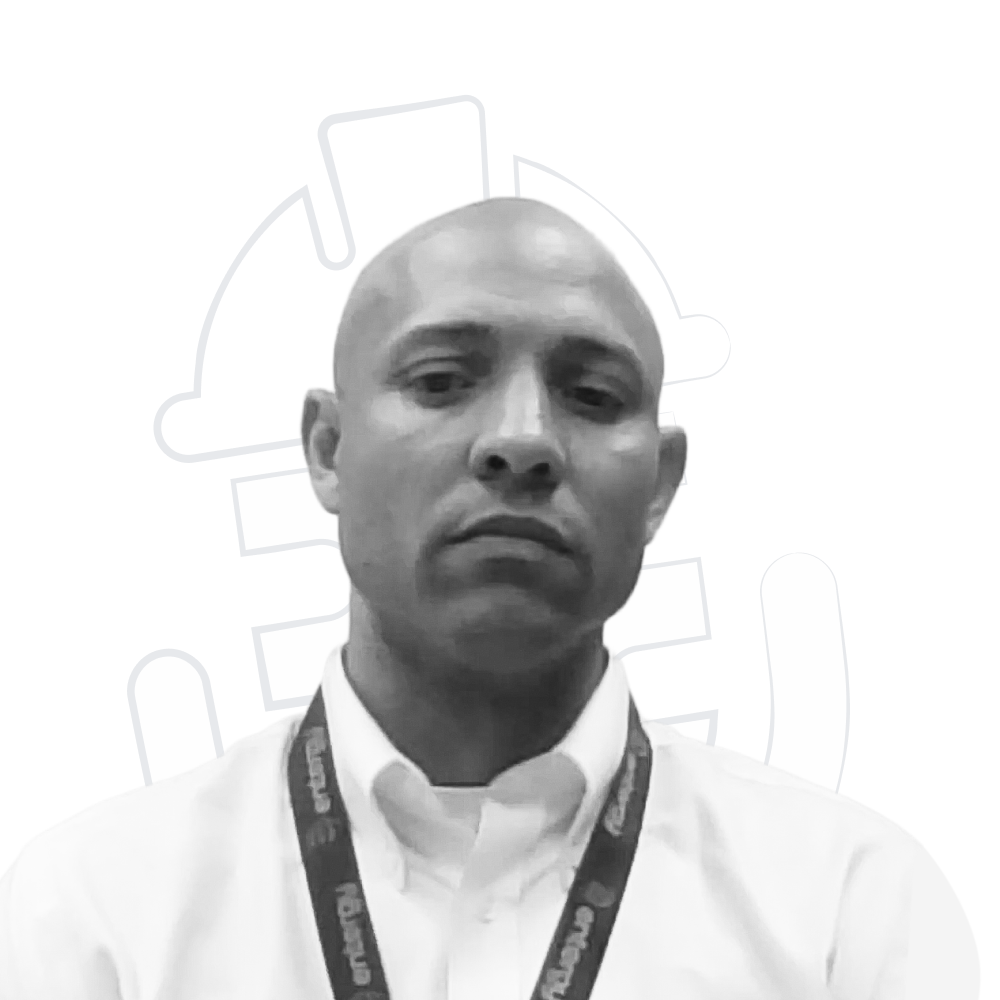
Hari Vasudevan (00:02.046) Okay, take one. Here we go. Welcome to a new episode of From Boots to Boardroom. Not every leader sits in a corner office. From Boots to Boardroom shares the journeys of those who power America, from the job site to the boardroom, leading with grit, tenacity, empathy, and vision. Hope. you will find the show to be educational, entertaining, eye-opening, and entrepreneurial. Today's show is sponsored by Cairo AI, digitize work and maximize profits. For more information, visit cairo.ai. Today we have a super special guest on the show here, Drew Thompson. Drew Thompson (00:54.896) you Hari Vasudevan (00:58.71) I met Drew at the Edison Electric Institute meeting in Phoenix and quickly formed a relationship and here we are, he's on the show. Drew is a manager of distribution reliability for the New Orleans metro region with Entergy. He holds a BS in electrical engineering from Southern University A College, MBA from the University of Phoenix. Drew has worked at Georgia Power for three years and with Entergy for 17 years. Drew is a very active member in his community and external groups. He's a member of Entergy New Orleans plus one chair, trade, craft and shift employee resource group. Entergy New Orleans employee experience vice president, American Association of Blacks and Energy vice president. Edison Electric Institute's second vice chair, Edison Electric Institute's emerging and diverse leadership member, McKinsey & Company inclusive leadership member. Drew loves God, family, work, gym, traveling, saving money, and setting goals. I I truly have a lot of questions for Drew amongst all these things and how we can help the next generation. Drew Thompson (02:16.926) Thank Hari Vasudevan (02:26.286) know, generation of entrepreneurs, right? Because saving money is an important aspect of it. So we'll get to all those things as we get through the different questions. Drew Thompson, welcome to the show. Drew Thompson (02:40.024) thank you. Thank you. I feel bad, man. You've been talking for a few minutes, you know. It's kind of like I need to narrow it down. But thank you for the opportunity. Very humbled to be talking to you and others. So thank you again. Hari Vasudevan (02:54.414) Awesome, awesome. Thank you so much again. So let's get right to the show. Give me your origin story. How did you get started? Give us your family background and your early childhood and how you got into the industry. Drew Thompson (03:13.948) Yeah, appreciate that. I'll take it way back. So my mom is from a small town in Mississippi, Cartala Town, to kind of give you an idea. It's off of Highway 98. And if you go, I think, might get Hattiesburg. If you go west, you might get Biloxi, if I'm not mistaken. So it's not a big city. My mom was born in 1949. My grandfather wanted the big life. He was married to my grandmother on my mom's side. And unfortunately, when my mom was, I think, nine or 11, my grandmother passed away. So at that time, my grandfather wanted to do something different, so he moved to Los Angeles. On my dad's side, my dad was born and raised in Los Angeles. So he was born in 1948. So with that, my parents met in high school in ninth grade. And I'm pretty sure my dad, you know, Was admiring my mom and they became high school sweethearts. So you got freshman year Southmore, right? Junior and senior and at that time in in life if someone was expecting You had to pretty much get married. So my grandfather on my mom's side asked my dad. are your expectations? And obviously my dad said to marry your daughter. So from that they graduated from high school and in 1968 my first brother was born. So my mom name is Johnny and my dad name is Damaris. So my first sibling was born Damaris Jr. in 1968. In 1969 the second one was born, that was Darryl. So we have two right now. And then in 1971 my sister Rochelle was born. And then in 1974, my brother Derek was born. So we have four of them that was born in the California area, like Long Beach, Compton. So that's kind of that background. And then in, I believe, a little bit after 74, they moved to New Orleans. Hari Vasudevan (05:16.042) OK, so now now starts the story of New Orleans, I guess, right? Drew Thompson (05:19.87) Yes, yes. So when they came over in 74, that's when my brother, DeWine was born in 1978. I was born in 82 and then my little brother Deshawn was born in 87. So I think you probably heard a lot of D. So all the boys in the family have a D and then my sister was the only one that had something different. So her name is Rochelle. So my mom was able to name all the boys and my dad, so I got to name one of them. renamed my system. Hari Vasudevan (05:51.31) Yeah, no, interesting. I'm an 81 baby or 82 babies who were not too far apart. And, you know, it seems like there's a lot of D babies there. So I'm sure your your mom loves Drew Greece, right? So everybody in New Orleans loves Drew Greece. So, OK, so that makes it seven kids. Right. Did I did I do the math right? Drew Thompson (06:01.758) you Drew Thompson (06:13.554) Yes, yes. So I'm at the very end. Yep. So six of seven. So I have a lot of examples. I have a lot of role models, good and bad, to go ask questions about. Hari Vasudevan (06:25.454) Okay, you kind of figured out what to do and what not to do, So, all right, so seven kids and your parents still around? Drew Thompson (06:36.734) Yes, yes. So they moved to Atlanta in the, a little bit after COVID. I want to say sometime in late 2020 or maybe in 21, they made that move to Atlanta. So still living. They just shared a birthday. So my dad turned 78 on the 19th of this month and my mom turned 77 on the 21st. we all, well, my birthday is coming up pretty soon. I'm on Sunday. So I love the fact that I share August with my parents. Hari Vasudevan (07:06.638) Yeah, advanced birthday wishes for you and listen that that makes it a pretty healthy long married life 55 years right and it's pretty pretty pretty amazing my grandparents were married for I believe 70 years so I come from a large family myself with plenty of cousins my parents only had two two kids right but we had plenty of cousins that we grew up with so it's phenomenal so Drew Thompson (07:06.719) you Hari Vasudevan (07:33.698) So let's, I'm sure you had that stable family life played a really big role in who you are today, right? So let's kind of get into your career, if you will, right? So I know you worked a little bit for Georgia Power and then Entergy, maybe you interned at Entergy before you worked for Georgia Power. In a quick nutshell, can you give us an idea as to the different aspects that you've covered over the last 20 years working in the utility space? Drew Thompson (08:02.214) Yeah, so you kind of summarized it right. I was blessed to do an internship and what I saw listening and kind of being observing leaders had different backgrounds. Some stayed technical, some did different experiences. But one thing I saw was a lot of engineers that got to leadership in various positions and most of them were not still doing technical roles. They did something different. And I used to always ask, why did you go to school for four and five years, but you're not the VP of engineering. You're over cusp I'm a server, so you're over some other business units. So I saw that early in my career. So when I interned, I quote unquote, I bounced around. I probably had six or seven different opportunities. So when I got to enter as a full time engineer, I started in what they call field metering, where pretty much you got PTs and CTs were based on the type of customer you have to make sure you have the right current or voltage to serve that customer. So I did that for about a year. Wasn't really my comfort zone, but had a chance to enjoy it. went to distribution, did some interesting things, meeting customers, how do you take the low data sheet and make sure that that investment comes to life. From that, I did move to Atlanta. You talked about that in the background. really different utilities, different experiences. I really enjoyed seeing InterG's philosophy along with Southern Company. I think there it made me grow as far as the workforce was very competitive. For example, Hari Vasudevan (09:29.806) Atlanta will make anyone grow. Drew Thompson (09:33.054) Yeah, like for example, I'm in the room and my peer has a PhD in electrical engineering from Georgia Tech and I just have a bachelor's degree and that was just the norm. Everybody was very career driven and I really enjoyed that because it put a spark in me and I did transmission line design. So really enjoyed seeing the state grow from a transmission standpoint and I missed home. So this time frame is from 2005 up to about 2010. So came back home in 2010 and then I went to the grids. maintenance on the transmission system. I enjoyed that for four years with the customer service. We're now nine years removed from college. I went from being technical to now business. I'm wearing suits. I'm dealing with politicians. I'm dealing with managed accounts like hospitals and school systems. So I learned to kind of cut my teeth into transitioning from technical to more people facing. Really enjoyed that. We had an opportunity Hari Vasudevan (10:29.066) Honestly, Drew, not many people survived the transition, right? You said it early on that why is it people go to college for four years in engineering and then get into management. Honestly, I did not understand that aspect even when I came out of engineering. Only did I when I went to my first job, did I realize that, okay, you know what? All these managers actually have a technical background and some of them are really good at the EQ aspect of being Drew Thompson (10:33.051) Yeah. Hari Vasudevan (10:58.84) manager, right? Because the IQ aspect is something else and the EQ aspect is something else. And many, many engineering managers or managers who had an engineering qualification did struggle about the EQ aspect of it, right? So before you continue your career, do you have a different experience? Did you have a different experience from that standpoint of dealing with managers from an engineering background? Drew Thompson (11:25.252) Yeah, but I think by me being an engineer, could relate, right? So technical language wasn't foreign to me. However, I know some people, they can't interpret what you're trying to say. You can have the best information, but how do you translate it? How do you make it digestible? So for me, I always gravitated to leaders that can change hats, right? They can be technical with me and you and talk about something to the cycle. And then they can transition and talk about a financial statement or people in the community. So I gravitated more that way. for me, regardless to the leader, I tried to take pros and cons so that as I evolved, I took those skill sets with me. So I've been able to adjust from both, but for me, I think it's best to be relatable. And I think you can have an audience that understands you regardless to what topic you're talking about. Hari Vasudevan (12:11.875) Got it. Hari Vasudevan (12:16.558) Got it, got it. Okay, so you're in 2010. So did you bring good luck to the Saints and did they win the Super Bowl after you come back to New Orleans or what is the story there? Drew Thompson (12:25.373) You know what's funny you said that when I was in Atlanta, that's the year the Sanks won the Super Bowl, right? Because I was there, like I said, from 2007, 2010. So obviously they had the 2009 season, but they played the Super Bowl in 2010. I went to a watch party and it probably had three people in there that was excited. And I was one of the three. So it wasn't a fun experience because they didn't want us to win, right? It's the Dirty Birds. They don't want the the almighty Sanks to win. They did not want it. Hari Vasudevan (12:52.75) I know who that nation man who that nation I was in New Orleans when they when the Saints won the Super Bowl and guess where I was I was in a very different setting than where you are in I was in Bourbon Street I was in New Orleans after Katrina when lot of rebuilds was happening I was there kind of helping the city recover I mean also game Drew Thompson (13:08.86) Wow. Wow. Hari Vasudevan (13:22.036) young guys like me plenty of opportunities to take up significant responsibilities, right, which otherwise might not have been available. And so I grabbed it with both hands. I moved from Houston to New Orleans in 2009. So the exact season when Saints had an unbelievable journey, I was there. And I remember after the NFC Championship game, driving the streets of New Orleans when Brett Favre threw that through that across the body, interception, you know, everybody was celebrating. Of course, I was in Bourbon Street. had a breakfast with my buddies at I believe Camille's Grill. And then we headed out to watch the Super Bowl. And thankfully, Sean Payton and the brave offside kick to kick out the second half and New Orleans did win the Super Bowl. So, that's good. So enough of the New Orleans Saints. We'll get back to that later on, right? Drew Thompson (13:52.978) it. Drew Thompson (14:03.484) Yep. Yep. Drew Thompson (14:18.75) you Hari Vasudevan (14:20.878) Let's keep flowing along. So you're in 2010. You come back to New Orleans. Keep continuing your career journey. Drew Thompson (14:25.947) Yeah! So I think what was a good transition, I came back, as I say, now I'm in transmission, I'm on the maintenance side. So I had a chance to fly in helicopters and get on air boats out in the marsh. So really the majority of my job was doing inspections and based on that data, what can we do with it? So it wasn't a big financial commitment knowing that my projects probably range from 20,000 up to maybe 2 million, but I really got a chance to see a bigger of the company. I was used to maybe a small district or a small network or I'm not sure what each company has but a very small local office. When you do transmission at Entergy you cover a few regions so maybe I went from having let's say 20,000, 50,000 customers if I had a region or a service center to now I'm looking at maybe 200, 300, 400,000 customers just based on where you are. Plus now when transmission goes out you impact in cities. you in the news, you got more political pressure, you got more internal leadership, asking some tough questions. What are we doing? What's the mitigation strategy? Where are you? So it made my critical thinking skills grow because now it's not just a small event. It's magnified. So again, what do we have to do? And usually it's a lot of cross pollination to get the answer, which is going to ask the question. Hari Vasudevan (15:50.511) Yes, I was going to jump in here a little bit because I was going to ask you about reliability, resiliency and repair affordability. But before that, talking about the experience you just shared about your responsibility and the big news story, right? The 2012 Super Bowl, if my memory serves me right, right, was in New Orleans and you had the Harbubble Ravens versus Niners. There was this power outage in the Super Bowl. Drew Thompson (16:08.883) Yep. Hari Vasudevan (16:20.014) Right? How was that received by Entergy New Orleans? You're probably out there. You're probably feeling the heat. If you can't just give the listeners a little bit of the how that was handled, the pressure points that the utilities faces in that situation. Of course, since then you you're hosting more Superballs and things like that. Right. How do you lessons learned? And if you can go into that a little bit, that'll be great. Drew Thompson (16:20.22) Yes. Drew Thompson (16:41.756) Yeah. Drew Thompson (16:47.42) Yes, I'll talk about my point of view. So I was in transmission and when I saw what happened, I was shocked, obviously, right? You go into an issue, shocked. We have various ways to be notified of power outages. I checked my phone because I had a notification process and when nothing went off. So at that point I knew it wasn't a transmission event. It had to be localized, meaning distribution. So at the time I called my operations coordinator. We kind of talked about it. So we knew it wasn't on transmission side. So obviously it was a local issue. So that was kind like my point of view. However, I would say from the city, from obviously the NFL, from many parties, right? It wasn't the best event, right? That's one of the biggest platforms and to have that event happen, it wasn't the best. So in short, what have we done since then? A very robust mitigation strategy. What happened? What are we doing? How can we mitigate this? Make sure it not happen again. of New Orleans at the time actually got involved and he said let's do a reverse engineering process. So we got a specialist to come in doing a forensic analysis and from what I remembered there was a relay that was in a particular switch gear that we thought was bypassed but it actually wasn't. So just something that was in the system that really shouldn't have been was the driver to what happened. So obviously we had the outage and at that time super dome had not the LED efficient lights that you see today, it was an older technology. So when the bulb went out, it had to cool off and then repower itself. So that took maybe 27 minutes or something for it to go through its process and the rest was... Hari Vasudevan (18:33.566) Yeah and then Ravens lost the momentum Niners almost came back it was game changing. It's interesting okay. Drew Thompson (18:38.535) Yeah. Yeah, so again, that was kind of the process. But at the time we did look at again, historical information. We looked at how is the Superdome fed? How can we get some more redundancy in place? And then obviously you mentioned we hosted more. So we've hosted one since which was this year in 2025. And even before that event, we had a year long Tiger team set up. We had different work groups from IT to operations to legal and on a frequent cadence. They got together. What are you doing? What's going on? of list of things to do, obviously executed very well and safely and we had such a good event. I think we might get the next Super Bowl and then maybe the next cycle that we can actually run for. So good for turnout. Hari Vasudevan (19:22.574) Yeah, New Orleans is always a great place to host a Super Bowl weather and dome and party atmosphere and things like that. I'm sure you are under a lot of pressure when the most recent Super Bowl was hosted, The Phillies and Chiefs and congrats on a successful Super Bowl. And thanks for sharing that story to the listeners who may actually not even remember, but I just wanted to. Drew Thompson (19:39.112) Yes. Hari Vasudevan (19:51.075) give an inside scoop as to how utility handles these Super Bowls, right? A little tidbit here, immediately after that is when I actually started my company, ThinkPow, first company, ThinkPow Solutions, right? And one of the first projects we received was from Centerpoint, and they hosted, if you remember, the 2016 Super Bowl, the Patriots, Falcons, first overtime Super Bowl, right? Drew Thompson (20:14.001) Okay. Hari Vasudevan (20:19.064) when the Patriots came back from 2073. And that was an interesting thing because one of the first jobs we had was to, hey, map out the system and identify quote unquote bombs in the system so that we don't have that issue. And I'm sure every utility learned a lot of lessons from that. We even had some discussions on that at the Edison Electric Institute and things like that. that's great. So you're in 2012 around that timeframe. Please keep going ahead with your career, if you will. Drew Thompson (20:33.713) yeah. Drew Thompson (20:45.31) Yeah, so when you look at 2012, I was in that role from 2010 to about 2014, but really, again, enjoyed the grid. As I said, it helped me to grow at a different level because now I'm more engaged with our middle, senior and executives just because of the impact that you see. after that, what was a great opportunity for me was to go into as I transitioned, as I say, to customer service. So now how you see me today, I'm not usually wearing my blue jeans or my FR clothing and that's when you get into again it's more about relationship driven more about contracts and luckily I had a technical background so when I talked to customers I was able to make it relatable so any topic we can can dumb it down we can understand the risks the pros the cons and how can we help each other because I think a win-win-win is great meaning win for energy one for the customer and just an overall win experience for everybody so that's That's usually what I try to do, but really, again, enjoy that aspect of it. And that's when I got into community service because being in customer service, right, there's a big emphasis on community engagement, giving back and trying to make sure that you're on boards and you're not just talking the talk, but walking the walk and having those grassroots kind of organizations, you'd be embedded with them in neighborhood association. So I think from that timeframe, what you see today is how that passion grew. did that had a great opportunity to get into power generation, something different, a new business unit. And even today we have one power plant that has an engine technology, right? Reciprocating internal combustion engine where in five minutes you get full load. So at this plant you get, I believe, Hari Vasudevan (22:33.068) Wow, wow, seriously. That's, you know, for the average Joe listening out there, can you contextualize that? I mean, what does it mean? How long does it... Drew Thompson (22:41.852) So. So this, I love this example. When you look at a traditional plant, I'm going to use grits. Everybody in the South, oatmeal or grits, right? So when you think about putting water on a stove, putting it on the pot, right? And it boiling 15, 20 minutes, getting it up to the temperature, putting your grits in, waiting. This can be, let's say 40 minutes before you can even eat your food. When you think about a conventional plant, right? You got to take this water, you have to boil it, you have a turbine, you have to wait for certain pressure to build up and it's a process right when you're trying to do that. So imagine it takes 18 hours to go from ball in the water to output. It's a lot going on. It's a lot of labor, a lot of costs with the engine technology right in five minutes. So think about instant grits where you put so much water. It's already predetermined. You put it in the microwave 30 seconds later, you got a hot meal. So think about a conventional way to make grits on the stove. And then when you put it in the microwave. So why? say that is because instead of having 18 hours to get ready to produce a megawatt at this particular plant you can go full load which I believe at that time was 129 megawatts in five minutes. Hari Vasudevan (23:55.947) That's honestly unbelievable. And for the average listener out there who may not understand what 129 megawatts is, what can that 129 megawatts be used to power? How many homes? How many businesses? Drew Thompson (24:13.426) Yeah, I'm not sure on the conversion rate to be honest with you, but I will say we do have a solar farm and it's a one megawatt and I think that powers about 62 homes. So imagine when you multiply that 128 megawatts. So that's a quick math on what does that look like? But again, that's the technology and I think it's a great tool to have in your arsenal when you do need that. Hari Vasudevan (24:38.082) It's almost 8,000 homes, right? So super helpful when it comes to power outages and getting people back on and things like that. Am I right, Drew, on that? Drew Thompson (24:52.124) Yeah, again, it's in this plant was a peaking plant. So it was to come online to support the system during summer days like today, right? When you really have that heavy demand on your system and we're part of MISO. So when MISO calls upon us or any other regional transmission operator, right? Hey, we need your load. Let's bring it up to help out the system. It's great to have that two and five minutes come on and relieve the pressure. Hari Vasudevan (25:14.412) Yeah, okay. So you're there on the generation side, you did all these cool things and then you got into reliability. Is that a fair way to put it? Your next stop. Drew Thompson (25:22.054) Yeah, so after that I had a chance to move to Arkansas and I got a chance to run my own network or local office where I had about 15 employees. I had four sub offices. Maybe it took about four hours to travel throughout the whole territory and really had a chance to run my own network. Wasn't there long, but I had a chance to experience a few ice storms because in Arkansas right there real big on one of those events occur and it just really helped me to understand how do you effectively run a network. Plus, I had some union in my area. So how do you navigate the bargaining agreements and all the rules and stipulations and at the end of the day, you know, get the work done. So I did that for about seven months and then I stepped into my role today in reliability. Hari Vasudevan (26:07.704) Got it, got it. So were you based out of Little Rock in Arkansas or? Drew Thompson (26:12.26) No, if you go southeast in the Delta, there's an area called Farsight, Crossett, Monticello, and Warren. So I worked out of the Warren local office. So if you know football in Arkansas, I think maybe in the 80s or 90s, they won a few state championships. So they're called the Warren Lumberjacks. A pretty good system for what I understand. Hari Vasudevan (26:34.062) Interesting, interesting. All right. So now let's get into what your real sweet spot is, what you love doing right now, which is reliability. I know you really love that space. Explain to the audience. the basic reliability metrics, SADE, SAFE, and many utilities are now starting to use CHEMI, which is widely used outside the US, right? And then the interconnection, if you will, between reliability, resiliency, and affordability. Maybe we'll start off with quick SADE, SAFE, CHEMI examples for our listeners here. Drew Thompson (27:16.368) Yeah, so SAFE in short is the frequency. So SAFE, there's an F in there, right? So to dumb it down or to make it very relatable, it's the frequency. How many times customers are experiencing outages? When you look at SAFE-D, D is for duration. So all utilities, that's two major categories that we look at to measure ourselves. How are we doing year to date, year over year, and how are we doing compared to our peers? So again, that's a good indicator. we use. very versed in it as my peers. And again, most companies, I know for EntryG, we've been kind of averaging maybe in between one to two. So roughly customers are averaging one or two outages a year when you look at the whole customer base. Hari Vasudevan (28:02.53) That is safety, right? Yes. Drew Thompson (28:03.74) That's safe feed. Thank you. When you look at CD for Entogy New Orleans, we're consistently about two hours or 120 minutes. So roughly when you do have an outage, that's the average. So about two hours and you're going between one and two a year. So that's kind of my metric that I'm used to seeing for New Orleans. Hari Vasudevan (28:21.742) Got it. Got it. And KEMI is nothing, but at the end of the day, it's the number of same customer experiencing multiple outages. And most utilities try to stay less than four. KEMI four is the metric, right? As you may know, right? And a number of customers experience are repeating outages and, for the listeners here so that they, don't, the same customer doesn't experience multiple outages. That's the idea. Drew Thompson (28:46.92) Yeah. And I don't think we've gotten to that one yet, but like we use momentaries. That's another one we look at. So momentary for us is like any outage that's under five minutes. So we monitor that. We have something called semi. Customer is experiencing multiple interruptions. So we look at that and we try to get all the way down to a semi one. But right now we're usually in the semi eight or 10, meaning you experience eight or 10 outages. So we're continuing to add more of those industry standards to our portfolio so we can narrow it those and try to reduce those pain points for our customers. Hari Vasudevan (29:19.534) I think for the listeners here, you and I are saying the same thing. Semi, I'm pronouncing the C as the K. Honestly, semi one or Kemi one is really unbelievable. Gold standard is Kemi four, right? Which is customers experiencing, I mean, you don't want the same customer experiencing more than four outages, right? Drew Thompson (29:27.418) Okay, gotcha. You're fine. I was like, you taught me a new one. What's that one? Drew Thompson (29:40.936) Okay. Drew Thompson (29:46.707) Right. Hari Vasudevan (29:47.567) If you're down to Kemi 1, it's unbelievably awesome. That's great. Let's get to that. Enter New Orleans, you're saying say D value is one to two hours a year. Is that right? Did I get the number right? Drew Thompson (29:51.965) Yeah. Drew Thompson (30:07.166) It's like we usually like 1.3, 1.2. So that's why I say between 1 and 2 just to round the numbers. That's usually what we're averaging. We're going to continue to get that reduced. Hari Vasudevan (30:13.742) Yes, perfectly fine. Perfectly fine. And safe fee, you said around the same, one to two, right? About two, right? You said about two. So safe fee again for the listeners is about two outages a year. Say D is about 1.2, 1.3. Let's call it 1 to 2 hours a year. The question really is Drew Thompson (30:22.236) Yeah. Hari Vasudevan (30:39.481) the utilities we have poured as an industry, we have poured $1.3 trillion into the grid from 2014. $178 billion just last year alone, 2024, Unbelievably, another trillion dollars is planned for investment through 2029. And it's probably going to be more because of the pressure coming in for the AI surge in data and things like that. I wouldn't be surprised if that trillion dollars through 2029 is actually a lot more, right? Unless chip technology just drastically changes power consumption, right? The question is, reliability is just a barely nudge, right? Yes, we have made improvements, right? But as an industry, we are still out there. Yes, lot of it has to do with storm outages are also connected to these numbers. How can we as an industry move the industry forward in terms of reliability? I'll go on mute and give you the floor here. Drew Thompson (31:48.87) Yeah, I mean, what I pretty much heard is how can... each utility and then collectively, how can we move the needle? And I think it's not a certain blueprint. I can't do what let's say, Florida Power and Light or PG &E in California. Everybody has their sweet spot that you have to find. But I think it's different approaches, right? Some of it's historical. How have we done so we can find those trends? I think some of it is best practices. I've used two utilities. What do they What successes have they found? Can we duplicate it? Can we make it scalable? I think some of it is doing pilots, right? To understand does this work for what we have? I think it's your regulator because every state has a different regulating body. What do they have the appetite for? I think it's funding, right? Because every company has a different setup. Some utilities have an unregulated side, some don't. So I think it's understanding what works for you. with what is the direction of your board of directors, right? What is that company doing? So for us, for example, we have path to premiere. That's where we're going and we're trying to be premier in every aspect. If you look at another utility, maybe there is growth. Maybe that's what they're trying to do. Maybe they want to be the AI, the big boy in AI for all utilities. So again, what is the company going and how do you support that? EEI, right? That's another great institution where all of us are together. We're trying to have the same agenda, the same policy. So when we do talk to local, state and federal agencies, we have the same voice to make sure that we are on the train with them going in the same direction. So hopefully that kind of makes sense. But I think you have to see what works for you. And then from that, how do you continue to make those those those gains, whatever that may be? Because sometimes a little gain is just as important as no gain. So how do you find the wins and continue to build a Hari Vasudevan (33:38.606) you Hari Vasudevan (33:49.336) Yeah. Drew Thompson (33:51.37) that and get partnership across the board. Hari Vasudevan (33:53.679) No, absolutely. I mean, I usually follow what is called as the 80-20 rule, Pareto principle, which is, you know, you can get significant movement of the needle 80 % with the low hanging 20 % processes. And to move from 1.2 hours of SADE and one to two in safety down to let's say 1.1 is incredibly hard. The question that every utility will ask is in your case do I spend a billion dollars to move the needle down to 1.1 or Drew Thompson (34:23.197) Yes. Hari Vasudevan (34:35.214) Do I spend that billion dollars to make my system more resilient and hence more affordable? So at the end of the day, it's a very symbiotic relationship between reliability, resiliency and affordability. You can't spend a lot of money to bring down SADY, but just a little bit, because that'll take the affordability out of the window, because you also have to keep affordable power in reach. Drew Thompson (34:42.44) Yeah. Hari Vasudevan (35:04.962) for the masses, right? Is that a reasonable way to put it? Drew Thompson (35:06.398) Yeah. Yeah, and I'm happy you said that. Let's break down reliability, resiliency, and affordability. to me, the way look at reliability is keeping the lights on each and every day. That's looking at your current infrastructure, where's your low hanging fruit? You start with that, and then you go more into strategic plans. Some of them are year over year. Some of them are one time initiative. But to me, that's reliability, keeping the lights on each and every day. Now, resiliency is how fast you recover from a major event, right? So you have let's say 150 mile per hour winds and you have 20,000 poles on your system. After the storm, maybe 10 went down. If you didn't have resiliency, maybe you'll have a larger impact. So it's making sure that when the storm does pass, right, you maybe have a wire on the ground, but not poles. So to me, one is day to day and one is making sure that you can combat mother nature and then affordability, right? I think it goes back to what I mentioned a little while ago. Every utility is a little different. I know what us, example, we are looking at how can we look at current processes and find some efficiencies from it. And then you take that gain and you redistribute it to the company. So whatever business unit or group has a bigger need that can move the needle, the 80-20, let's put those resources there so we can move the needle. So I think that's another way to look at it. I think a lot of utilities are also looking at DC for Department of Energy, different grant opportunities. That way, If we do have a $100 million axe and we get let's say 20 million from DC, right now the customers are eating 80 million and not 100. So how do you find those wins, those partnerships to make sure that you are reducing that burden on customers? So that's just a few ideas on how you try to manage the costs. You start in-house to find ways to keep the cost the same, but gain efficiency so you have less investments that's on and more capital driven. Hari Vasudevan (36:52.63) Yeah. Hari Vasudevan (37:03.874) Yeah, no, fantastic, fantastic explanation for the average job there, which is what is reliability keeping the lights on resiliency? How quickly does the power lights come on after a storm and affordability is how can you keep the power affordable for the masses through partnerships and grants and right investments and things like that. So it's really a phenomenal explanation there, right? Viability is directly, in many ways, connected with veg management. Not always, but many times you have these Drew Thompson (37:43.496) Yeah. Hari Vasudevan (37:46.135) vegetation growing, falls on your distribution lines, and then you have an outage, storm, same thing, know, fuse goes off and things like that. So, know, I'm assuming in your role you also work closely with veg management teams and ensure that the reliability is good? Drew Thompson (38:06.416) Yes, and I appreciate you saying that because Entergy has five operating companies. You have Louisiana, Arkansas, Texas, Mississippi, and then Louisiana or New Orleans, right? So we have five. The reason why I say that is my vegetation concerns will be different from a rural Arkansas, for example, right? I worked out there. So most of my lines, I couldn't see them because I had pine trees covering them, right? So usually there's a danger tree or something that's going to take out the feed or the power line. Hari Vasudevan (38:32.943) in Arkansas. Yes. Drew Thompson (38:33.918) In Arkansas. So in my area, I'm more dense with a heavy population. New Orleans, I'm assuming might have 300 to 500,000 customers, right? Just in a parish or county. So I don't have the vegetation issues that maybe my neighboring operating company has. We have a 18 month trim cycle. So based on all of our power lines in New Orleans, we got about 230, a little bit more than that. of that 153 overhead. So every 18 months we have a strategy in place where those tree lines are cut back. One of the things unique to us is we look at the primary, the top of the pole, and we have a four-foot radius where we can cut back based on some rules and regulations by the City of New Orleans. When you get to certain parts of the city it's very historical. New Orleans is over 300 years old so there are some rules in place on what you can and cannot do. We have a beautiful oak tree canopy throughout certain parts of the city. and it's not allowed to cut back more than you have to. So that's one of the major constraints we have. We continue to partner with the city. Parks and Parkways is the governing body and they're very stern, which we understand and we continue to work with them. But I think we have a great program with that. If there's an off cycle issue where we're starting to see an uptick instead of waiting 18 months, we can ask for support. They go out and inspect it and cut back what they can. So for us, I would say if I look at outages, usually vegetation might be five or six depending on a year, but it's not the main driver because I think we do a great job of being proactive and reacting quickly. However, my peers might need it more because of just the territory at the end. So we work very closely with vegetation. Hari Vasudevan (40:22.058) No, it's really good by the way. Five to six just driven by vegetation management for utility is pretty good stuff actually. Awesome, awesome. No, that's good. So, you know, that's a great segue into the next two questions that I have for you. Data-Center Growth. I don't know how much of data center growth you guys are seeing in Entogy, but obviously Dominion is a great example where there's significant data center growth in Virginia and whatnot. What do you think is the impact of that on the grid? Because you see that literally every day there's a news on Washington Post, Wall Street Journal, New York Times, or any major news organization. The data center growth is impacting the grid and affordability as well for the customer, right? You just saw recent news as to how in the PJM territory, average consumer saw their rates go up by 20 to 27 bucks a month, right? Because of the data centers coming live for different tech companies out there. What do you think is the impact on the grid the data center is going to have? And I'd love to hear your perspective on that. Drew Thompson (41:19.902) Yeah. Drew Thompson (41:43.184) Yeah, thank you for mentioning that because Part of one of the organizations I'm in through EEI is I went through an emerging leader program where I had a chance to go to Dominion Energy and they call it data center alley or something like that when you get closer to DC. And I mean, when we got, we went to go tour a data center and the closer we got to that area, it seems like every building was a data center. I was so amazed to see so many substations, so many transmission lines in a condensed area. They maybe had 50 in a little small radius. So I understand what you're saying. Yes. Yes. So I understand the PJM, what's that? New Jersey and Maryland, right? So that's that region. Hari Vasudevan (42:16.098) Wow. That is the dominion area. Hari Vasudevan (42:25.154) Yes, BGM is the area where you have that I just described the 20 to 27 bucks a month per consumer per rate payer rates are going up, which is a lot, the way, right? Every month. Drew Thompson (42:31.964) Yes. Yes. Drew Thompson (42:38.928) Yeah, and I'll say if and I know you do if you're doing your reading, right, because I read a lot about just what's going on in industry, right? There's a lot of pushback between. FERC right now getting them to look at it again. You know some states or governors are looking at pulling out so there's a lot of pushback on that. So I still have to say for Entergy what's great is its public knowledge. In Louisiana, Metta, we did secure a plant in the Richland Parish so I think right now it should be up and running by maybe 2029. We have to build two new power plants. We have to I think build eight substations. We have to to upgrade 500 kV, 230 kV for one customer, right? Right, so that's a lot of risk. It's a lot of investment for one customer, right? So this is metal. Hari Vasudevan (43:24.728) Who's paying for it? Hari Vasudevan (43:31.246) And who's paying for it? I mean, that is actually the fundamental thing, right? Because you said about Georgia, Georgia, for example, the regulators have said that, hey, data centers, you guys have to pay for it. And AEP is pushing back heavily in Ohio. And the reason is exactly what you mentioned, a lot of risk involved for one, two, or three customers. And what if those data centers don't come online? you build all these, you make all these investments, customers have to foot the bill, right? Drew Thompson (44:05.916) Yeah, so what I can tell you is what we're doing is set up in such a way when we do come to the table, right? Because it's all about partnership. We are making sure that those kind of customers are. helping out with the burden. You know, I don't know the financials, but let's just say the one I talked about meta, maybe it's a 10 billion or 15 billion dollar investment. And some of it the customer will bear to make sure that other customers are not caught with this, you said, $27 increase, right? So they're paying their share to make sure that the customer rates remain where they are today. So that's a big improvement to make sure that, hey, you got to have some skin in the game. They're also supporting us with some of our volunteer and community engagement efforts where maybe if we give let's say two million to a certain partner they'll match that. So we're doing some other things to make sure that not only are they there but they're making an impact while they're there. So again they're they're the cost to make sure that rates remain flat in our community so that's a great one for us. Hari Vasudevan (45:05.358) Wow. Hari Vasudevan (45:12.394) that's a phenomenal approach, honestly, right? Not only do you get the data center to get built there, you're also having them take on the risk or share the risk. And you're also helping your local communities by having them become active members of the community, if you will, right? That's phenomenal out there. So. Drew Thompson (45:33.362) Yeah. Yeah. Hari Vasudevan (45:39.823) Before I go into different aspects of it, since we're talking about AI, I would love to know your perspective. We talked about AI and its impact on the utility industry from a cost standpoint and build out standpoint. But what do you think is going to be AI's impact on the basic foundational? Drew Thompson (45:51.685) you Hari Vasudevan (46:05.984) aspects of the business, right? I when I say that asset inspection is one piece which comes under reliability, wedge management obviously is another one. You briefly touched upon resiliency after a storm response. Have you guys thought about it? mean, even if Entergy has not thought about it from a broad organization perspective, what are your thoughts around it because you're involved in so many different industry trade organizations? Drew Thompson (46:30.718) you Yeah, and that's a good segue, right? Entergy recently stood up a department just for AI. So we restructured, reorganized. I think we have a chief AI officer now, Andy Quick or Andrew Quick, and he's standing up his team to support that effort. So I do know we're in the early stages and they are touching different groups to, you know, I guess understand their pain points and how can we help you. But overall, I think it's a blessing. It's a great way. to find inefficiencies. Right, let's say doing your time. Like right now if I was to do my time and to do my employees time, know, maybe it might take 20 minutes. But if we had AI just in our payroll system, right, maybe I can go from 20 minutes to three minutes because I clicked a button and it went through its process and it solved it and everything's validated, checked, times approved. And then we do machine learning. So now it went from 20 minutes to now three, maybe now it's two, right? So how do you find ways to free up me to do effective work and strategic work opposed to stuff that's repeated repetitive on tasks. So that's just one example. I think too, we talked about in the beginning, reliability kind of being from one to two on a frequency and then one to two hours on a duration. How do we use AI and reliability to be data driven? Not what I think or this is a good project. How do we get more bang for our buck? Because we talked about the affordability. So if we're working the right projects, we will reduce the frequency and duration and the cost burden will be less on the customers because we're making better investments and making the right decision at the right time. I'm not as familiar with all the different aspects, but I know bit by bit we are continuing to look at organizations and asking those tough questions and trying to figure out how do we implement it. I will say too, it's going to make our workforce evolve, right? Because if you look Drew Thompson (48:31.552) that our life in general, things will evolve and people get new skill sets. So our workforce might look a little different, but right now we're continuing to look at how do we grow our skill set. If you can do one thing great today with AI, you can do that plus two or three other things. So we're trying to reimagine our workforce, which means we all have to evolve so that we can move in the right direction. So hopefully I answered your question, but it's gonna make us a better company. Hari Vasudevan (48:55.583) It's a no no honestly it's really good answer and you brought a smile to my face. of what Cairo AI does is the timesheet automation that you just talked about which is you know how you actually are able to enable timesheets expenses and translate that into easier invoices, easier payroll and things like that. It's interesting that you had that thought process there, right? What about LIDAR and AI in veg management, right? Because you know, Centerpoint for example, I mean this is public information, bunch of articles that came out on TND World a couple of weeks back, couple of days back and things like that, where they are able to predict with 85 % accuracy, right? This is my good friend, Eric Easton, who's the VP of Centerpoint leading this charge here. They're able to predict with an 85 % accuracy which fuse is likely to fail during a storm event, right? Based on LiDAR data and AI modeling. So what do they do? They send pre-positioned crews, restoration crews, and or redirect their wedge management crews. to that predicted fuse outage and trim trees and things like that go off cycle and do that. So that is drastically reduced outages by 45 % percent upon. So what are your thoughts on that? And honestly, the pre-positioning of crews, one of the things that I super close to my heart is the storm response piece, but being in the industry for more than two decades now, one of the things I've always felt like, you know, storm response is done in honestly a brute force manner, right? Where, you know, you send crews, you put a large amount of alignment out there, get power up and running, and so it's good, but there's a price to be paid, right? Is there a way in which we can be more efficient by pre-positioning crews? Hari Vasudevan (51:14.594) AI and things like what you take on Drew Thompson (51:16.934) Yeah, I think that example you mentioned is what obviously it's a win for them and that's something that all of us should be looking at. I will say, I don't know if it's public knowledge, but we are working with a vendor to look at what you said. They're using AI and probably looking at different parameters to figure out, where's this damage tree or where's the out of 2000, let's say line miles, hey, let's focus on this 100 mile range because this is what we think we're going to have some issues. So I think we're still continuing to understand what does that look like. But we did take the steps to get a partner where we can use AI to help us figure out, again, not looking at the whole power line, where is it the best place to pre-position to make sure that we are ready to respond, which means we have a shorter outage time for our customers. that's in the progress for us. And I'm pretty sure other utilities are looking at how do we use something similar to that. Hari Vasudevan (52:13.198) Yeah, no, you're right. You're right. You're short of the response time, short of the outage time. The customer satisfaction is higher, Sadie's lower, Sefi gets better over time, and your affordability is hopefully better because you don't spend as much money on recovery, you will, storm recovery. So it all is interconnected, right? So it's a great, great discussion there. You know, would love to get into another key aspect of what I want to talk to you about, which is how would you mentor and encourage kids from different backgrounds to pursue a career in the industry, right? Because, know, when I go out to EEI, I've been going there since 2009 or 10, if I remember right? And I've always stuck out like a sore thumb, right? There's only one hurry out there, right? And... Candidly, there are not many African Americans in the industry, right? How do you encourage kids of different backgrounds to become members in the industry? I thanks for sharing the beautiful career story of yours. But what are some of the things the industry could do to attract talent from a wide variety, know, swath of our community, if you will, right? Great players that support the industry. How can we get more talent from everybody? Drew Thompson (53:12.798) you Drew Thompson (53:35.271) Yeah. Yeah, I think every utility has like a workforce development arm within their organization, right? I think that's a great way to figure out the pipeline, right? Everything is a pipeline. Without it, you're going to die off. So I think that's a good way to go. As you went through my background, right, I went to HBCU, a historical black college and university. And you think about the history, right? Unfortunately, there was a time when people that looked like myself was not able to go to a larger institutions. So these other institutions have to stand up for themselves and go through their process. Right. So with that, I do the best I can to be an advocate for this industry. think STEM, I love the fact that every time you hear it, right, it's the buzzword and people are actually getting involved, getting engaged. Right. So I try to make science look, to be honest, as cool as it can be. I talk to kids, I try to encourage them, I give them the good, the bad. the ugly and I'll use an example. If you look at for example, an actress or someone of that nature, right? When they're on the screen, you see that one person. But when that movie goes off, the credits go for about five or six minutes, right? There's a whole army in the background. So I try to let them know that there is an opportunity, right? You don't have to be the basketball player. You don't have to be the actress, right? In the background, there's data scientists, right? There's finance. There's legal, there's production. It's so many opportunities in the background and I try to get them to see the possibility. Sometimes... Drew Thompson (55:18.878) It's just hard to sometimes reach those possibilities. I'll give you an example. When we had career fairs, I only saw certain companies at my college. However, LSU was not too far away. If I went to LSU career fair, maybe my school had 40 companies come. When I went to LSU, maybe they had 200 companies to come. So sometimes you don't have the visibility that other institutions would have. So I try my best to advocate, to show it. As you can see, I'm very engaged. I'm on different platforms. So anytime you see me, you see someone who's down to earth, hopefully relatable, loves what he's doing. And I'm always trying to pull up someone to get engaged, regardless to what your background is. I think we are in a great position. Entergy, our slogan is we power life. Everything we do today, you need electricity. Back in the day, it wasn't as popular as it was today. Like think about schools. You had a chalkboard. white chalk right you're behind you looking now you go in the classroom is digital. Look at kids they have tablets so we work for industry where it is essential and I think when you say essential that's job security so I try my best to advocate to everyone but in particular people that don't have a voice. Hari Vasudevan (56:23.328) I know. Hari Vasudevan (56:39.566) Yeah, great response. I really appreciate the authenticity that you said. You know, interesting, you know, to know the difference of how many companies come to a career fair at HBCU like yours, which one you went to versus a really good school in LSU, right? And how can we bridge that gap? How can we get more companies to cast a wider net, right? where there is talent everywhere. How can we give kids of all backgrounds an opportunity to be successful and be part of this beautiful, great industry, which is going through revolution, so to speak, through AI. mean, this really, this industry is what is powering AI, if you will. Without electricity, forget AI, right? So I think that's an important piece there. Drew Thompson (57:31.6) Yes. Hari Vasudevan (57:35.448) So let me ask you this, since we're having such an interesting and intense conversation about this aspect, what are some of the challenges being an African American in the industry for yourself, Drew? Drew Thompson (57:49.47) I think that's a hard question, I try to, I guess it's the old saying, I try to work hard, I try to keep my head down. I'm an avid learner and I try to make sure that my product is the best product forward. I do my best to make sure that when you see Drew You know that he won't fumble the ball again. You have the best product possible He's dependable Reliable right he says what he's going to do and I just try to make sure that again when you look at the product you have what you need. And it has gotten me from an intern to where I'm at today. I'll tell you a quick story that it hurt and it still hurt today, but it's reality. I had a chance to intern for three years, right? And I talked about what I saw. I did different aspects, maybe six or seven different roles. There was a gentleman who knew me from the age of 18 until I graduated from college. I think I graduated like 21. And soon as I graduated, that's around the time Hurricane Katrina hit, I went and bought a very expensive two-seater car because I was proud of myself, right? I showed up to the office and when that gentleman learned that that was my car, he looked at me and said, we're paying you too much money. Right? But the three years before that, we would laugh, we would joke, we would go to lunch, you would praise me. Hari Vasudevan (59:18.083) Wow. Drew Thompson (59:25.116) but he told me we're paying you too much money. So that's just one example, right? So again, it's dumb, but I understand that life is not always going to be a sunny day. It's going to be a rainy day. So I just try to pull forth the best product. be a team player and move forward. And that's been helpful to me. And I try to give lessons to people that are like me or not to say, hey, just do your job, be a team player, and believe me, they'll see you and they'll come for you. Hari Vasudevan (59:54.835) and you are where you are. You obviously have had phenomenal success right now, right? So that's great. So thanks for that super candor out there. Let's kind of get into your involvement with EEI, right? You're obviously involved in EEI. Help the listeners understand what you do at EEI and what the goal of your committee is. Drew Thompson (01:00:11.069) Mm-hmm. Drew Thompson (01:00:17.174) Yes, I'll start with to me. All I knew about EEI was every year Entergy would say that we've gotten awards for storm restoration. You know, it's year 21, year 22. So I just know we had a good streak that hopefully we can continue to keep going on with the amazing work we do when storms hit. That's all I knew. I got an email quite some time ago from my CEO, Drew Marsh. That's another Drew. You talked about Drew Brees. We got Drew Marsh. Yeah. Hari Vasudevan (01:00:42.392) We got lots of droos out there. Drew Thompson (01:00:44.862) So I got nominated for a program where everyone involved in EEI, they get to nominate someone who is a high potential person of color. And I was, I just, couldn't believe it. took me four hours to respond back to say, thank you for this amazing opportunity. So from that, I got involved. It was maybe 29 individuals, high contributors from different utilities chosen by our CEO, right? Entergy has 12,000 employees. was one out of 12,000. So still grateful. So as I went through the year-long cohort one of my peers that works for Ameren I believe in Illinois she talked to her CEO about hey, what can we do? To kind of move the needle or get more out of this experience and her CEO mentioned get involved in the subcommittees, right? There's plenty of subcommittees get involved and I told my we had a group in DC that kind of helped us with what to do during this cohort and We mentioned it so they told us every group we can get involved in. I emailed every group, IT, regulatory, resiliency. So out of emailing all these groups, the only two that stuck was the distribution group, which I'm in now. I'm working with the dynamic workforce group. When we look at work development, how do we continue to build the pipeline that we kind of talked about? So there's a second chair, a first chair, and a chair. So I'm the second chair. So I'm the one kind of Pam I do. Hari Vasudevan (01:02:08.921) That's a very good place to be. Drew Thompson (01:02:14.696) So I did that AI, I get emails every week from AI and what's going on. So I read all the articles, but that's kind of how I got involved. And as you opened up, we met in April at in Phoenix. We're going to be together soon in Nashville coming up and just really enjoying everything that's coming from this experience, all the networks, all the relationships, learning, setting up conferences, speakers. But again, it happened from that. So very involved in the group that I'm part of, but just the distribution track. that's kind of my background, but love EEI. wouldn't change it for nothing in the world. Hari Vasudevan (01:02:49.934) No, it's amazing. It's an amazing story there. Single greatest achievement that you're proud of in your career. Drew Thompson (01:02:59.622) I would say my greatest achievement would be two things. And I know you said greatest, but I would say when I talked about that power plant. That was me going out on the limb, taking a chance, doing something I was very uncomfortable with. And I was able to help Entergy commission their one and only Rice technology in the system. They're trying to do more, but it's the only one up and running. that, that 15-1 process, it tested me in so many different ways. And I came through and in my office, when you leave a power plant, right, they take a picture and they all sign your plaque. So when I look at that plaque, That was 15 months of hard work. My wife today when we were dating, I was in the beginning and she was like when the next time I'm see you and I looked at my calendar I said well we got this commission and we got this I'm gonna see you in two months. She said two months? I said yeah we got a lot going on. She was like yeah what you mind? But it was hard work right but Hari Vasudevan (01:03:51.777) you Hari Vasudevan (01:03:55.79) you Drew Thompson (01:04:01.342) When Hurricane Ida hit in 2021, we got first lights on in two days because of that power plant. So to know that the plant I helped commission, we got power on in two days and it took nine to get everybody up. That was my biggest moment in my career. The other moment was more personal. I was with Entergy for two years, made a personal decision to leave, which was very hard because I interned, I was here, I went to Georgia Power and then I came back. So to have that courage to say I'm willing to leave, that was hard. But I needed that moment and it got me to where I'm at today. So I say that to say, sometimes you gotta make those hard decisions and the unknown is scary. But because of that, I don't mind the unknown. I love the unknown because I know I'm gonna come out strong on the end. Hari Vasudevan (01:04:38.882) Yeah. Hari Vasudevan (01:04:49.411) Yeah. Hari Vasudevan (01:04:54.794) I love it. I love it. That's what entrepreneurship is all about. I love the unknowns. That's what you venture into as an entrepreneur. you know, when you when you have the courage to do it, you know, the payoffs can be pretty, pretty good as well. On the other hand, which obviously seems to have been the case with you. Right. Career setback that you've had in what lessons did you learn from that? Drew Thompson (01:05:22.054) Yes, for a setback. I would say for me, there's that old phrase, what they say, you're honest to the teeth in so many words. Like this conversation has been very candid and sometimes you have to know when to put on different hats, right? So I think that's a challenge that has happened in my career. give you an example. We had two new hospitals being built in New Orleans and based on this, we built a new, well we added on to a substation so that we can support the growth in the community. And based on this, when I had to write the contract, based on the rules, the customer had to pay a minimum bill. So whatever your demand is, you pay one fourth of that. So based on one of the major hospitals, I was able to get them signed up contract. We good to go. So we got X amount of money. Even today, we still have this revenue coming in because we signed the contract in 2015. Great. The other customer, they were going to phase on over time to get to that full load. So their position was, Hey, we're not really there. Instead of one fourth, can we do something smaller? Right. Cause they were trying to justify, Hey, we're not really there. We don't feel like we should be paying that amount because we're not using it. Maybe in five years for example, we'll get there. So we did a handshake in so many words, right? One customer I signed it, it's locked in, it's contractual. The other, we did a handshake saying by this date, which was two years later, we were true up. Here come two years from that date, it's time to true up. Guess what? They did not true up. Drew Thompson (01:07:04.414) And what hurt me in my career was my company was basing some revenue projections off of them spiking up to where they should have been. Because they had no contract, we couldn't hold them to it. So our projections was off. So I had a really good talk. Wait, say that again? Hari Vasudevan (01:07:19.256) Don't shake hands and make deals. guess. Don't shake hands. Just make sure it's written contract. Drew Thompson (01:07:26.11) Yes, yes. So I say that to say that was a turning point in my career. And now they tease me. They say I'm like a little lawyer, right? I get everything in writing. I follow up. don't, handshakes mean nothing to me. Let's, let's true it up. I don't believe unless it's an email or a contract. But again, I went through that pain point and it was very hard. Hari Vasudevan (01:07:46.499) Yeah, yeah. You know, one final question before we go to some fun stuff, Saving money. I know you said saving money is important for you. I read it as part of your bio. What's your, how'd you come down to them? What drove you to do that? Because, know, honestly, you know, I was a big saver of money and that allowed me to start my companies, you know, early on in my life. because I put myself in a reasonably secure financial footing. What's your story there? Drew Thompson (01:08:17.968) Yeah, I think it goes to how I kicked off my family. That's my foundation. So my dad unfortunately didn't finish high school. Right. So my dad struggled. He worked really hard. Right. I have many siblings. So most of his early adulthood, as soon as he got paid, it was already out the door. So I saw. the struggles that my family went through. And my parents was really big on safe. You need to save because it's going to, you're going to have a rainy day. You're to have a rainy day. So I think just hearing that and seeing it. And once they got to a point where it seems as a kid, we didn't want for anything, it was really the discipline of what my dad had to go through. So you had to fall to understand what was important and what wasn't. So for me, as I went through my adulthood and I lived in Atlanta, I had a personal moment where I did things that wasn't in my best interest, right? I got into some financial troubles. I had a car repossessed, right? I was trying to do things that my paycheck wouldn't support because I was trying to live a lifestyle that I couldn't support. And it humbled me and I moved back home. And when I moved back home in 2010, as we kind of talked about my career, I actually moved back home with my parents. I humbled myself to say, I didn't do what I thought was right. Can I stay with you until I get back on my feet? So that journey 2010 to 2014 I paid off a hundred and seventeen thousand dollars of debt in 34 months saving and getting back on track so that fall that I had was similar to my father right I figured out what was important what wasn't and now to this day there's no person or thing that would get me back on track so I had to go through my own journey if that makes sense right so I would say to anybody right I hope you don't have a similar story but just continue Hari Vasudevan (01:10:03.566) Yeah. Drew Thompson (01:10:10.504) to make sure that you spend some and you save some right and obviously take care of your bills but you have to be financial literate. I read a lot of books you got to do what you got to do either through YouTube through family or just being self-taught but you have to be financial literate you have to be. Hari Vasudevan (01:10:27.086) Yeah, rapid fire questions my friend. We're about to wrap this up here. college was this no college. If you were to advise kids, what would you say? Drew Thompson (01:10:30.206) . Drew Thompson (01:10:40.222) would say in these days follow your heart, I think it's nothing takes the place like college. You learn so much about yourself. do what's best for you, but I think there's, you can't deny what you learn about yourself and going through that journey to get that degree. So that's my advice. Hari Vasudevan (01:11:00.654) NFL versus college football. Drew Thompson (01:11:04.082) Well, right now, all I'm getting paid, right? So back in the day, you had to go through college to get the paycheck. Now, some of them get more in college than they do. But I still enjoy college because of what I just said. You get a certain experience going through being on their campus and you talking about that. You took that professor. man, I had Professor X, man. He was mean, you know. So you have that you have that that camaraderie, right? So I think I would still pick college over the NFL. Hari Vasudevan (01:11:21.123) Yeah. Drew Thompson (01:11:34.016) right? They didn't get contracts. It is just ridiculous right now. Hari Vasudevan (01:11:37.294) Yeah, no, I agree. So you're an LSU fan, I'm assuming? Drew Thompson (01:11:42.022) I am, I think you can't be from the state without rooting for the Tigers. I hope this year they win. I hope they get a championship for Brian Kelly. I'll be honest, he needs one or he might get fired, you know. Hari Vasudevan (01:11:45.216) It's. Hey, 100 million bucks, he's still fine, man. So he's still fine. So LSU fans versus Alabama fans. Drew Thompson (01:11:54.684) Yeah. Drew Thompson (01:12:00.36) Well, I I hope I don't get hit upside my head for saying this, but you won't hear me say Alabama a lot. I'm just, and they stole Nick Saban, right? Who was with LSU? So we could have had seven trophies or whatever he had. So I'm a bit of. Hari Vasudevan (01:12:12.814) You know, that's a great segue. Nick Saban, Les Miles, who's the other guy? Third guy, Ed Orgeron, right? The three championship winning of the most recent ones, right? One was in 1954, if I remember right. So which one would you pick? Drew Thompson (01:12:28.669) Yeah. Drew Thompson (01:12:34.236) I like Saban, man. He's just, he knows what to do, right? And we talked about taking risks. No, no, I like what Saban stands for, right? He was at Michigan, he went to LSU, he went to the Miami Dolphins and realized I'm better at the collegiate level and step back and now he's great. So I like what he stands for and he's an icon, right? He's the standard. Hari Vasudevan (01:12:37.71) See you like Alabama then. See you like Alabama. Hari Vasudevan (01:12:57.422) So if he was in LSU, you think LSU would have won more championships? Drew Thompson (01:13:03.932) Yeah, I think he was, he had something going, you know, he, but he had to prove something to himself to go to the league, to understand that what if now he doesn't have regret. And I think that's important for people, right? He would never have regret because he did that and he came back. Hari Vasudevan (01:13:19.49) Got it, got it. Drew Brees of Sean Payton. Drew Thompson (01:13:24.702) I mean, obviously I didn't get to Drew's level, but I played high school football. I would always pick a player over a coach. yeah, Drew is the man. Hari Vasudevan (01:13:33.646) So 2009, yeah, sorry, 2009, 10 season, Sane season, obviously magical, right? What is the single memory you have of that season? Drew Thompson (01:13:44.262) I would say that what they did for the city, you still feel it today. Meaning when Tom Benson was there after that year, they wound up behind the New Orleans Hornets. They bought up dealerships. You see a lot of real estate around the city that has Benson tied to it, right? Even if you go to Canton, Ohio for the, what you call the Hall of Fame game, you see the Tom Benson Stadium. So to me, I saw what happens when your franchise wins your first championship. It changes everything. And I'm lucky to see all the great things that they brought to my city. Hari Vasudevan (01:14:09.39) Okay. Hari Vasudevan (01:14:23.938) Yeah, to me the greatest memory is that offside kick to kick off the second half of that Super Bowl. Drew Thompson (01:14:31.76) Yeah, if you talk about the game, would say probably when I think it was a is a Porter when he caught the interception and he ran back with his hand up. Yeah, so I could not play. I play cornerback, so I enjoy when you catch it and you do the Deion Sanders dance when you score the touchdown. So I enjoyed him catching up in IT. Hari Vasudevan (01:14:38.71) That is my clue. Yeah, Yeah, that's a great memory. Hari Vasudevan (01:14:50.944) Awesome. Final question, man. Camellia Grill versus Cafe Du Monde. Drew Thompson (01:14:57.65) I'm a sweet tooth guy, so café du monde. Café du monde. I need my beignets, I need my chocolate, and I need my sights. Meaning people dancing, people singing, the horses, just the art. If you haven't been to New Orleans, I recommend anybody watching this. Come over, have a great time, enjoy yourself. It's a lot of history, a lot of culture, and I promise you, you will want to come back many more times. It's a great city. Hari Vasudevan (01:15:00.398) Okay. Hari Vasudevan (01:15:07.47) Alright. Hari Vasudevan (01:15:24.866) French Quarter, the arts out there, you know, the amazing restaurants all over the city. My favorite restaurant still is on. it's a place called Lebanese Cafe. It's right there on, I forget the name of the street now, but it's beautiful place out there. anyway, Drew Thompson, it's been an honor, it's been a pleasure having you on the show saying thank you so much for being so raw and authentic and speaking from your heart. I deeply, deeply appreciate it. Drew Thompson (01:16:02.354) No, thank you. As I started, I appreciate the opportunity. Very grateful. And again, I hope that someone who heard this can benefit from it. So thank you again. Hari Vasudevan (01:16:13.005) Yes, sir.