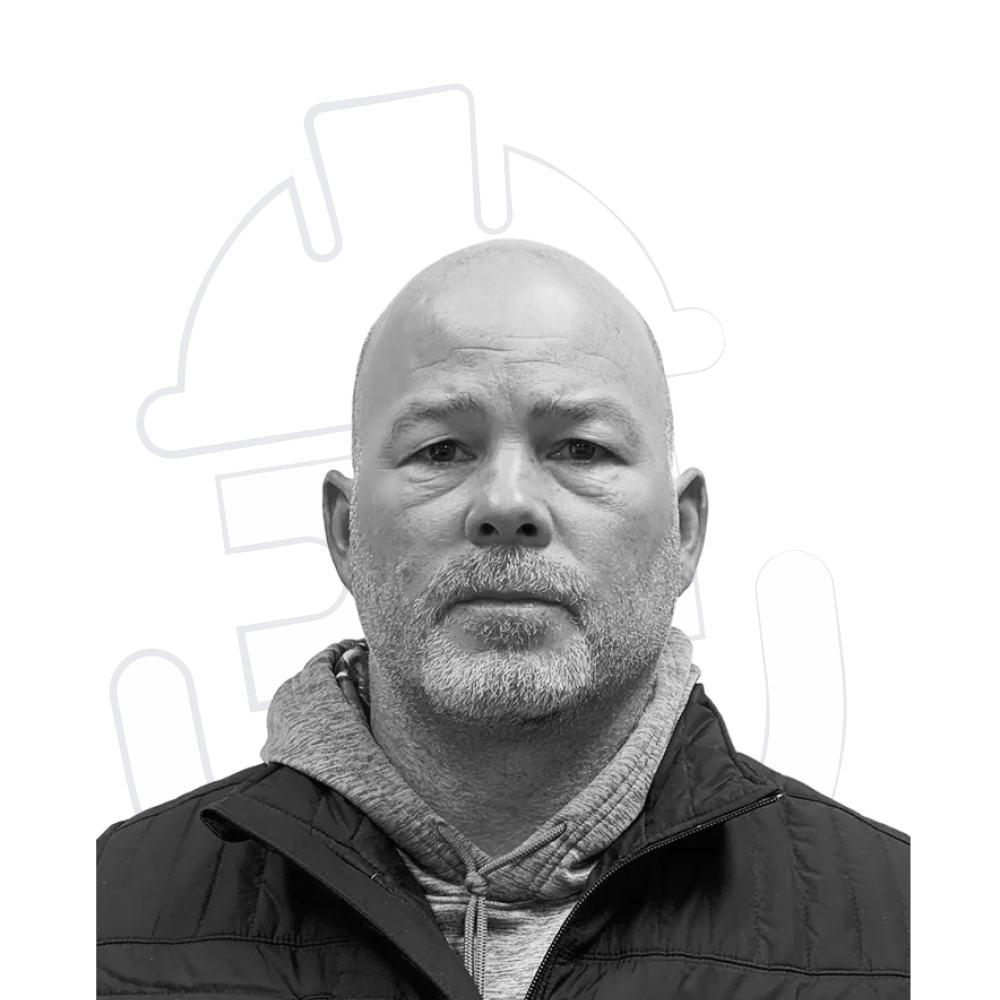
Hari Vasudevan (00:01.216) Alright, welcome to a new episode of From Boots to Broadroom. I am your host Hari Vasudevan, founder and CEO of Cairo AI. Previously, was the founder and CEO of ThinkPower Solutions. The show shares entrepreneurial journeys of those who power America. Presenting sponsor for the show is Cairo AI, Digitize Work. and maximize profits. more information, visit Cairo.ai. Today I am joined by a very special guest, Coach Brian Irwin. Brian Irwin is the Corporate Health and Safety Officer for Bobcat Power, a subsidiary of Aspland. Bobcat Power's primary work is in the transmission and substation construction industry. Brian has served Bobcat in this capacity for 10 years. Under Brian's leadership, Bobcat Power has been awarded American Electric Power's Contractor Safety Award of the Year in 2020, 2023, and most recently 2025. I can tell you from my own personal experience with working with AEP, that's an incredibly proud accomplishment. Prior to entering the construction industry in 2014, Bryan served as a Texas high school head football coach for 20 years. During his time as a head football coach, Irwin led his team to a state championship in 2003 and 2006 and is one of the winningest head football coaches of all time in the state of Texas. Irwin uses his experience as a coach to train, teach, motivate, manage, and care for his employees. Welcome to the show. Coach, how are you? Bryan Erwin (02:13.677) You're doing great. How you doing, Harry? Hari Vasudevan (02:15.838) I'm doing fantastic so. Bryan Erwin (02:17.709) I need to get my wife to read that to me every day. Hari Vasudevan (02:22.723) No, actually, you know what? You know this fully well. I have personal experience of you, you know, with your motivational talks. I was there in 2003 at the AEP Health and Safety Awards where you guys won the Safety Award of the year and your speech was so motivational. You know what happened after that I tried to hire you You know Scotty stepped up his game and you you stayed at Bobcat power and you know good for you and your family things have worked out very well for you and obviously for Scotty and so congratulations on Bobcat powers sale to Asplund and Bryan Erwin (02:51.438) you Hari Vasudevan (03:13.456) I'm so proud of you and your accomplishments and so proud to know you, honestly. Bryan Erwin (03:19.309) Thank you, I feel the same way. through that process, it was so much fun and so incredible. And I wouldn't have even considered something like that. I don't think unless it was somebody like you that was passionate, that could communicate the thoughts. your most your your your intelligent guy, but your emotional intelligence also is what really struck me and your leadership and passion for the company. So that was a hard decision back then. I remember those days. But yeah, stuck with Bobcat. And but I grew so much and learned so much through that experience and talking to you and that we've developed this friendship now that we talk, you know, periodically and It's been incredible. So I thank you for everything you've done for me and my personal and professional career. Hari Vasudevan (04:08.894) No, no, no. Thank you for those kind words. Honestly, you know, it's a good way to get started on the show because it's like when people interview for positions or people, you know, they just lose connections and move on. Whereas one of the things I've tried to do always is to keep in touch with people. Right. Because you never know how how things pan out in life. Right. In relationships or. the backbone of the success I've had and the relationships I've built over the years obviously with you is incredible. So that's great. So let's get started on this beautiful story of yours, right? For the listeners here, give an insight into who Brian Irwin is, how you got your early life, how you got started. You know, we'll get started with how you got into football, coaching football, then eventually into health and safety. Bryan Erwin (05:11.657) think it all starts with me just keeping things pretty simple. I'm a small town Texas boy. I'm originally born and raised in Hillsboro, Texas. My family is incredible. My mom and dad are still living. My dad was incredible father figure for me. My mom is the ultimate. Her name is Martha. She's the ultimate Martha servant. Just just incredible people. I three brothers. So four boys in the Irwin family and we were. We were pretty feared in the the town of Hillsboro. People come over the house and they're going to get roughed up pretty good. We we we played sports and we were always, you know, it didn't matter what what season it was. We were playing sports baseball. Hari Vasudevan (05:50.488) You Bryan Erwin (05:57.367) Football, basketball. You know we didn't get much hockey in or anything like that, but we pretended to. But we go full contact football in the front yard and then we played baseball and baseball season and. Hooping up, you know, during basketball season we'd have dirt cloud fights. We would have turf wars, know between the neighborhoods just for fun type type things. But you know my family I would say really is the first thing that comes to my mind. Just a strong, strong mom and dad, very conservative Christian family. Again, sports were a big part of what I did growing up. Education, my dad was, you know, he was a doctor. He was in family practice, family practice physician. Very educated man, very well read man. Really, really stressed education, but at the same time he stressed. Do what you want to do, do what fuels your passion and go at it with everything you've got. I've got a brother that's a doctor. I've got a brother that's a nurse. I became a football coach. And in a lot of ways, man, I wonder if my dad. respects that because I became a football coach. older brother became a doctor and followed in his footsteps. But I almost went that route being a doctor, but I had some injuries in high school that curtailed my playing career, tore my ACL, had a lot of knee surgeries in high school, three or four different knee surgeries, two or three different risks. surgeries and so I had a rough go as a sophomore, junior, senior in high school but my dad just really stressed the education side of things and and being well rounded. Education is not just math, it's not just science, it's math, science, you know it's history, it's it's both vocabulary, the art, the English ability to write. Hari Vasudevan (07:55.389) Arts, yeah, music, yeah. Bryan Erwin (08:00.141) Throw in sports in there and extracurricular activities, whether it's fine arts or sports or agriculture, whatever it is, it's about that will. And the will needs to be well rounded in one week. Lincoln that spoke can can really throw things off. You could be the greatest mathematician in the world or the greatest scientists in the world. But if you can't write, if you can't compose an email, if you can't compose a paper and write eloquently, then. you're gonna have a constraint there. So we really stressed education and so that was a non-negotiable in my family. We were gonna go to college, we were gonna get an education and then whatever we wanted to do with that from a passion standpoint, go do it. Hari Vasudevan (08:48.268) Yeah, yeah, no, beautiful. So, so there you go. A very strong family values from central Texas Hillsborough, right? So you got you got started. And how did you get into football, right? How did you get into football coaching rather, right? How did walkers do that? Bryan Erwin (09:07.295) Yeah, that's. Good question, because that was. Kind of what I was referring to a while ago with all those injuries and things. You know first again, my parents they taught me how to serve. My dad was very sorry he did a lot of he gave away a lot of services in the time didn't ask for payment. Just did a ton of stuff for the schools. He was a school board member for 20 years. My mom. She didn't nurse much while we were growing up and then became a nurse after we... So she's a true servant. biggest... Yes. Yeah. Yeah, just serving. Whether she was treating somebody medically or feeding someone, her greatest gift is ability to cook and feed. I learned at an early age that you can get to a man's heart real quick through a stomach. Hari Vasudevan (09:38.55) I'm sure she was building nursing you guys with broken hands and, right. Bryan Erwin (09:57.741) And so I still use that when I coached and even in what my role is now we get together we get our men together. We're gonna feed them like kinks, you know, I really believe you feed men. That's what one aspect of just serving them. But getting back to your question on coaching. I really thought I wanted to be a doctor. I want to be an orthopedic surgeon. Hari Vasudevan (10:07.746) Yeah. Bryan Erwin (10:21.741) But towards the end of my high school career when I had these serious knee injuries in the game was literally taken away from me, stripped away from me through multiple knee surgeries, wrist surgeries, things like that. I remember the final injury sustained as a senior in high school. I made the decision that night on the bus ride home when I knew my playing career was basically over. God spoke to me and said, you're not gonna be a doctor, you're gonna be a football coach. And this was my senior year on a yellow bus driving home from Hubbard, Texas. And I went home that night and I was down because of the injury and I knew this was the end of my playing career and it was devastating, very traumatic actually. But I told my dad, said dad, I'm gonna be a football coach. God's leading me that direction. And from that day forward, I put everything I had into becoming a football coach and doing what I needed to coach and surrounding myself. with the people and the systems and the organizations to coach. Hari Vasudevan (11:29.536) Yeah, yeah, which year was this? Bryan Erwin (11:31.501) This was 1987 was my senior year in high school. I actually fought back on this just a little bit. went to Stephen F. Austin, my first two years of college, and I went there to try to play. My older brother was playing Stephen F. Austin, and they had recruited me through the process, and I'd been recruited by Baylor and by Army at West Point, visited the Academy and some other visits. once I had sustained the injuries and I wasn't... able to perform at a high level, then Stephen F. Austin became the next option and they still wanted me to come try to play and get healthy and all that. So I went, wasn't able to do it. My body just didn't cooperate at all. So I spent two years with Stephen F. Austin, 1988 to 89 and then in 89 I transferred to the University of Texas. And my younger brother... Hari Vasudevan (12:29.144) And what position did you play? Bryan Erwin (12:31.851) I played quarterback and free safety in high school. I had a really a passion for playing inside linebacker. And that's probably what I would have played in college cuz I got bigger, a little heavier, a little stronger, big boned. And I had the size and the speed to play linebacker. But I played quarterback and free safety in high school. Hari Vasudevan (12:54.552) it. Okay cool awesome. So then you you know get into head I mean not head football but you got into high school football coaching after college. Is that right after UT? that right? Bryan Erwin (13:04.973) Yes. Yes, when I went to I went to UT with my younger brother signed with UT. And so then I transferred to Texas to become a student assistant coach was a student assistant coach for a couple of years in 89 and 90 and then became a graduate assistant coach. 91 92 as a graduate student in Texas and then ended up going to SMU in 93. as a GA as well and continue my graduate work. Although I'd already completed one master's program at Texas. And then after the 93 season at SMU, I changed my goals and decided then I wanted to go the high school route and started pursuing that. and went Irving Nimitz High School in 1994 as an assistant. And then about six months later that spring was offered the job at Italy High School, I-T-A-L-Y, Italy. But we pronounced it Italy. Just out the walks of Hatchi on I-35, the Italy Gladiators. And I had a little bit of a connection there through my former high school coach and principal and some other men in my life. that were principals, coaches, superintendents, that were men in my life when I was at a young age that really took the locking to me and respected me and they helped me get this job at a young age. I was 26 years old. I was actually the youngest head football coach in the state of Texas at that time. So that was in 1995 that I got the Italy job. Hari Vasudevan (14:42.424) Nice, nice. And so your two state championships in 2003 and 2006, right, they were won at Italy. Bryan Erwin (14:50.964) Yes, in Lamarck, Lamarck, Texas, down by Galveston. So I coasted in Italy for three years. I went back to my hometown of Hillsborough in 98 and I was in Hillsborough for four years, 98, 99, 2000, 2001. And then in 2002, I got the Lamarck job. Well, again, connection. My high school principal, he became the superintendent at Lamarck High School. He and I had a tremendously close relationship when I was a student and he mentored me. His name is Adrian Johnson, Dr. Adrian Johnson, and he ended up getting the Lamar job. He Brian, he called me, said, Brian, can get you an interview. I can't get you the job, but I can get you an interview. I would love to see you get the job. You'd be great with these young men down here in Lamar, but I can't get you the job. You're going have to earn the job, but I will get you an interview and get your foot in the door. So he did. Long story short, I won the job. And became the head football coach Lamarque High School in 2002. And Lamarque is the last mainland community you go through before you go across the causeway into Galveston. So it's it's on the Gulf Coast, just a tradition rich football program. And. Hari Vasudevan (16:04.759) God. Hari Vasudevan (16:09.623) Yeah. It's a fertile ground to, mean, for really good football players, I'm sure. Bryan Erwin (16:16.929) great football players, kids that come out of Galveston. The Galveston County area is just, it's incredible, the amount of athletes. And then plus, Corey, was really cool is we were right there in one of the petroleum capitals of Texas, Lamar, Texas City. down in that area, La Porte, but we were right there on the Gulf Coast and so many, know, BP and all the big companies down there from a petroleum standpoint. it was really neat to see that different type of work ethic and family. dynamic and it was something I really hadn't been around my entire life. And so, you know, those folks truly punched in, punched out every day. And I think that work ethic really carried over to their family dynamic, their household, their kids, the kids that I eventually coached. We were supported 100 % by the parents in the school system. No matter what discipline needed to be administered, the parents were behind us 99 % of the time. And that's what I really think it takes in the school business is parents getting behind the teachers and getting behind the administration and working as one instead of pulling against each other. So just the dynamic, the work ethic, the blue collar mentality. And it was incredible. So we had a really good run. We won the state championship in 2000. double overtime against Denton Ryan. And we won it again in 2006 against Waco High. Hari Vasudevan (17:59.16) Wow, wow that's incredible. So tell me this from your championship runs in 2003 and 2006. Any famous players, anyone went down to have a great career into NFL or something? I'm just curious. Bryan Erwin (18:17.709) Yeah, the Lamarque years in 2003 we were very, very talented. We had think the number was like 13 signed Division one scholarships. We were very, very talented. Had a number of guys go on to play. Align back or go to SMU. We had alignment go to Utah. Of course, Rashad Bobano was in middle linebacker. He ended up playing at the University of Texas. It's a really cool story. How you got there? Hari Vasudevan (18:28.589) Wow. Bryan Erwin (18:47.597) had a player to go to Texas A had a player go to Baylor, Sam Houston. So my quarterback went to Grambling. So we had a number of players going, but I would say out of that group. None of them made it to the pros, but Rashad Babineau had a stellar career, went 16 and 0 his senior year in high school. And then his freshman year went 15 and 0, won the national championship in 2005. And I was able to attend that game as a Rose Bowl in Pasadena in 2005 when Texas won the national championship. And we got to attend as his guests, his parents couldn't make the trip. So we went in place of his parents. Hari Vasudevan (19:06.391) Got it. Hari Vasudevan (19:22.762) Right? Vince Young. Hari Vasudevan (19:33.1) Yeah. Bryan Erwin (19:33.222) And I've got to witness that and Vince Young and Rashad started at middle linebacker and had a great, great career. Hari Vasudevan (19:40.182) very nice, phenomenal, incredible. Nobody would forget that game, right? USC. Yeah, yeah. So, that's great. So, you know, honestly, what stands out to me here, your journey so far, is again, the relationships, right? Your high school principal, right? He goes down. Bryan Erwin (19:47.735) It was unbelievable. Hari Vasudevan (20:06.482) Lamar and he gives you an opportunity you come up with lying colors right I think that that that thread is there from what I've known you throughout your career right and we will kind of go through that so so you know since we're talking about football and you know players and whatnot I'm just curious what's your take on NIL and I mean it's here to stay right what's your take on that Bryan Erwin (20:16.907) Yes. Bryan Erwin (20:33.325) You know, wrote a my thesis when I was at Texas I wrote a paper on the fact that we needed to Compensate and pay players that was in 1992 I wrote that paper the night. Yeah, I've seen Back then, you know players they would get some per diem money, but they couldn't have a job Hari Vasudevan (20:48.994) Jeez, I had a real time. Hari Vasudevan (21:01.549) Yeah. Bryan Erwin (21:01.641) Other than in the summertime in the summertime they can have a job for four to six weeks or so. But other than that they couldn't have a job so therefore they couldn't make any money. So if their parents had money then they had money in their pocket but their parents did not have money. They had no money in their pocket to go buy a pair of shoes or. Or to go out on Friday night to 6th Street or whatever they want to do. So they would end up the ones that didn't have any money. They'd stay on campus, stay in the dorm and get in trouble. And guess who's in the news? The guys that are on campus in the dorm getting in trouble, not the guys that are downtown. So I really believe we need to compensate student athletes. They put in a tremendous amount of time. It's a full time. Hari Vasudevan (21:29.357) Yeah. Hari Vasudevan (21:36.61) Yeah. Bryan Erwin (21:45.855) job. It's a lot of stress, a lot of pressure on top of being a student in college. So I really believe, you know, we need to compensate them. I'm all for that. I like to see it capped in somehow, know, somehow some way the numbers are getting a little bit ridiculous. The transfer portal is where I have the biggest gripe is not not necessarily the NIL and compensating the guys because I'm a proponent of that. The transfer portal is what I don't like. Guys being able to jump around and jump around and the lack of loyalty, which is a huge thing of mine. You talked about relationships a ago. really believe loyalty is a gigantic piece of that. always say, I always have said loyalty is the most important seven letter word. Hari Vasudevan (22:20.568) Yeah. Bryan Erwin (22:30.125) in the English dictionary and that's part of how we live. That's how I coach. That's how that's how I do health and safety. It's how I do my family. It's the most important similar one in the English dictionary. Loyalty is not just. Not talking about. Hurry, it's defending hurry when he comes under attack and that's what most. Yes, yes, yes, yes, that's the key when you're not there and so most people. Hari Vasudevan (22:45.302) Yeah. And when Hari is not there, he defends himself. Bryan Erwin (22:58.059) can kind of understand how I shouldn't talk about how are you here. anything but but most people don't have the courage and the loyalty to defend him when he comes under attack when he's not there. this we always try to define always try to define everything I try to say in a simple term so that I can understand and I believe it and if I believe it then I can sell it and preach it and communicate it. But if I can't define it in a simple way then I can't sell it and I because I believe systems not there. So that's loyalty for me and yes it's it's a huge huge, huge aspect of how we do everything from coaching to help and safety to raising a family. Hari Vasudevan (23:38.976) Yeah, so in essentially that you you you you're you're thing on the NIL is NIL is a good thing players need to get paid but hey you know what this transfer portal is kind of getting out of hand I actually really yeah Bryan Erwin (23:49.325) It's out of hand. I like to see there's some strict parameters on it where, okay, you get one transfer. And if you transfer, you have to sit out a year. Once you graduate, I'm okay with it. Once you graduate and you can transfer, once you become a graduate transfer, I'm okay with that, because you've earned that. You've earned that right. But if you transfer in the portal, that's fine. You want to see... Hari Vasudevan (24:04.493) Yeah. Hari Vasudevan (24:12.973) Yeah. Bryan Erwin (24:19.309) compensation elsewhere or go to a different environment that's okay but you're going to have to sit out of here and and that's going to curb and curtail a lot of this stuff. Hari Vasudevan (24:29.046) Yeah, I actually agree with you that the fact that NL is a good thing, you know, honestly, the upcoming national championship game between IU and Miami, I don't think it would have been possible two, three years back. Right. You got all these guys coming up and candidly, you know, the Alabamas and the LSUs of the world and Georgia, the world, I really think they haven't figured it out and they have a slight problem on their hands. Now, I think UT, Texas Tech and whatnot, mean, honestly, successful alumni in A &M and all these guys, right? I think it's going to benefit some of these schools. listen, the magic of free market at work, right? That's a good thing at the end of the day, right? In the long run. Bryan Erwin (25:15.021) That's right. That's right. Bryan Erwin (25:20.269) So now you guys know why I hit it off so well and almost what to work for him because in the interview we talked football for like 99 % of the time and business for 100%. Hari Vasudevan (25:31.932) We're 25 minutes into the interview and we're talking about football and you I remember the interview you and I had obviously you interviewed us as much as we interviewed you and you showed the play that defined your family where the Cowboys Stadium, AT &T Stadium, your two kids are playing And you know, that is the moment and then I think both of them got injured unfortunately after that game and things like that, right? Is that right? Bryan Erwin (26:05.165) Yeah, that's kind of part of my story is my two kids getting hurt. It's not part of my story. is my sister. It's probably why I'm sitting right here today and why I ended up changing careers and. OK, let's do it well. Hari Vasudevan (26:14.935) Yeah. That's a great segue. Let's do that actually now. Yeah, so how did you get into, you know, health and safety? I think we'll talk about that game and what made you change. Bryan Erwin (26:33.037) So when I left Lamarque after the 06 state championship season in 07, my wife, my kids, we ended up taking the Flower Mound Marcus job in Flower Mound, Texas. And so, you know, huge change, different, you know, so I coached at the 2A level, the 3A level, 4A level, and then Flower Mound being the 5A level. It's 6A now, but 5A was the largest level back then. So it equates to the 6A stuff now. I coached there for seven years and I was in my seventh season or just I guess it finished my seventh season in 2013. in 2012, both my sons toward their ACL four weeks apart. My first son was a quarterback tore his down had moved on younger son. So my oldest son was a junior, my youngest son was a sophomore. Had to move to sophomore Sunday quarterback four weeks later. He tells his ACL. So I've got both of them on the sideline. was devastating. was heartbreaking. You remember the store I told you, I went through the same thing. A lot of PTSD, a ton of PTSD with the injuries, surgeries, just going into an operating room or surgery room for me is pretty traumatic because it brings it back a lot of things. So when I had to... Hari Vasudevan (27:37.121) Yes. Bryan Erwin (27:56.045) hand that surgeon, my son, twice in four weeks for an ACL. And I went through the same thing as a young kid. It really was tough. And it was tough on me. was tough on my wife. It tough on my family. It brought back a lot of pain from my previous life. And pain is relevant. That's one thing I learned through that process. Pain is relevant. You know, okay, yeah, torn ACL and your kids getting hurt in football is not the same as our heroic soldiers and what they do putting their life on the line or someone gets sick with cancer or some other type of debilitating disease. No, it's not. But pain is pain and pain is relevant. when we feel pain, it's real, no matter what's causing it, whether it's a torn ACL or whether it's cancer or whether it's death. My pain was like incredibly real and hurtful and debilitating. So went through that junior sophomore, they come back bigger, faster, stronger, going into their senior and junior year. long story short, my senior quarterback tore his other ACL and LCL on the opposite leg early, early, early in the season, week two of the season. And Hari Vasudevan (29:15.211) Thank you. Bryan Erwin (29:19.437) It was it was rough. was was was debilitating again. We now we're going back through it again. His younger brother. They were very, very close 13 months apart. I remember when my oldest son came off the field. He's you know he got hurt. I didn't know it. He he we ran the next place. Stay on the field. He didn't come off the field. We ran the next play and he just handed it off. He didn't move his feet. He just handed the ball off. Hari Vasudevan (29:40.286) Bryan Erwin (29:46.771) I'm like, what's going on? He tapped his head, sit down, just didn't want to play. So he runs off the field and runs by me and I said, Cole, you okay? He said, yeah, I'm good, I just need one play. All right, good, so I didn't even worry about it. So we keep going, the coaches then radio down to me and say, you need to go check on Cole, he's back there on the table. He looks like he doesn't look good. So I go back there and the doctors are. as wide as the sheet of paper sitting in front of me and my wife's there and it's not good. It's structurally not sound. And so I go back. I'm trying to process this. I'm trying to continue coaching my younger son who's on the field at that time. His younger brother comes running off the field. He's he's hurting. He's you know, he's hurt bad in the end. He's crying and he just go finish the half. Let's go finish that. Let's get to halftime and. You know, so it was very, very traumatic on our family, what we went through there for two years. You know, I coached a lot of kids and gave of myself to so many kids, so many families. And yeah, did I look forward to coaching my boys? Yes, I did. And a lot of that got taken away from me per se. Hari Vasudevan (30:35.608) So. Bryan Erwin (30:58.413) Everything happens for a reason to this day. I firmly believe that but back then it was very painful, very hurtful. We went through a lot as a family, a lot. I went through a lot as a coach trying to deal with that and the pain and the suffering I went through was incredible. I'll never forget after that game, my parents were at every game. They came to all my games as a coach and then obviously their grand sons are playing so they were at the game. And we were all down and distraught and we knew things weren't good. And so I remember my dad coming up to me and consoling me and I said, Dad, man, I hate this game. I hate this game. And what it did to me, what it did to now my boys, I hate this game. And those words came out of my mouth and this is a game that I gave everything for. I love. Hari Vasudevan (31:38.837) Yeah. Hari Vasudevan (31:51.703) You loved, you wanted to be a hit. Bryan Erwin (31:54.317) I worked like a grunt for nothing when I was a student assistant coach. I got a cool story there, maybe we can come back to, but kind of defines what I think it takes from a work ethic standpoint and passion standpoint, but I loved it. So we end up making the playoffs, got beat first or second round that year. I'm at my brother-in-law's house, Scott Yoakam, owns Bobcat, who owned Bobcat. We're cooking steaks the night before Thanksgiving. He said, hey, you ever thought about getting out of coaching? And I said, no, I don't know how to do anything else. All I know how to do is coach. I'm not good at anything else. And he said, no, you can be good at something else. He said, you're a great manager. You're great motivator. You're a great teacher, trainer and all that. He said, you ever thought about would you come consider coming to work for me in construction industry, utility construction? I don't know anything about that. And he said, I can teach you the business. I can't teach you what you already know. It's the management side of things. And I thought about it, prayed about it for. A month or so in middle of the night in December of that year, about a month after Thanksgiving, I woke up in the middle of the night like 3 AM, tied my wife on the shoulder who's the sister of Scott and said, hey, I'm going to resign today. Let's do this. And she was all for it. She wanted me. She saw the stress, the pressure. I've been doing it since I was 26 years old. And you you can't go on vacations and all I'm thinking about my players, my program. can't I can't disconnect. I just couldn't disconnect from work when I was coaching and so. Anyway, that that's that's the story how I ended up probably burning out of coaching and and transitioning and getting the opportunity to go into the utility construction industry. Hari Vasudevan (33:45.303) Yeah, no, it's a really heartwarming story, right? It's tough, but it's a very authentic, raw story of how you got into the utility industry. But before we get into your utility industry's journey, let's talk about that beautiful story, the work ethic that really helped you. I mean, what you learned as a graduate assistant. Let's do that. Bryan Erwin (34:08.609) Yeah, you know, when it comes down to it, you know this as well as anybody comes down to work ethic, passion, being unique, being different, taking risk. Bryan Erwin (34:27.275) doing things for if you've got to get the job and it's going to pay you zero, but that job is going to get you here, then you take the job and you do the job. so one of the proudest moments of my career that I can look back on, I shared this with players, I shared this with coaches, shared this, I try to share as much as I can. I was a student assistant at Texas. Hari Vasudevan (34:37.599) Yeah. Bryan Erwin (34:52.781) I was a grunt, I was as low as you can be on the total ball. I made $0, they didn't pay me a dime. I volunteered all of my time outside of being a student to coaching and everything behind the scenes and I didn't get paid anything. I just was able to work with the defensive line, work with the defensive line coach, learn from him, be a part of the Texas program, have a job. day in day out, had a job on Saturday afternoons during the games as well. So we're gonna play Arkansas. It's 1989. We're going to Fayetteville. It was Little Rock. Back then they played in both places. I think we're going to Little Rock. And I'm on the bus. Raise your backs. Arkansas, raise your backs. 1989, we're gonna travel out there to go play them. Hari Vasudevan (35:32.503) You're talking about Razorbacks here, right? Bryan Erwin (35:40.671) And I'm on the bus. We're getting ready. We're on the bus going to the airport to fly to Little Rock to play the Arkansas Razorbacks. And I'm on the bus on the charter bus fixed to make the trip. We got our bags loaded up. Just got my seated and I get tapped on the shoulder and someone says hey, coastal McWilliams wants to see you off the bus just for a second. OK, so I jump off the bus for Satan step down the steps and. He puts his shoulders on me, say Brian, we've had an alumni that's just got added to this trip to the travel group. We don't have a seat for you on the airplane. So you're not going to make the trip with the team. I'm a coach. I've got a job. I've got a job. Now, granted, I'm a student assistant. I'm a grunt. I'm a nobody. I'm a coach. I've got a job to do. And so I know Brian. I hate it. And he was the greatest man in the world. Very humble. very caring and I just, you my head was down. My eyes were sad. He basically kicked me off the bus and told me I couldn't fly on the airplane. Yeah. And I'm like, what do do? You know what I do now? He said, Brian, if you want to go. Hari Vasudevan (36:46.583) You literally can't get up and dance. Bryan Erwin (36:56.813) the U-Haul bus back then we didn't have these nice equipment buses that they have now these semi trucks where you see Texas Longhorns plastered across the rest of you plaster. We took U-Haul, we rented U-Haul trucks to take the equipment to the games, all the helmets, all the shoulder pads, everything. He said, if you want to go to the game, the equipment U-Haul bus, U-Haul van has not left yet. It's back there behind Newhouse Royal. And if you want to go. Hari Vasudevan (37:04.426) Yeah. Bryan Erwin (37:23.713) Go tell big Larry you want to ride and jump jump in the you all bus. I grab all my stuff. I grab my luggage. I grab my briefcase and I run to the back of New House Royal and they're shutting the doors. They're coming out and I said Larry I need to ride. I need to ride Little Rock. And I'm telling you Larry's driving the van. Mark Cousins is on the passenger side who is the head or. I'm not sure if he still is, but he was the head of the UIL and became the head of the University Interscholastic League. And I'm sitting in the middle, it's a stick shift U-Haul equipment van. And I'm sitting in the middle and we take off and we drive all night, all day, all night to get in. Sit between my legs. Yeah, yeah, I'm actually changing the gears for him, know, sometimes. Hari Vasudevan (38:04.983) You know, shift, stick shift sitting in the middle is hard because you got the stick right there. Bryan Erwin (38:19.885) I had to be at the game and so I would have crawled there. it's how you respond. We talk to people all the time about it. Success in life is not about what happens to you. It's about how you respond to what happens to you. 90 % of your success in life is how we respond. And we've to respond the right way. know, the whole E plus R equals O, Tim Kighton, I'm a huge proponent of that. You have an event that happens to you. You got to determine what outcome you want. Well, whatever outcome you want, that response that you give will determine the outcome that you want. If my response would have been, I'm just mad, I'm peed off, I'm calling my girlfriend who's now my wife. And tell her to come get me and I'm just gonna hang out at the apartment all weekend and I'll watch the game on TV. But no, I responded cuz I wanted to be at that game. That was the only way I was gonna get to that game and do my job. So, jumped on the U-Haul and then after the game, what happened? The team flies back, they're back home in two hours. Hari Vasudevan (39:14.699) Yeah. Bryan Erwin (39:22.665) And I drive all night, you know, my my my wife, she comes and picks me up behind Newhouse Royal at like 4am because that's when we got in. And it's just doing the things you've got to do and sacrificing to to do what you got to do and putting your pride away, killing your pride and and just being willing to respond the right way to get the outcome that you want. Hari Vasudevan (39:52.319) Yeah, indeed. Yeah. Bryan Erwin (39:52.435) I knew I was a cry. Yeah, I I embarrassed all the other guys that were, you know, gradual assistance and guys that were like my age that flew on the plane. And then when I showed up, you know, there's Brian, he had to had to ride the U-Haul bus up there and it hurts your pride. But you swallow that you do what you got to do. You know what your goals are and you know where you want to be in the end and. You do what you gotta do. Hari Vasudevan (40:18.891) Yeah, it's perseverance at the end of the day. You wanted to do you had a long term goal and you had to take a path to get there and, know, tenacity and whatnot. I mean, honestly, when the coach kicked you off the bus, you could have done lot of different things, right? You could have, like you said, you could have mocked, you could have simply said, I'm done with this job because it ain't being nothing. You could have, you know, you could have gone back to your Bryan Erwin (40:25.943) Perseverance and just overcoming. That's right. Hari Vasudevan (40:48.791) room whatever and you know watch TV whatever the hell you wanted to do right but here you are trying to figure out a way to get back to that game and you know because you loved it so much and you had a goal of becoming a head football coach one day right. That's that's Bryan Erwin (41:02.625) Yes. Yeah. And I think a little bitty things like that pay off in life. I really do. Hari Vasudevan (41:08.359) E plus R equals O. And actually one of the key things honestly what you say also really is resonates well with me because a lot of times you are in a job in your career which doesn't pay a whole lot but it's a stepping stone to something that you have a long-term goal in. I've had many such jobs right where you know where you know doesn't really pay well, but you know what, I'm developing relationships which in the long run is gonna be enormously beneficial and you stick with it, right? In the long run, it really is based off, it's delayed gratification, right? At end of the day. If you want instant gratification, you can't put up with all those kind of things, right? So. Bryan Erwin (41:55.437) I've got those two words somewhere in my notes and and as we were talking over the last week or so about some of the things we might be talking about, I jotted down a couple of ideas and those two words are somewhere on my paper, delayed gratification. So that's you're exactly right. Hari Vasudevan (42:15.477) Yeah, 100%. So now, let's 42 minutes into it. We might have to do one more show here but you know let's let's wrap up football before we get into safety now, right? So your your your your expertise right there are different types of coaches obviously you got a John Harbaugh as we record today on Jan 15th apparently he's going to be the head football coach of the New York Giants. News just flashed right he's a special teams guy. You got a Mike Tomlin kind of guy or Mike McDonald who's a defensive coordinator and then you've got the Sean McWays and you know the Matt LaFleur who are the offensive guys right. Where would you put yourself in or are you Steve Sarcassian or Are you on the defensive side or are special teams guy? Bryan Erwin (43:13.325) I stayed pretty involved in all of it. Same way I have done health and safety from day one when I was the only guy. So if it was going to get done, I had to know how to do it all. You know, incident reports to new hire training to OSHA reporting to, you know, whatever it was, client and customer requirements. So in football is the same way I was. I was neck deep. In all three phases of the game, I was neck deep in strength conditioning. I was neck deep in nutrition. I was neck deep in motivation, motivational tactics and the best way to motivate young men. But I'm kind of old school when it comes down to it. I like the Nick Saban style Nick Saban approach. of you know hard nose yet developing relationships having a system in place being process oriented we talked all the time about you know on monday you don't worry about winning on tuesday you don't you don't talk about winning on wednesday you don't you're not worried about winning you you do what monday requires you do what tuesday requires you do what wednesday requires you worry about winning on game day That's when you, we're gonna go win the game, up until then you're preparing to win, you're processing to win. And winning is a byproduct of doing the right things day in and day out. It's like health and safety, mean. We don't want guys getting hurt, but I'm not gonna sit around all day worried about guys getting hurt. I wanna sit around all day making sure our guys are doing observations and good catches and inspections and audits and weekly safety meetings and all the things that we do from a process. The byproduct of that will get us the outcome that we want. So to answer your question football wise, I would say. Hari Vasudevan (45:09.633) Got it, got it. Bryan Erwin (45:13.963) I don't know those guys well, I do like the hard, I like hardball. I like his style, his approach, but probably more of a mixed saving comes to mind first. Just hard nose, discipline, process oriented. The standard is the standard and we're not deviating. Hari Vasudevan (45:34.271) Yeah, yeah, you're not deviating a standard just because you want to have a superstar on your team or some of that. Right. So. Bryan Erwin (45:40.811) Yeah, what a great philosophy I had towards the middle of my career was because you mentioned the word superstar and things and know the coaches deal with this a lot, but my belief system became. It's not about who I'm willing to win with because hurry, I'll win with anybody. I'll win with the worst character. Kid all went with a criminal. I'll win with a drug addict. I'll win with a. I'll win with anybody because I love to win. It's who are you willing to lose with? That's what I always pose to myself and my coaches is it's not about who we're to win with because we'll win with anybody. But when you lose, when you lose the battle, you lose the game and you have to reflect on it and analyze and debrief. Who are you willing to lose with? Because if you knew going into it, man, this guy is going to cost me a game or this guy is going to cost me a job or a customer or a life. I knew it. I knew it. The leading indicators were there the whole time. The flags were there the whole time. So when I lay my head on the pillow, it's not about who I'm willing to win with, it's who I'm willing to lose with. Hari Vasudevan (46:38.955) military. Hari Vasudevan (46:56.573) Interesting. That's actually a really good way to look at things. Right? So, all right. So, so now we're into &S, 20 years as a high school football coach. Super successful, obviously, winning as football coach in high school in the state of Texas, right? You go into Bobcat Power. Scotty is an entrepreneur, I'm an entrepreneur. Nothing wrong about entrepreneurs. Entrepreneurs are great. We're the ones who actually move American economy, right? But you know, we're not good at lot of things, right? We kind of, in many ways, a little disorganized because we're going at a very rapid pace. So tell me this, now that Bobcat Power has been sold a couple of times, beautiful success story, right? How was it on day one when you stepped in? Challenges that you faced? the structure that you had to put in place to really make Bobcat what it is today because you know the construction space, let's be honest, you know got so many moving parts out there, one small mistake, really the company can collapse, right? I've had that situation personally, I think I may have shared with you where we had this incident when I was running ThinkPower back in 2018 or so. Bryan Erwin (48:11.821) Yes. Hari Vasudevan (48:21.911) with Entergy and there is a fatality unfortunately on the contractor side and it really cost the company dearly. mean the company fought for its life so to speak. Right. So tell me this from your experience. How was it on day one? Bryan Erwin (48:37.325) One day when I didn't know much and I actually started out on the operations side when Scottie hired me. I had done some things as a kid, some civil things, some municipal waterline, sewer lines, storm drain construction things. And so I had a decent understanding of some of that, not necessarily the electrical side of things. But so I started out as a project manager and really didn't know much. just my tactic was I needed to use, God gave us two ears and one mouth and I try to use that in that ratio. Listen twice as much as we talk. So I had to do a lot of listening, a lot of watching, a lot of observation. It doesn't cost anything to pay attention, right? So we've got to observe, we've got to pay attention, listen, see, and speak less. And so I did that, I would literally, Get up every morning and pray, you know, God, just give me. Today, daily bread, give me today the wisdom I need to do what I need to do. A funny story, I've told this a gazillion times early on in that process when I was project managing and I'm dealing with. Other project managers from customer I'm dealing with engineers I'm dealing, you know, and and you know, learning as I go and I didn't have a lot of answers early on. So I knew that if a certain guy called or a certain engineer called or a certain project manager called from the customer and I might not have the answer and I knew we might have a problem, I would just let it go to voicemail. And they would leave the message on the voicemail of the issue or the problem at hand. and great I'm going to go research it I'm going to get the answer I'm going to talk to I need to talk to and I'm going to give them a call back and I'm gonna say here's the solution oh here's what we're going to do and and here's how we're going to respond to this so again just taking it one day at a time and and really listening twice as much as I talked trying to learn using time Hari Vasudevan (50:27.447) you Hari Vasudevan (50:43.383) Yeah. So you're back to being literally a graduate assistant. Of course, you're getting paid, but you're learning something absolutely brand new to you. Bryan Erwin (50:50.207) I'm back. Yes. I said this, I spoke at a banquet not long, a couple years into this and I went back, one of my former coaches asked me to come speak and I said, you know, it was very humbling because I went from being what I felt like was one of the best in the world at what I did to I'm like the worst in the world at what I'm They want, yeah. Hari Vasudevan (51:16.747) Yeah, that's really hard. That's really, hard. Yeah. Bryan Erwin (51:20.981) And that's the way I processed it. like, you know, I was, I was a great, great football coach. And right now I'm just a, I'm a poor project manager, you know, or I'm a poor safety guy. And, and so it's very ugly. So you have to start, like you said, from, from ground level and. Hari Vasudevan (51:42.199) But you know, let me ask you this, Ryan, if I may, right? you know, that's one thing it's described now, but at that moment of time, I'm sure mentally it was really, really hard, right? How did you process it? Did you ever think about, man, let me go back to coaching, right? Did I make the wrong decision? Did you second guess yourself? Bryan Erwin (51:54.859) Yes. Bryan Erwin (52:04.886) there were days where I was like, what am I doing here? And why did I get out of coaching? Yeah, but I've got that tenacity. I've got that persists the same perseverance that enabled me not to overreact when coach McWilliams kicked me off the bus. I use that and I'm like I can overcome this. Nothing's gonna break me. And I'm gonna learn this and through daily prayer and one day at a time and God's wisdom. I'm gonna learn how to do this and this is a huge challenge and I'm gonna stick with it. But yeah, had moments where I tell people all the time, it's okay to wanna quit. It's okay to quit. If you're a football player, it's okay to quit for three or four seconds in between plays. Just. Don't quit when the ball snapped, you But you're gonna have those mental challenges. And so yeah, I fought that. It was tough. There were days I'm like, what am I doing? Why am I going through this? And I don't know what I'm doing and I've got to. project an image to our employees. I've got to project an image to the customer. I've got to project an image. know, Scotty knew me so he knew, you know, I'm going to learn this. You know, it's just going to take me a minute. And I had some strengths in the construction industry. I've done some things with my hands, but I just didn't know some of these other things. So I just, you I had to learn it and I just saw it as a huge challenge. Bryan Erwin (53:38.097) But it was very humbling, yes, it was very humbling. And it brought me to my knees, which is a good thing. It brought me to my knees every day. I had to pray, God give me the strength, give me the wisdom to give me this day my daily bread. And I couldn't even worry about tomorrow, I had get through today. Hari Vasudevan (54:01.814) Yeah, yeah. No, that's a beautiful story there, right? So, let's, know, in the line trade, in the construction itself, right? One of the biggest challenges that we face, you know, this is people travel all the time. It's a tough job. You're away from your families almost all the time, right? For weeks at a time, many people, right? So there's a big issue of suicides in the industry. There's a big issue of overdoses in the industry. I did a show with RL in season one and he told me that he had done some research and the divorce rates are super high apparently in the construction industry and the line trade and things like that, right? Just because people are away from families. They don't want to talk about it, right? Because it's very personal. It's very hard. How do you deal with that? What's the tactics or strategies that you use to deal with those? Those are real issues. Bryan Erwin (55:13.741) Yeah, real real issues. I'm glad we're talking about this because I didn't know we were going to talk about this and it's a big topic. This is probably a show podcast all in of itself. It's a really really big topic. I've done a lot of work on this. You know, I tell our guys all the time every time we meet every quarter or every Wednesday. I'd like to show I'll show that later with our win call. What we do there from a culture standpoint, but. You know that I pray for him every day every morning. I pray for guys working and traveling safety working and traveling because traveling is a. It's just as much of a danger in our industry as it is. It's number one, yes, yeah it's. Hari Vasudevan (55:53.769) It's number one as to be honest, you're right. mean, it's like people are literally driving with their phones on their face these days. It's crazy. Bryan Erwin (56:00.854) Yeah, well, and motor vehicle accidents are killing more guys in the construction industry than all the focus for fatal four put together. In this area, in the rural parts of Texas, Arkansas, Louisiana, Oklahoma, driving is the number one killer. Way more than electrical and struck by and caught between and false. All four put together. So we spent a lot of time on motor vehicle and distracted driving, but the mental health side of things also. The status crazy five times more more guys are dying. From their own hands than they are. From the construction industry on the job five times. It's it's. Hari Vasudevan (56:46.241) Wow. Bryan Erwin (56:48.116) It's unnerving. The construction industry, the utility industry, what our guys face living on the road, isolation away from their families, stress, pain in their bodies, dealing with pain and then having to mask that pain with then it becomes maybe an opioid problem. And that adds to the mental health. Hari Vasudevan (57:10.911) Yeah, big time. Bryan Erwin (57:15.446) I'm actually been I've been working on something for a number of years. I've I've got it put together. I haven't launched it yet. I'm calling it tougher than nails. It's a spiritual based. Approach. To preventing suicide in the construction industry. And it's it's spiritual based. It's called tougher than nails. And my belief is there's only been one person ever walked his face on this earth. It's been tougher than nails and. You know that that Jesus and dying on the cross and rise from the day laid down his life for us. And it's a spiritual based approach because. Maybe nobody else has the courage to go at it like this, but here's the way I see it. Hurry, nothing else is working. All this call 988. Tap into this resource, tap into this app. Have this speaker come speak. It's not working. And so. Going back to we're trying to keep people alive. We're trying to keep them from. From dying by suicide, we don't we don't like saying committing suicide. That that terms not. We don't like using that term anymore. It's died, died by suicide. And so. It's a it's a huge topic. It's. It's there's a lot there. I've got a lot of beliefs on it. A lot of things I want to share on it. But at the end of the day, we're having more guys killing themselves than the guys that are dying because of their tools or because of the job. And so that that mental health strain and our guys having to work on the road away from their families in the elements in the environment with pain and with pressure and around electricity and around falls. Bryan Erwin (59:14.368) It's tough and it's tough being, you know, doing all that away from your family, worrying about you. Hari Vasudevan (59:15.66) Yeah. Hari Vasudevan (59:20.415) without the support system that you know you and I have a bad day we can come and you know honestly talk to your loved ones and yeah. Bryan Erwin (59:26.924) Yeah, that support system is huge and I actually have that written down and from a mental health standpoint, from a nutrition standpoint, how are these guys eating? How's that playing into their mental health? We all know how hard it is to eat on the road and- take care of your body while you're on the road and you're working and you're in a hotel room or you're in a travel trailer or you're in a man camp. It's real. It's so comfortable. I respect these guys. Tell them they're my heroes. What they do, they're my heroes. And praying for them every day because I couldn't do it. I can work 20 hours a day. I can work seven days a week. Hari Vasudevan (01:00:02.551) It's hard. You don't get healthy food. Bryan Erwin (01:00:19.534) I can work under a tremendous amount of pressure from the public to the private. I couldn't live on the road. I'm not geared that way. I'm not made that way. And so these guys are my heroes. The stress, the pressure they're under, the mental health, the way it's affecting the stats don't lie. Suicide is the number one issue. when it comes to the construction industry. It's the number one killer. Take away all the OSHA focus forward, take away driving. It's the number one killer. And we've got to do something. We've got to have a different approach. And my approach is let's go to our creator. If we want to live, let's go to our creator. Hari Vasudevan (01:01:07.511) Yeah, yeah. No, actually, that's a really good approach. And honestly, if you think about it, right, all the things which you just mentioned away from families, away from the support system, working in the elements, working with pain in their bodies, right, because linemen, it's really hard. And then, you sometimes to overcome that, obviously you have these painkillers and progresses to opioids and that progresses into substance abuse and You have serious overdose issues and things like that. this is real problem. 100 % I agree with you. We need to tackle that. And you know what? I agree. We need to have a separate discussion about it. Let's maybe you and me and RL and a couple of others, we can do a separate panel podcast on that down the road, right? So this is super important topic. going back to the beautiful journey at Bobcat Power. So you got started. You, you know, It's humbling, something new. You had to learn again from the ground up. And, you know, obviously you you set the program up. Right. And how did you get to 2020? Right. 2020, you guys win AP's award, safety award, which is really hard. Right. And 2020 is the year of the pandemic. So I'm assuming that might have been doubly hard just because of the nature of how the world worked back then. So walk us through that. Bryan Erwin (01:02:41.038) So I think I took over the safety program around 2016. So like I told you, I started out as a project manager, 14 and 15. I did that for a couple of years. And so, you know, knew nothing worse than what I did, ground level, very humbling. And then Scotty threw me another curve ball, came in, hey, I've always pegged you as being a safety guy. Hari Vasudevan (01:02:55.383) Good. Bryan Erwin (01:03:04.654) You know, you care about people, you have a heart for people, you're a great trainer, you're a great coach, you're a great motivator, you're a great encourager. I've always seen you in this role, but you you needed to learn the industry. You need to learn the work and that's what you've done for the last two years. So he asked me to take over the safety and health program and I was reluctant at first. Hari Vasudevan (01:03:25.947) Let me ask you this now, if I can pause you there. Was there anybody before you doing that or is there a brand new role? Bryan Erwin (01:03:30.934) Yes, there were two people in that row. When I went to Bobcat, was guy in place. And then about a year into that, we replaced him and replaced that spot internally with another guy. And he was in that role for approximately a year. And then I took over after that. So we had two guys prior to me that I know of. And just kind of lukewarm, just not real connections with the guys. And when I first got in. Hari Vasudevan (01:04:11.191) Just checking the health and safety box is a good way to put it. Yeah. Bryan Erwin (01:04:14.51) Checking the box. Yeah, checking the box. were good. We were safe and. Hari Vasudevan (01:04:20.375) And then you simply say, safety first! Ra, ra, ra! You're not doing anything! Bryan Erwin (01:04:24.47) Yeah. Thank you. First. Yeah. Then here comes the. Then here comes Nick Saban, you know, throwing the throwing the Satan's throwing the straw hats and pounding the white boards and you know not. Hari Vasudevan (01:04:35.543) No process, nothing. There is an 800 page safety manual and somebody does something unsafe. All that he says, you shouldn't have done that. Bryan Erwin (01:04:45.282) Yeah. Bryan Erwin (01:04:51.63) Yeah, exactly. Very process driven. know, look into the whys and why this is happening. Or, you know, let's just tend to the fundamentals. You know, it's fundamentals. It's like coaching. You teach fundamentals. We're to do the fundamental things every day. Observations, audits, inspections, having conversations with God, toolbox talks. Day ones, know, we kick off a job and it's project first. Hari Vasudevan (01:05:16.395) Yeah, well, let's talk about the fundamentals of your world, right? Because then honestly, that is the most important piece of anything in life, right? You got to get the fundamentals, right? So from a health and safety perspective, what are the basic things that you wouldn't compromise on, that you didn't compromise when you set up the program or if you were to set it up today, right? It's a better way to put it because you got 10 years into it, right? So what are the basic, absolute fundamentals? Bryan Erwin (01:05:46.84) You know, we've got a really good way of with our safety management platform of the got this form in the superintendent, the site leaders of leading their crews and documenting meetings, audits, inspections. You know, equipment inspections, day one forms, all the aspects that go into it. We were ahead of our time on that. I really believe from a from a safety management platform standpoint, we were way ahead of our time and. Just we asked them to do this daily and this weekly. Making sure that they were doing this daily and these things weekly and going back and verifying those things. And holding them accountable and identifying the guys that were doing it and identifying the guys that weren't doing it. So it came back to accountability and making sure the guys were doing the fundamental things that we asked them to do. daily and weekly. having zero tolerance for that, really pushing that, really having a belief system that and it's selling that belief system. Say observations, our observation program is top notch. We're way ahead of the industry and we have been for a number of years. And like I've always said, it's trying to define everything we do. Well then, so you know in our industry you've got good catches, you've got near misses, you've got incidences and no one could define that for me when I started. It was confusing. So I had to define it for myself. I had to understand it myself and then once I understood I could get it across to the guys and explain to them. So our good catch program is within our observation program is a great example. We have observations daily that we do by our site foreman site supervisors. safety people in the field and these observations are either positive in nature or negative in nature. What makes them positive is it's a safe act or safe condition that they see and then they do an observation on it. Or it's an unsafe act or unsafe condition that they see and they do an observation on that. Bryan Erwin (01:08:01.568) If it's an unsafe act, unsafe condition, which constitutes a negative type observation, that is a good catch because we are seeing an unsafe act or an unsafe condition. We're stating that, we're stopping the work. We're correcting it before any energy is released. That is our good catch program. And it's built within the observation program. So those are leading indicators. We're, you know, we... Early on, became a big leading indicator company instead of lagging indicators based on incidences and OSHA rates and EMR rates and all that. We tried to be more leading indicators driven, again, more process driven. If we can see these things on a daily basis, good or bad, then we can... Hari Vasudevan (01:08:47.178) Yeah. Bryan Erwin (01:08:53.804) develop some trends and develop some topics for conversation and open communication and transparency to deal with. And no observation, good or bad, no observation, positive or negative, no good catch, no matter how serious of a crime it might have been for it to actually. Hari Vasudevan (01:08:59.222) Yeah. Bryan Erwin (01:09:15.682) be out there could be punishable. had a zero non-punitive, non-punitive, 100%. No one was getting in trouble. No one was getting fired. No one was getting docked. No one was getting suspended for anything that they turned in in our operation. Hari Vasudevan (01:09:21.367) non-punitive. Hari Vasudevan (01:09:34.443) So you created a culture of open communication where instead of people, employees hiding things from you, they're gonna share things with you and the rest of the company, right? Because if a mistake happens or if an incident happens somewhere, let's say Waco, it's gonna happen in West Texas. It's only a matter of time. And so what you wanted to do was instead of them kinda Bryan Erwin (01:09:42.018) Yes. Bryan Erwin (01:09:45.827) Yes. Hari Vasudevan (01:10:02.711) pushing it under the rug, you really wanted that to be open out there, talked about, and hey, if I made a mistake, hey, I did this, watch out for this, right? That's the culture you're trying to promote, right? Bryan Erwin (01:10:15.753) Yeah. Yes, transparent culture which we were reporting culture doesn't matter. We're going to report it. No one's getting in trouble. Non punitive. We're going to be able to learn from each other because part of this in the observation or good catch besides stating the unsafe tactical condition they saw and stopping the work and correcting it before the energy was released. They also had to have a picture. A picture was attached to this. Observation reporting. mechanism that we have within our our platform. So we were able to off that picture that picture is so important because we're able to teach and train from that picture to the entire company. If you just got words and say, you know, we saw we saw a guy exposed to a leading edge of an open hole. And yeah, we stopped where we got it corrected. It's just words. You can let the whole company know about that, it doesn't get their attention. You show them a picture of a guy standing next to an open hole, exposed to it, and they can see the picture, then we can train the entire company. And we do that primarily in a number of different ways, quarterly training. weekly safety meetings but primarily through our wind calls on Wednesday, W-I-N, it's what's important now. We do it every Wednesday at 4.09 p.m. 4.09 p.m. Well, so again, Hari Vasudevan (01:11:46.007) Why is it 4 or 9? Bryan Erwin (01:11:53.226) Everything we do, we're trying to sell a belief system, sell a culture, right? And so the old coach in me comes out, I've got to get this across to this guy's importance of good catches and observations and everything else that we're trying to cover. our weekly win call at 409 and we know in this industry, brother's keeper is a big term, right? We want to be our brother's keeper and we want to have those peer checks, human performance and And the Brothers Keeper concept is gigantic in the construction industry. So I did some research and went back and I'm reading and Genesis four nine in the Bible is when God confronted Cain and asked Cain, hey, where's your brother Abel? And Cain had already killed his brother Abel and Cain said in Genesis four nine said, am I my Brothers Keeper? So I'm like Brothers Keeper. Just 49 so we do our wind call at 409 PM every single Wednesday. And we call it our wind call so it sells it further sells. Brothers keeper. And and it further sells. Our message that we. Hari Vasudevan (01:12:58.356) Interesting. Bryan Erwin (01:13:09.826) preach every single Wednesday. There's two or three things we discuss every Wednesday. Simple belief systems that we have at Bobcat and then we get into good catches, observations, topics, know, customer safety alerts, whatever it may be. Hari Vasudevan (01:13:19.287) you Hari Vasudevan (01:13:25.877) Yeah, no, it's interesting. Interesting. I've never heard the 409 before, but appreciate you sharing that. So let's go to leading and lagging indicators, right? You know, help the listeners understand a little bit about what those mean. What are some of the metrics you track? Obviously leading, assuming, hey, number of people attending safety meetings regularly. That's a leading indicator, right? Lagging indicator. is probably, hey, you what, you got a number of safety incidents increasing or something like that. Can you explain that a little bit at a high level? Bryan Erwin (01:14:04.002) Yes. Leading indicators of what you identified ahead of time before any energy is released. We talk a lot about, here's your release of energy. Where are you? Which side of this are you on? If you're on this side, before the energy is released, that's more leading. If you're on this side, now you're lagging. Energy now has been released. And that's what we're trying to control in our industry, is the release of energy. We know that energy may be released, but if we're prepared for that, then we've got to plan in place. But if we're not prepared for that and it happens, then someone's gonna get hurt because energy causes harm, more energy causes more harm. So it's all about the release of energy and controlling that. But we want to be on this side of it where we're identifying things. We're seeing things prior to the release of energy, such as these observations, whether they're good or bad. Because remember, if it's a positive observation, we're seeing a safe act, a safe condition on a job site. We're seeing, OK, guys are working in the air. We got our drop zone barricaded. Guys are tied off. They've got fall protection. But we snap a picture of it. guys are tied off drop zones barricaded positive observation. Or we can observe the same type of work and see guys not tied off in the basket. We don't have our drop zone barricade, our barricades not in place. So now I can do an observation on this, snap a picture of it, state that we may not have fall protection in place or state that we're not barricaded with our drop zone and line of fire. State that I stopped the work. state that I made the guy tie off state that I got the drop zone barricaded and then we go back to work. No energy was released. No one fell. No tool fell. No guy on the ground got hit by tool. Nothing happened. That's we're leading. We're ahead of any release of energy. Lagging is. Energies released. We've had an event. Bryan Erwin (01:16:21.506) We've had either property damage or we've had injury. Something got damaged, something got broke or someone got hurt. That's a lagging indicator. It's after the release of energy and now we're at the mercy of luck. We're at the mercy of maybe some capacity to determine how bad that property damage was or that injury was. Hari Vasudevan (01:16:49.687) Got it. So anything, mean, another way to put it is you put it to eloquently, but the other way to put it would be, you know, you have a set of processes in place, a number of observations coming in, a number of people attending your 409 meetings, number of people attending, submitting good catches and things like that. Or if they're trending downwards, that's a problem that could potentially, that's a leading indicator that could potentially cause an issue on the lagging indicator, which is essentially hey, you what, you have a vehicle accident or you have out there, incident out there in the field, things like that, right? So is that another way to do the same thing? Okay. Bryan Erwin (01:17:31.426) Yes. Yes, because we may have, I go through the observations from the week and primarily looking at the negative observations because those are the ones where we're seeing an unsafe doctor condition. We're stopping the work. getting it corrected. Those are good catches. I'm primarily focused on those. And we may have a trend of eight, 10, 12 of them come in where there's a barricading problem. with guys up in the air doing work and we're not barricading our drop zone. So that's a trend that we're seeing. So I'm going to make sure that I emphasize that on this wind call. And I'm going to emphasize these good catches on this wind call because this is a leading indicator. We don't just have one of these observations. We've got six, eight, 10, 12 of these. So we're ahead of it right now. Let's stay ahead of it. Let's get this corrected. Let's get ourselves barricaded below our aerial work. Hari Vasudevan (01:18:11.051) Yeah. Bryan Erwin (01:18:29.24) So we don't have to deal with a lagging indicator, someone getting hurt. Hari Vasudevan (01:18:33.847) Got it. Got it. So coach, you know, we have a lot more to talk, right? I'm looking at the clock. We have two minutes left in our slotted time. We can keep going or we can kind of come back in a few weeks and do this again. What do you want to do? Bryan Erwin (01:18:56.396) I'm good. Let's keep going. Hari Vasudevan (01:18:57.783) Okay, perfect. All right, good. It's good stuff, right? So really good discussion. you win this award in 2020, Incredibly proud achievement. So walk us through that, if you will. How do you feel? I mean, it's like winning a national championship. How does it compare to 2003? Compare the two. Bryan Erwin (01:19:14.062) I feel great. Bryan Erwin (01:19:21.748) Yeah, it's maybe not quite as sweet. A state championship was a long term goal, childhood goal of mine. It's the quintessential ultimate in Texas high school football to be a champion in this state is hard. so. Not not quite as not quite as high, but very rewarding. It was was a reward we wanted. We we know Scotty wanted it. He wanted to win. He'd want to win it for a number of years. But again, you can't say I want to win the AEP safety award. I want to win the AEP safety award. I wake up every day. You wake up every day and you do your observations and your good catches and your audits and your inspections. And again, it goes back to the process. Do these things and the AAP Safety Awards is just a byproduct of all that other stuff that we do daily and weekly. Hari Vasudevan (01:20:18.455) Yeah, mean, listen, obviously, work AP, I've been working with AP since 2009. I have a really good appreciation for how hard it is to win. Who was the managing director of construction back then? Is it Nathan Ball or was it? Bryan Erwin (01:20:21.368) The cult. Bryan Erwin (01:20:35.084) Nathan, I believe, was then, yes. Hari Vasudevan (01:20:37.312) Yeah, yeah, no, it's incredibly hard, obviously. Congratulations. you guys won it again. Two thousand twenty three, two thousand twenty five, two thousand twenty three. was there watching your acceptance speech and you also had a discussion. So that is a really good, good stuff there. So let's kind of connect now football and safety, right, which you've done throughout your career. Right. In football, you know the players will know if a coach really cares about them, right? I mean same thing applies in business as well, right? you know people, most people know if somebody's just blowing smoke up their skirt or they're really caring about them and whatnot. It's especially true in the health and safety industry, right? Like I said earlier, there's a lot of raw, raw health and safety guys out there. like safety first but really don't put in the effort to get there right. One of the reasons I really wanted to hire you was I know you were putting in the hard yards if you will to help your employees get there right. How do you make sure your employees know you have their back right. While still holding on to the rules, accountability, know expectations and things like that. that you can't compromise on. Bryan Erwin (01:22:09.999) Yeah, just let them know you care about them. Caring is one of the most important qualities that we can have and you share that with. I said it a while ago and let our guys know and praying for him daily praying for the working and traveling safety. Just let them know that they're my heroes acknowledging. Then working on the road, acknowledging them being away from their families, acknowledging the fact that they were they're doing things different and more difficult. But just just caring about you know, loving on him. That's not a term that you use much in this industry, but but loving on him and caring on the you know. They they can put up a facade all they want. I thought I was coming into a tough guy industry. And. There's no tough guy industries. These guys are human. These guys are men. They they feel pain. They feel hurt. They have heartaches. They deal with, like we said earlier, the mental health challenges. But just having good, open, honest communication, letting them know that we care about them. Praying for them daily and just being real with them, being authentic and having some things in place that. That they know that we're authentic and we're coming from a place of true vulnerability. And we appreciate them, we respect them, and I always. from the standpoint of we want to catch them doing things right, not not necessarily catch them doing things wrong. That's what the safety I think culture is improved for the for the good over the last few years is that this safety cop mentality is not out there. And that's one thing I told Scott early on. I was like when he asked me to become the safety guy and head of safety on Scott, I can't be that guy. You know I I can't. I can't be that guy when the safety guy rolls up and here comes the safety guy. Bryan Erwin (01:24:17.902) Let's get our stuff together. The safety cop, yeah, the safety cop and being the guy that maybe the ops guys, the field hands don't truly respect for whatever reason. I say, I can't be that guy. It's not gonna work. If I'm that guy and I feel like I'm that guy, I'm walking, I'm done, it's over. Hari Vasudevan (01:24:18.207) Yeah. You're the cop! Bryan Erwin (01:24:44.266) So just know that and so it never was that way. I treat the guys we respect, try to catch them doing things right. Let them know we care about him. You know the wind calls you know zero horn is a huge factor that we that we sell zero horn for us. Is. A belief system that AP and we've heard in this industry for number of years, but I couldn't believe it. You know we would be there and. They say, how many of you believe in zero harm? You know, AEP is 100 % behind zero harm. And I dropped my head and dropped my eyes. Like how am I supposed to believe in zero harm when there's gonna be some harm? You know, in my world, if you say something, it's got to be realistic. To me, zero harm is not realistic. So I had to put a definition behind it that I could believe in because like I said earlier, if I can't believe it, I can't sell it and preach it to my guys and get them to believe it. So I had to come up with something I believe in. So zero harm for us is everyone goes home every day with life, limbs, and livelihood intact. Should I expect you to go home, you know, we're sitting in a meeting, should I expect you to go home with your life? Yes, sir. You know, I think everybody can agree to that. Should I expect you to go home with all your limbs, which also includes your eyes? Yes. Should I expect you go home today with your livelihood? Yes. And then we get to have the livelihood pieces where we get a chance to have a conversation. We get to find out what makes Hari tick. What makes Brian tick? What lights our fire? What's our hobby? What's our passion? Is it golf? Is it fishing? Is it hunting? Is it cooking? Is it traveling? You know what? is it rodeo? mean we come across all kinds of stuff. You know through new hire orientation when we have these conversations with these guys face to face during new hire. Which also separate. Yes, that's also separates us also is our our new hire orientation. We it's still face to face. It's three days face to face. We don't put a computer in front of him and tell him to knock this out. It's face to face. Check the box. Hari Vasudevan (01:26:38.935) I'm going to take it. Hari Vasudevan (01:26:44.353) So you get to know the person. Hari Vasudevan (01:27:00.631) Check the boxes. Bryan Erwin (01:27:03.694) Yeah, yeah. So zero harm is a big piece of that's one of the things we cover every Wednesday on our wind call. Every single Wednesday, we define zero harm. Everyone goes home every day with life, limbs, and livelihood intact. And then again, we get a chance to have our true, open, honest, vulnerable conversation about livelihood and get to know people and get to know what makes them tick. Hari Vasudevan (01:27:29.845) Yeah, no, that's beautiful. That's beautiful. So, you know, we've talked a lot about your achievements, which are honestly a lot. Right. What is the one setback in your career that you may not have shared so far in the show and you want to share now and something you've learned and you want to share with others? Bryan Erwin (01:27:56.694) You know, that's a tough, you know, from a coaching standpoint, was the story I told you earlier about my son's injuries. It set my coaching career back. really, but that was the plan, you I didn't know it at the time, looking back on it now, that happened for a reason because I would not be here. I would not be sitting here if my sons would have been healthy, went on to have all state careers. Team have tremendous success. I would have either been there or moved on to the next thing or moved on to college or kept climbing that ladder in football. So. It was a setback because it was was a major, major hurt and disappointment in that pain that we talked about earlier, but. I don't really view it as a setback. It was part of my plan. God's plan for my life, and that's the reason I'm here now. And. That had. Already not had to happen. You know how we talk about things that have to happen. You know, I'm like I'm a faithful Christian man. things had to happen. Jesus had to die. My sons had to get hurt for me to be sitting here talking to you. They had to. Hari Vasudevan (01:29:25.343) Yeah, no fair. It's really, it's a really good way to look at life in general, right? Because everything happens for a reason. So, you know, advice for young people, right? You got all these data centers, AI, driving all these energy security issues, reliability, resiliency issues, and of course affordability, right? It's in discussions all the time where utility rates are going up because of know so many different factors coming into play right so there's a demand all this creates the demand for alignment in the community demand for construction workers in the line trade right What is that wise you would give for young people that's number one in is from a health and safety standpoint two questions here, right? From health and safety standpoint, is there a concern that you have? Because when there is such a demand, reshoring of manufacturing, data centers coming up, electricity demand going up, are people moving up the ladder too quickly? Are GFs ready, general foremen, are they ready to be GFs? Are they ready to command the crew out there? So two questions, advice for young people and your concern with this booming industry. Bryan Erwin (01:30:45.016) Yeah, advising young people there's a lot there because it's kind of old school approaches work ethic. Is it there? Is it not there? We always said success is spelled W-O-R-K. Success is spelled, it's not spelled S-U-C-C-E-S-S, it's spelled W-O-R-K. You have to have, you know, that strong, strong work ethic. The delayed gratification thing that you talked about earlier, I think is the young people today. They don't have that really, the Fumaraci. They want it now. They want the toys, they want the stuff, they want the big house, they want the big truck, they want the vacations, they want it now. you know, I didn't have that. You know, we delayed so many gratifications. know, we, and just delaying having things and... I think that's a big piece that I want to stress. The two to one ratio I mentioned earlier with the ears and the mouth, know, just listening twice as much as they talk. You know, young people need to learn that skill. There was also a quote that I used when I was a young, young guy growing up. I still think about it all the time is is a belief system or philosophies demand more from yourself. than anyone else would ever expect from you. And I always had this on my resume. I always shared this in interviews. This is who you're hiring. I demand more from myself than Hari would ever expect from me. I demand more from myself than Scott would ever expect from me. When I was in coaching, the superintendent or the athletic director or the community. Don't worry about, I got it. I put more pressure on myself than Harik could put on me. I demand more for myself than anyone else could ever expect from me. Yeah, I think young people, they need to adopt that. They need to adopt that mentality. They don't need the strongest manager in the world or somebody motivating them every day. Intrinsic motivation is where it... Hari Vasudevan (01:32:43.704) That's what I wanted you. Bryan Erwin (01:33:00.032) It needs to happen, not extrinsic motivation. So just being motivated, being persistent, perseverance, all things we've talked about that work ethic, listening twice as much as you talk. Bryan Erwin (01:33:16.534) A lot of them also like being the smartest guy in the room. This is not just young guys, this is old guys too. I firmly believe don't be the smartest guy in the room. Emotional intelligence. You can be smart, you may know, you may have a better idea knowing when to be the leader and knowing when to be the follower. Hari Vasudevan (01:33:18.711) No. Hari Vasudevan (01:33:26.423) Yeah. Bryan Erwin (01:33:37.676) having that emotional intelligence, sometimes I need to lead and I need to lead every ounce of it. Sometimes I need to just be quiet, shut up and step back and follow. And so I see a lot of people just, and I'm talking about owners, executives, CEOs down to grown, they wanna be the smartest guy in the room. And I don't think that's a good trait. Don't be the smartest. Hari Vasudevan (01:33:55.307) Yeah. Hari Vasudevan (01:34:03.607) Yeah, no, actually, I've been on a lot of calls with exactly, you know, CEOs or types like that. And they want to just make that one quote in that call. It's like just to show that they're the smartest. And actually, it doesn't it comes through, right? It comes through as like, dude, just keep your mouth shut. You're probably smarter by doing that. Right. So it's interesting. Super interesting. So. Bryan Erwin (01:34:27.744) Exactly. Hari Vasudevan (01:34:32.887) Second piece of the question, the demand for the industry, is that creating, you know, qualified, I mean, rather people with limited qualification, mowing up higher responsibilities, what's your concern from a health and safety standpoint? Bryan Erwin (01:34:54.55) It's a concern industry-wide. It's concern for Bobcat. It's concern for Auspland. It's there. The labor market is a concern. I don't know that I have the right answer. I know that we need to support all the support pieces that we've talked about previously on this podcast need to be in place for mental health. You know isolation. Traveling and being on the road. Obviously financial incentives and financial support can ease some of that burden, but just incentivizing these guys and both financially and mentally. And from a social standpoint, I think could play a part in attracting more guys to the industry. the labor market is, it's hard to get guys to work on the road. We went through the pandemic, right? And everybody learned to work at home. And I didn't, and lot of people I know didn't, but I know of a lot of people that did. And so getting guys to go work on the road six days a week out in West Texas, and they live in the Valley, and when they get off on Friday afternoon or Friday evening, they've got a nine hour drive home. Hari Vasudevan (01:36:14.198) Yeah, we can. Bryan Erwin (01:36:14.86) And then they're expected back to work, possibly Monday. So that means they got a nine hour drive on Sunday. And I did a little bit of that when I was coaching and transitioning between jobs and it's stressful. you dread going home because you dread going back. As you're driving home, you're already thinking about the anxiety and the dread of leaving your home. Hari Vasudevan (01:36:32.619) Yeah. Hari Vasudevan (01:36:37.687) 18 hours on a drive. mean, honestly, sometimes it's more than that depending on where you are in West Texas, where you are in the valley. Bryan Erwin (01:36:44.94) Yeah, yeah, it's it's I don't we're all tackling that issue right now trying to come up with we've had these discussions we know in order to grow as a company, this is a constraint. The labor the job market, the labor market. Finding guys, you know, good young guys that are that are capable or competent or willing to, you willing to learn and have a growth and development. But I know this to get them there. Hari Vasudevan (01:36:58.604) Yeah. Bryan Erwin (01:37:14.2) We gotta pay them well. We gotta incentivize them and we've gotta provide them some support mentally and socially to what's good. Hari Vasudevan (01:37:25.015) Yeah, I mean for all the sacrifice for all the sacrifice people make it's gotta be worth the sacrifice, right? You know, for the 18 hour drive to go back and see their families. It's it's tough, right? So it's interesting. You know, we talked about the eye and the demand it creates from a health and safety standpoint. What what are what excites you by the AI era, right? Bryan Erwin (01:37:31.852) Yes. Hari Vasudevan (01:37:53.751) what concerns you about the AI era. Bryan Erwin (01:37:58.03) What excites me is a little bit of work we've done and been exposed to by one of our other companies within within Auspland working on some AI driven task hazard analysis, JSAs, know, just job planning things that are that are AI driven. I've seen a little bit of it. Again, I've just seen a smidgen of it. Not enough to. to be an expert on it, but I think that's where we're headed because obviously with job planning, task hazard analysis, JSAs, it's about, okay, what are we working on? What's our activity? What's our task? And then identifying the hazards associated with that task and then mitigating those hazards. And most of the time where we have an issue is we failed to identify a hazard with that task. And if we can identify the hazard, we're going to mitigate it. But most of the time, we just don't identify the hazard. So if the hazard doesn't get identified, that we don't have to put a control in place to mitigate it, then that's when we have the unexpected release of energy. And something gets broken or someone gets hurt. And I see AI and what I've seen from it. AI has this ability to help lead a foreman through job planning to identify tasks associated with this work and then the hazards associated with that task and then the best way to control those hazards. So that's probably what I'm most excited about. I'm on a scale of one to I'm a I'm a 0.5 or a one on what I know and what I've been exposed to, but I have had some exposure to it. The negative to it from what I've seen is thinking skills, writing skills are getting destroyed. Guys, we just don't have people that... Hari Vasudevan (01:39:42.679) Hahaha! you Bryan Erwin (01:40:06.786) that are thinking for themselves, they're relying on Google or Gemini or chat GPT and AI to think for them. I think we should think through it and then if we need help, then we go to AI and round it all out. But then the writing piece is where I see the biggest issue, especially in health and safety. Folks that just... They struggle with writing, you know, and they struggle with composing emails and composing incident reports and composing a plan or a program for certain things. writing is so critical to being able to communicate informally and formally. And so... Hari Vasudevan (01:40:58.647) document your thoughts honestly, right? It's such an important skill. Bryan Erwin (01:41:01.558) Yes, yeah, and obviously, there's no doubt AI can help people like that. But it also can be a detriment as well because then they never practice that skill and their skill diminishes. Hari Vasudevan (01:41:13.463) Yeah. Hari Vasudevan (01:41:20.725) Yeah, right. Write an email to Brian Irwin. They just copied that. I mean, honestly, it takes me now two seconds to figure out if somebody wrote this. They took their time to read this email or if it's just. Bryan Erwin (01:41:26.958) Yeah. Bryan Erwin (01:41:33.57) No doubt. Or we're seeing it now. Hurry, we're seeing it with observations. We're seeing it with incident reports. We're seeing it with. Number of different things, and I've had a couple of safety guys say, you know, and I've actually applauded a guy or two for the way this was written and well written, well thought out. And I'm pretty sure he did it with AI. And then I'll have to say he did that with AI. Well, at least he put in the thought and the time and he had the care to make it professional and want to do a really, really nice job the way he presented that. So I'm not against it. just I think when you always use it 100 % of the time, if you use a calculator 100 % of the time, Hari Vasudevan (01:42:11.766) Yeah. Bryan Erwin (01:42:26.774) Instead of using your noggin to add up some numbers and to multiply some numbers, you lose the ability. Hari Vasudevan (01:42:33.111) 100 % actually so interesting you say that because you know you know my kids are 10 and 12 and they're kind of really good in math and whatnot and you know one day they were asking me something I immediately took my engineering calculator right here and did that and they kind of were looking at each other and laughing because it's a simple math I had to rely on the calculator to that you're so right about that right so Bryan Erwin (01:42:56.034) Yeah. Yeah. Hari Vasudevan (01:43:02.743) We'll lose it. No, you got to be careful about it. You one of the things that I'm actually excited about from a health and safety standpoint about AI is, you know, listen, you guys are on a good ship at Aspland and Bobcat power and whatnot. But, you know, in many places, the exact issues we talked about, right, long hours at work, many days away from home, working in amongst the elements, difficult conditions and things like that. leads to mental health issues. But there are also perverse incentives at play in many companies, in almost every company. You have these guys working, the project manager has to get things going, there might be a bonus tied to getting the project done on time. So the PM may simply say, hey, just get the job done and then you can take a break. Well, that might be an issue. And the health and safety program may not be very strong in things like that. you know, hey I might help nudge, right? It's like different stakeholders within a project kick it out to health and safety personnel, kick it out to PM, kick it out to different people out there, say hey maybe this guy needs a break, right? And maybe in those kind of situations it can help humanize construction a little bit more, time will tell. Let's see what happens, right? Bryan Erwin (01:44:24.078) Yeah, yeah, I could still with you know some forecasting. They prop forecasting profitability forecasting work schedules work to rest ratios, things like that. Hari Vasudevan (01:44:35.819) Yeah, yeah, yeah, no, absolutely. So man, we're coming towards the end of the show, right? So if a camera were to follow you, right, what are the specific things it'll be, it'll catch you telling your crews, right, from a safety is a non-negotiable piece of the puzzle at Bobcat Power. Bryan Erwin (01:44:58.734) It's gotta go back to the first three things that we cover every Wednesday on our wind call. just, I try to keep it simple there with the guys and consistent. It comes down to zero harm. We're gonna be preaching zero harm. It's everywhere. It's on our walls, it's on our t-shirts, it's on our wind call. It's the conversation we have at the very beginning of new hire orientation. It's a conversation we have at the beginning of our quarterly training. Hari Vasudevan (01:45:18.368) It's the time. Bryan Erwin (01:45:26.57) And that's everyone goes home every day with life, limbs and livelihood. If we can do that, if every one of my guys goes home today with their life and all their limbs, including their eyes and their livelihood, then we had a great day. We had now we may we may have hit a foundation and dinged up some concrete. We may have dropped something. Hari Vasudevan (01:45:42.443) Yeah. Bryan Erwin (01:45:54.806) you know, we may have bumped into something up in the air on the ground and dinged up a fence or something that might that might have happened. And we don't want that. We don't want that. But did anybody lose their life? Anybody lose anybody lose their livelihood? And so that's number one. Number two, we have a belief. Second belief system we have is no one should have to sacrifice their life for their livelihood. Hari Vasudevan (01:46:05.291) Yeah. Hari Vasudevan (01:46:09.365) Yeah. Bryan Erwin (01:46:20.61) because a nation built on the dignity of hard work must provide safe working conditions for its people. And so that's a second belief system in quote that's in our new hire room, in our training room. No one should have sacrifice their life for their livelihood because the nation built on the dignity of hard work must provide safe working conditions for its people. And then thirdly, we talk about high energy and how we control high energy. And that's the most important thing is we look at this thing, the stuff that kills you and controlling that high energy. know, remember a while ago, we talked about that unexpected release of energy and what side of this are we on? And so we're always trying to control high energy. We're trying to control struck by we're trying to control phones. We're trying to control electrical issues. We're trying to control struck caught in between. We're trying to control motor vehicle accidents. We're trying to control. Suicides. Hari Vasudevan (01:47:16.853) Yeah. Bryan Erwin (01:47:18.232) Those are the high energy things. In the summertime, heat. Okay, we're trying to control heat illness. huge issue, huge. We put a lot of work in, but that's another show. What we do there with our heat plan. So, we have three beliefs on how to control the high energy. Number one, you eliminate it. Eliminate the high energy. Well, Hari Vasudevan (01:47:27.285) Which is a big issue. Bryan Erwin (01:47:48.118) We know we very seldom can do that. But we can sometimes. If we've got a hole, we've drilled a hole for a pier foundation, we can cover that hole up until we get ready to form it up and put an anchor bulk cage in or rebar in it or whatever. We can cover it up. We cover the hole. That fall hazard is eliminated. But very seldom can we eliminate hazards. If we can eliminate it, we eliminate it. If we can't, then we build capacity to absorb that released energy. And if we can build capacity to absorb that released energy, then we build that capacity. If we can't, then we thirdly create, and this is where most people stop. They talk about building capacity, build capacity, build capacity. And that's all everybody talks about. We don't stop there. We can't always build capacity. And so if we can't build capacity, then we create space to avoid it. Space always answers the problem. Space is always a solution to hazard exposure. The more space you have away from that hazard and that exposure to that hazard, then you can control the release of that energy from harming that person. So, obviously, One of the greatest examples you use for build capacity is a seatbelt or airbags in a vehicle. So we have seatbelts, we have airbags. So that's a tremendous capacity builder when we drive. It's the greatest capacity builder. It's the greatest tool we can have when we drive is putting our own seatbelt and having airbags in our vehicles. I know it's crazy. It's crazy. It reduces fatalities by 50%. But Hari Vasudevan (01:49:18.261) you Hari Vasudevan (01:49:29.367) You'd be surprised people don't wear it even today sometimes, right? Bryan Erwin (01:49:41.486) The other, okay, then we create space. So if we can create space while we're then now our chances of having a good drive just increased dramatically, right? By creating space between us and that other vehicle. Same thing with any construction activity you wanna talk about. Creating space away from an open hole. Creating space away from a trencher. Creating space away from drop zone. Hari Vasudevan (01:50:09.303) Yeah. Bryan Erwin (01:50:10.158) You know, create space away from electric. That's why we have mad distances. You know, minimal approach distances. That's why we have trigger distances. We create. We have very little capacity to build when it comes to electricity. We don't have. We can't build capacity to absorb an unexpected release of electricity. So what do we need to? We need to create space. So that's those are the three things we utilize to help us to control high energy. We eliminate if we. If we can eliminate, we do it. If we can't, we build capacity. If we can't build capacity, we create space. So I would say those three things, zero harm, no one should have sacrificed their life for their livelihood because nation built on the dignity of hard work must provide safe work conditions for its people. And then number three, high energy and those three ways in which we control them. Hari Vasudevan (01:50:59.829) Got it, got it. Okay, all right. So let me ask you this final question here. You're coach of the UT football team for a year. What would you do? Bryan Erwin (01:51:15.47) I've got an unlimited NIL budget, of course. Hari Vasudevan (01:51:20.983) Of course, and I, you're man, so... Bryan Erwin (01:51:25.038) I think as they stand right now, we've got Arch. everyone wanted to call him a flop at the beginning of the year, but he ended up having a great season. He's gonna be tremendous player. Surround him with the very best that you can surround him with. I think we've done that with Cam Coleman and some receivers and going to get some running backs. Right now the biggest piece is offensive line. I'm gonna go get the very best offensive lineman I can have. to establish a running game and to protect them in past protection. So right now I'm going to get the very best offensive line I can buy. And then defensively, obviously, create as good a defense as we can possibly create. Hari Vasudevan (01:52:02.871) Yeah. Do you you think you'd. Hari Vasudevan (01:52:11.661) Yeah, do you UD has a shot at the national championship next year? Bryan Erwin (01:52:16.108) Yeah, I think so. I think we'll be top three to five teams and probably be ranked one or two again. Of course, that didn't help us this year. We were ranked number one this year, but we just weren't ready. think we got caught a little bit and Sartre felt like maybe he had the offense alive. maybe some receivers in place ready to go. And thought that they could develop some of the other guys that they had instead of going into the portal and getting some proven guys. that's what cost Texas a little bit this year was not having the offensive line didn't come through. The receiving core didn't come through. The running backs, we were very, very, very average at running back as well. So we made a mistake. Hari Vasudevan (01:52:49.111) Yeah. Bryan Erwin (01:53:03.31) The guys that have hit it out of ballpark in the portal, like Indiana, Texas Tech, Miami, those are the definitely great. That's a great example. Those are the four teams right there that probably have really, really knocked it of the park in the portal and look where they are. Hari Vasudevan (01:53:09.937) miss. Hari Vasudevan (01:53:21.045) Yeah, yeah, no, they got it right, right? you know, honestly, I think the schedule also didn't help you to read me first game going in is starting in Ohio State in Ohio State. But remember, right out there, right? It's tough, right? Yeah. So anyway, so coach, you know, give the listeners a pep talk, coach, coach, you're in pep talk before we end the show. Right. Bryan Erwin (01:53:34.52) Yeah, move into that again. Yeah. Hari Vasudevan (01:53:50.945) What would you say? will be the pep talk that you'll give? Bryan Erwin (01:53:57.166) There's so much there in the brain. Hari Vasudevan (01:54:00.535) I need the voice, I need the tone, I need the energy as well. Bryan Erwin (01:54:07.534) Yeah, I think one of my favorite things to say is, going at halftime and it's a tight game. It's nip and tuck, we're down, it's a championship game. And guys, we gotta be willing to hurt like we gotta be willing to hurt to win this football game. Are you willing to hurt the way you're willing to hurt to win this football game? are we willing to pay the price and to sacrifice? and to submit ourselves in a servant role as health and safety professionals and be servants and submit ourselves and kill our pride and kill our flesh. Are we willing to do that enough to be successful? yeah, that's kind one of the first things I think of. Hey guys, are you willing to hurt like you got to hurt to win this football game? Hari Vasudevan (01:55:00.181) Yeah, yeah, no, it's good, Coach Urban, Brian Urban. Obviously, thank you so much for coming on the show. It's been a pleasure to know you so much. you know, there's so much material out there we can do. Definitely, definitely more, much more, many more shows out there. So. Bryan Erwin (01:55:18.914) Definitely. Love to follow up on the mental health. Hari Vasudevan (01:55:22.037) Yes, sir. Thank you so much, Brian. Bryan Erwin (01:55:24.344) Thank you, Ari.