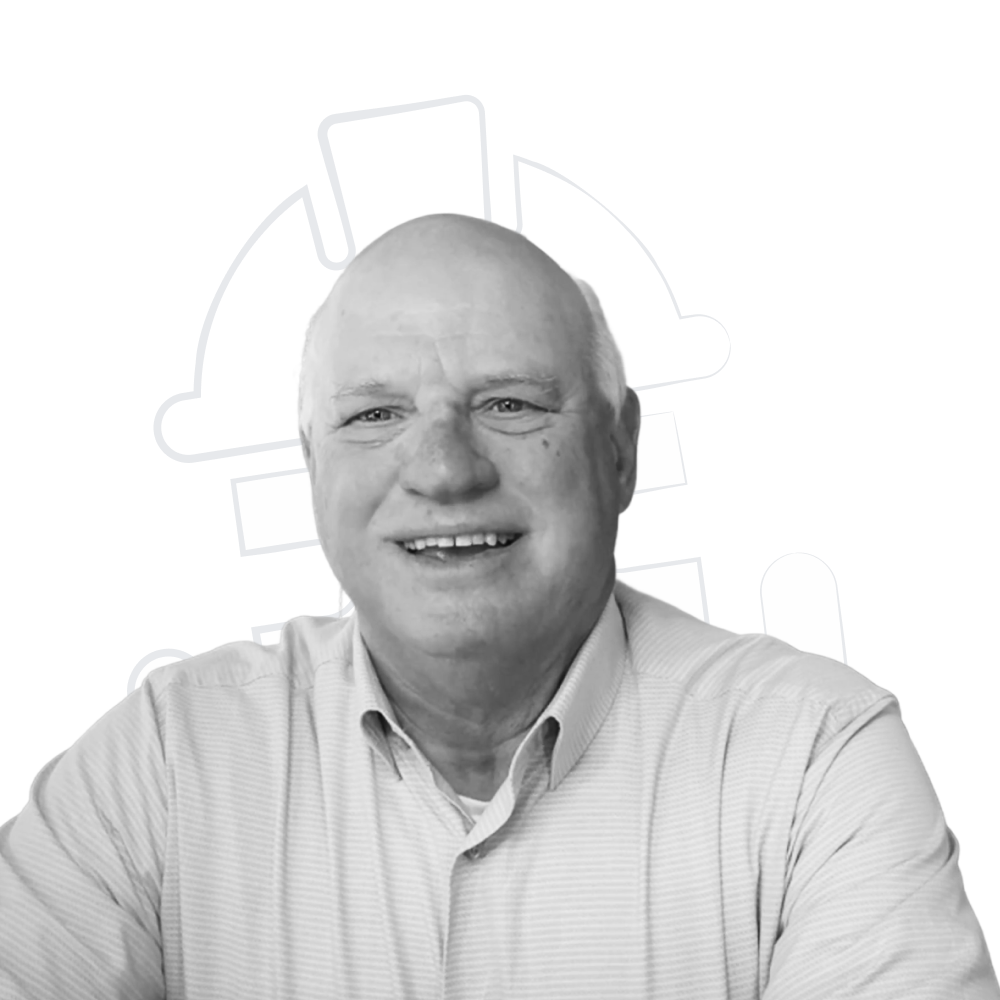
Hari Vasudevan (00:21) Welcome to a new episode of From Boots to Boardroom. I'm your host Hari Vasudevan, founder and CEO of Kyro AI. Previously, I was the founder and CEO of ThinkPower Solutions. Not every leader sits in a corner office. From Boots to Boardroom shares the journeys of those who power America. From the job site to the boardroom, leading with grit. tenacity, empathy, and vision. Hope you'll find the show to be educational, entertaining, eye-opening, motion bodily, Brian McFarlin (01:01) . Hari Vasudevan (01:01) entrepreneurial. Presenting sponsor for the show is Cairo AI, digitize work and maximize profits. For more information, visit cairo.ai. Today I've got a special guest, my friend, Brian McFarlin (01:03) . . Hari Vasudevan (01:19) Brian McFarland. Brian is in the 40th year of a stellar career in the electric utility industry. He has worked in leadership positions, in management consulting, as a vendor on the engineering services side, and at Encore, where he worked for 22 years. That's where Brian and I met. Brian McFarlin (01:30) . . Hari Vasudevan (01:45) He is mainly focused on strategies for sourcing and managing construction professional services when he was at the Encore and during his management professional services career. You know what? I want to do it again. I want to do this again, right? Because Brian is in the 40th year of his career in the electric utility industry. He worked in leadership positions at Encore for 22 years. Prior to that, Brian McFarlin (02:00) you â“ Hari Vasudevan (02:14) He worked for management consulting firms serving more than 20 of North America's largest electric utilities, where he mainly focused on strategies for sourcing and managing construction and professional services. In his current role as president of utility engineering, a full services engineering and related services firm serving the industry, he is looking to change the industry again, right? Brian McFarlin (02:28) Thank Hari Vasudevan (02:44) Brian holds a mechanical engineering degree from Texas A University. He's a proud Aggie and is a licensed professional engineer in the state of Texas. Brian McFarland, my friend, welcome to the show. Brian McFarlin (02:59) Thank you, Harry, and I'm very humbled and honored to be here. And this is exciting. I â“ appreciate those kind words. And yes, sir. Hari Vasudevan (03:09) Yes. Honestly, it's great to have you on the show. know, I want the listeners to know one thing that is you played a very uniquely special role in my career. And we'll get to that, right? â“ You were instrumental in ThinkPower Solutions â“ getting a contract. I was knocking on the doors of Encore for many years after I'd left my previous employer, Kleinfelder. And I had started the company and, you know, we were serving other utilities, but Brian McFarlin (03:31) Yeah. Hari Vasudevan (03:39) you know, I wanted to make sure I was at Encore and knocking on the doors and you're about to leave Encore. I'm pretty sure you had already decided where you were going to go but you are still so kind enough to set up that such a pivotal meeting honestly, right? Between if you remember Todd Whitley, Colin Martin, Todd Rosenberger, you and I. where we brought in pizzas and brought everybody together. That ultimately was the meeting that, you know, put us over the hump. He got into the Encore system and the rest is history. before we even get started to your story, I really want to know. And then we competed for the next 10 years, right? That's the beauty of it. You knew I was a competent guy and I was competitive. We were going to compete, but you still did what you did. Why'd you do that? Brian McFarlin (04:26) Yeah. Yeah. You know. I, you and I have not talked about this much and you know, we'll probably get into this later through the day. You know, this, you know, I've been a part of, of startups. This is my fourth either startup or build out of a company that I've done where I'm at now. And I have a very, very, uh, soft heart for entrepreneurials. Um, one, cause I do believe they drive the innovation. in America, â“ that it's an entrepreneur that has an idea that wants to shape or reshape or build something that may not be there. I have, before the time you and I got together, I had been there with a startup and realized the difficulty for â“ a small entrepreneur to break in to the big business and lots of times what I saw happening were the big corporations would just sit back and watch the entrepreneur and they'd kind of throw shade on them and cast doubt with clients until they run out of money, then they started up, right? And so â“ when I saw you, I knew that you were working hard. You brought your construction management kind of... Process your your your software you've been building out and I said, know I said you need you need it just needs a helping hand all it is, you know and to get a start so But I had laughed about that too because down the road is and I don't call it competing hurry I call I've never I don't think I really call my competitors in the field Competitors, I call them industry peers because I will team up with anybody if it makes sense, right? And so I kind of laughed about it. said, you know, later on when I was trying to grow within some of our common clients, I said, and I got hurry this start, man. Now I got to compete against him, you know? But no, it's as you know, I mean, it's been a wonderful journey. And you and I have to use an old kind of farmer's term. We plowed a lot of the same dirt. over the last least 10 years anyway. So yeah, no, I was happy. was just seeing an entrepreneur wanting to bring something different to the table and being met with the opposition of some people not wanting to change, right? Not wanting to move forward. Yeah, yeah. Hari Vasudevan (07:02) Yeah. Yeah. We've always done it this way, right? And no, I wanted to let you know, I've told this to you privately. I just want to make it so public, right? On the record, I deeply, deeply appreciate what you did. The pivotal moment in ThinkPower was when you got us onto the Encore system and we... Brian McFarlin (07:28) Yeah. Hari Vasudevan (07:42) continue to have a great relationship and here we are talking about it. So that's a great segue into what I wanted to be the first question, if you will, right? Which is, â“ what experiences shaped your leadership style? Brian McFarlin (07:54) Okay. Hari Vasudevan (07:59) right? Both professionally as well as personally, right? Because we all bring that experiences, experiences, professional experiences into what we do today, who we are today, right? You're a very competitive guy, but you're also very relationship driven, right? â“ What has shaped you? What shaped who Brian McFarland is today and â“ what you give the industry today? Brian McFarlin (08:16) Mm-hmm. Yeah, I mean, you first of all, I think everybody has their own style, right? I mean, and their style works for them. So I don't believe there's one style that is better than the other. And you're correct. I have learned over the years that I am relationship driven around that. and, and, uh, uh, And I am competitive. A lot of people don't recognize because my personality seems to be probably a little laid back. I use the analogy. said, don't let that fool you. It's kind of like the duck on the pond. You're just floating there peacefully, but their little legs are just paddling away. And I don't like to lose. I don't like to lose. Even the day when we don't get a bid, it just kind of... It gives me that losing. Yeah, it bothers me. It bothers me. that is part of it. But I think it goes back to just all the influences through your life of where you grew up and what you did. But I grew up in a small town in East Texas, in the old belt of East Texas, where very blue collar, very hardworking people. Hari Vasudevan (09:19) It bothers you. Brian McFarlin (09:43) where everybody kind of knows your name type and you know them and and â“ So I grew up in a also a large family six kids so some competitiveness there and The the you know, I think I learned a lot about relationships like in the small town you You know everybody and you and I had them. I love to listen. I love to people watch and I love to observe and maybe not talk as much in some situations, but just to learn and to build those relationships. You said, know, a 40-year career, a little bit further in depth of that was my dad also was an industry. So I'm a second generation. So I have been in this industry ever since the day I was born. Hari Vasudevan (10:29) I did not do that. Brian McFarlin (10:36) It's fed and clothed me and put a roof over my head, whether it's as a child to my parents or here. So yeah, I got a long history of this industry. â“ But as I'm... Hari Vasudevan (10:50) If somebody asks, where did your dad work? What did you do? What did he do? Brian McFarlin (10:52) He worked at the predecessor to Encore at one of the operating companies back then, Dallas Power Light. He was there for 40, 42 years, started in probably, guess, 1950. So there was a point, there was a point before I left Encore that I met Farland had been there nearly for 75 years total, you know, and so I overlapped with my dad before he retired. So, and. Hari Vasudevan (11:20) I did not know that. It's good to know actually. That's fantastic. Brian McFarlin (11:21) Yeah, yeah, yeah. So, I mean, that's kind of where I got a lot also, some of the executive relationships that kind of bled down through there as well. so I grew up in a small town, and actually I live in that small town still. And my kids were able to â“ go to school and be taught and administered by a lot of my classmates. So it's kind of a. Hari Vasudevan (11:39) Yeah. â“ Brian McFarlin (11:49) small world for my kids. But as I went on to college and got my degree, â“ I'm not sure where I really started developing a leadership style. I think it's just inherent to me â“ wanting to build relationships. Something I learned later on during kind of leadership training, and I didn't really realize it, but as I look back, I I was rated very high on developing win-win solutions. And as I thought about it, that's really, I've always seek to understand, right? â“ Whether it's a peer, whether it's a client, or whether it's someone who works for me, to seek to understand their perspective and not always believe that There's only one right way to do something, you know? so, you know, what shaped, I guess, just the events of my life and just, you know, learning to finesse. I learned to finesse, you know, and â“ lead people to answers rather than me dictating answers, you know? And so, letting employees â“ feel comfortable and confident that they can make decisions that I support. So, anyway. Hari Vasudevan (13:23) Yeah, yeah. No, it's fantastic. So obviously you grew up in West Texas, or East Texas rather, â“ one of six kids. Dad worked in DPNL. I just took some notes here. Known to develop win-win relationships and I can attest to that. And key thing I would really want some of our listeners to take away is always learn to â“ also understand the other person's perspective because there may be a reason to why they are doing out there doing that's great segue â“ into you know into your broader career right you know you you've been at it for 40 years obviously â“ you're doing what you're doing right now right but you were on core for 22 years where we met you also had that management consulting career can you kind of briefly you know let our listeners know what you what are some of the key aspects of â“ lessons you learned in your management consulting career that you apply applied at Encore and then what you learned from both of those two now you're applying at United if you will. Brian McFarlin (14:32) Yeah, I mean, there's one thing that I walked away from doing management consulting. â“ As you know, Hari, that you were at Klinefelder. You know, when you go into a client's â“ operation and you're charged with looking at different things and coming up with solutions, I don't think that I ever walked into a client and brought a solution that they hadn't thought of before. And so I had developed, and I use this today with my staff, is The road to success and greatness is littered all along the way with great strategy that just doesn't get implemented. It's about implementation. It's about getting it across the finish line. Yeah. Hari Vasudevan (15:22) 100 % it's about execution. Honestly, right? You everybody has great ideas, but very few people actually have the discipline, perseverance to deal with adversity that eventually comes with executing that strategy in see through completion at the end of the day, right? â“ Brian McFarlin (15:42) â“ it is. Sometimes you just got to drag it. I'm talking about drag it across the finish line. In a big corporation, it is easy to stop and just let it sit there. And I think that's some of the frustration. Entrepreneurs, they don't necessarily fit in the large and corporate environments because we're thinkers. We're wanting to to change, we're wanting to do something and you're met with so much resistance and friction that you just say, can I do it? Yeah. No. Yeah. Hari Vasudevan (16:16) Yeah, 100%. We don't want meetings. We want meetings for sake of meetings. We want action-driven meetings at the end of the We were task force-driven as opposed to committee-driven, right? Honestly, so I think 100 % you hit the nail on the head there. Brian McFarlin (16:37) Yeah, I mean that was a big takeaway. â“ And you know, the other one is just, you know, having confidence in your thoughts and strategy that that it'll work. You know, you know, I tell people and Hari, you can maybe I'm interested in your perspective too. As I've gotten older, I've kind of reflect on things, you know, all through school, whether it's elementary, junior high school, college, we're We're tested and we're tested on answers, right? What is the answer? Then you get on this side, there are no answers. It's just decisions, right? You have to make decisions. And I think that's the other thing is make the decision. And I will tell you personally for me, I tend to labor on those a while. And so I tell my staff, my leadership team, Hari Vasudevan (17:16) You're right. You're right. Brian McFarlin (17:33) If you see me laboring on that decision, kick me, push me forward, make it happen, you know? Hari Vasudevan (17:40) Interesting. I'll tell you what, because it is so interesting you say that, you know what I teach my kids all the time, right? It's like I tell my kids at least, hopefully I'm teaching them, is the most important skill in life is to make decisions, right? Because you make decisions all day, every day, right? Little do you realize that you're actually making decisions. Brian McFarlin (17:47) That's it. Yeah. Yeah. Hari Vasudevan (18:06) That is such an important aspect of â“ life, career and whatnot. You're right about it. And honestly, from an entrepreneurial perspective, what you're doing right now at utility engineering and what I've loved in my entrepreneurial career is like you can make decisions, right? You make decisions, whether it's right or wrong, you make the decisions, see the fruits of that decision, bear out or you â“ face the consequences of it. And then you tweak it next time and make a better decision because hopefully as you get older and whatnot, you're more mature and you're making better decisions. that's one of the things I love about sports, right? Hey, you draft a player, you make a mistake, you cut him, move on, you draft the next player and whatnot. I mean, we'll get into sports a little later. Brian McFarlin (18:39) Yeah. Yeah. Hari Vasudevan (19:03) Rams for example. I love Sean McWay and the aggressive decision making that they do. It's like hey you know what let's go. We have Jared Goff, good quarterback, trade him, get Matthew Stafford, right. Make a better decision right now right. So and they got and they got the Super Bowl right. So Brian McFarlin (19:05) Good. Yeah. Yeah. Yeah. So I think it's very interesting, Hari, that you're teaching your kids that one of the things of my goals with my children was the same thing was to lead them and teach them to make good decisions. And it is difficult because you do make bad ones, wrong ones. I don't know if they're bad, but you'll make wrong ones at times. you can't. You know, and they sometimes those decisions affect people's lives, you know, and their livelihood. And that's the weight that we bear, right, as we do that. so, but I think it's very wise to begin to teach your kids how to make those decisions and you'll make decisions that not necessarily the ones that are fruitful, right. But you learn. But the thing I always rest on. Hari Vasudevan (19:50) time. Yes. Yes. Brian McFarlin (20:15) I'm not an armchair quarterback that goes back and say, I wish I would have, have. I stand by with, I made the best decision with what I knew at the time. And so then I just move on. Hari Vasudevan (20:26) Yeah. â“ It's interesting for an ex-management consultant to say that, but of course you're now an entrepreneur running utility engineering. management consultants, what do CEOs do? They want to cover their decisions with a report from a management consultant. Go to a Bain or whoever and say, here's what I'm thinking. What do you think? And the management consultant comes back and say, you're right, Mr. CEO or Madam CEO. This is what you should be doing. â“ Brian McFarlin (20:35) Yeah. Yeah. Yeah. Hari Vasudevan (20:58) the CEO makes the decision, presents it to the board, the decision doesn't go well, you guess what they do? You know, the management consultant said it's gonna be all right. â“ Brian McFarlin (21:03) Yeah. Well, I'll tell you, know, one of the, think the reasons I related well in the utility space, cause I did management consulting in the utility space is because I was not the classically trained consultant. I didn't have the consultancies. I didn't have that. I kind of spoke just plainly. And you know, one of the things going kind of going back kind of laugh a little bit. can't tell you, you know, when these presentations and stuff, you know, We generally, as consultants, would develop the presentations and the material, working with whatever level of management it was. And they would present to the C-suite or whatever. And I always coached them. Always coached them. You you've seen people present, and they're getting up there and presenting, and they get a tough question, right? And then they'll start backpedaling. Casting doubt and I said never ever go backwards on what's on that slide You know if if you get a bot getting a bind you look over at me and I will help you out But never go backwards because you start showing a crack of doubt It's done, you Exactly, I mean you cannot do that right so Hari Vasudevan (22:26) especially in a boardroom meeting, right? It's a really interesting way your careers can evolve, right? And I say this to you all the time, man, one of the most energetic, inspirational entrepreneurs is Brian McFarland. You you're hustling 40 years into your career. You've worked almost as well. I mean, I could be young enough to be your kid, honestly, right? And you're... you're kind of absolutely hustling it. I deeply appreciate that. Brian McFarlin (23:05) Well, I will tell you that yeah, it's, I'm not ready to hang it up yet, but I can tell you that I can feel the energy kind of a little bit less, but the mental capacity and the desire to continue to drive change. One thing about me, I cannot stand status quo. I just can't stay, I cannot. tolerate things just stay in the way they are. We always ought to be moving things forward. And sometimes in my entrepreneurial mind, I may be moving forward too fast. You gotta have either your stakeholders or your clients, you gotta bring them along with you. And that's another thing I learned from the management consulting was where you end up in whatever your strategy is, really depends on where you're starting. You can't take someone who is on the lower end of the spectrum of sophistication and automation and all of sudden put them way up here. They just can't grasp that. So you kind of have to move them up the curve to where you think they can. And it's the same thing. It's the same thing. When you came out in 2009, I think that's what you did. You kind of went. Hari Vasudevan (24:13) Yeah, I know all about it. Yes. No, it's a... Brian McFarlin (24:27) Boom, you were talking about your software and how we need to be and the stakeholders were on, you know, what, we've been doing it this way, A man in a truck and an old cell phone, that's all I need, Hari Vasudevan (24:36) Yeah, I know, for 100 years. No, it's so funny you say that. you know, it's like they were more concerned about reliability, which is obviously important, right? I mean, we'll get to that. The industry is all about reliability and whatnot, right? So, but you know, before we get to some of the technical aspects of our business, since you talk about your career and how it's evolved, you know, obviously you're energized to a large extent because our industry is going through change. Right? Honestly, we've and I was just reading a EI report the other day and I believe we've spent $1.4 trillion since 2014. I believe about $180 billion just in the last year alone 2024. We're about on track to invest about $1.9 trillion for the next four or five years through 2029 if I remember right. So Brian McFarlin (25:14) yeah. Yeah. Hari Vasudevan (25:40) we're I mean, I A.I. is driving a monumental â“ change through the industry because of data centers built out the need for energy, need for power and things like that. But, you know, we're still struggling to attract young kids into the business, right, into engineering, construction, utility business. There is definitely shortage of skilled labor there. â“ What would you tell a 20 year old kid looking at his or her career options? Brian McFarlin (25:58) Mm-hmm. Hari Vasudevan (26:10) What would you tell that person? Hey, you know what? Come, come be part of this monumental change in the utility industry. How would you attract somebody to the industry? Brian McFarlin (26:19) Well, good question, because I have long talked to engineers about this industry. if you're an engineer and you enjoy engineering, there's no better industry to jump into, because it generally supports all disciplines from electrical to mechanical to civil to nuclear to probably chemical. You and I talk a lot. We talk in the confounds of the kind of the wire side of the business, but really when you get over into the generation and in, in what like TX, used to have the mining operations. had this unbelievable ability to just use whatever discipline that, that you wanted to pursue. think on top of that, â“ it's also an industry that supports, â“ you know, individuals who are more vocational as compared to not wanting to go to college or if you want to go to a technical college, it's supported. there's for in good living, good living. Hari Vasudevan (27:25) and still make a good living. Honestly, it still makes a good living. I interviewed, I mean, I've known Daryl Hallmark, who you know very well. I had him on the show and how somebody with a GED has made some phenomenal living, right? mean, honestly, phenomenal living, right? So you're right. This is an industry that supports college educated, those who go to trade school. Brian McFarlin (27:32) Yeah. Yeah. Hari Vasudevan (27:53) in what not as long as you're willing to work hard and honestly be entrepreneurial too because it supports a lot of small businesses. Brian McFarlin (27:56) Yeah. Yeah. So, I mean, I think that, you know, making them a lot of, lot of individuals are not aware of this industry. â“ You know, we'll talk more in a minute about the details of it, but they basically flip the light on and they know the electricity comes on. They don't, they don't understand all that's behind that. And so exposing them to it is one thing. think now you get into where we're headed now, you know, â“ with distribution automation and different things like that, but also the services that are becoming available to our, like we're providing that through large scale data collection through different techniques, LIDAR, photo imaging, photogrammetry, then taking that and moving that in through AI engines and things like it. It's just for analysis, it's incredible to where we're at and where we're headed. Hari Vasudevan (29:00) Yeah. Brian McFarlin (29:00) So I think there's a lot off. Utilities are conservative. We're conservative in this industry. But I think we've got to get a little more energetic with those guys, the kids, and talk about what's out Hari Vasudevan (29:11) Yeah, but what's exciting could happen. Honestly, it's interesting you say LIDAR AI all these things because I literally today is what today's date is â“ September 16th. Whenever this gets posted, but â“ September 16th I just released an article on Yahoo! Tech and Power magazine about that exact topic. How it can help the utility industry. â“ Make their vegetation management. Brian McFarlin (29:34) Yeah. Hari Vasudevan (29:40) more efficient and hence reduce wildfires outages related to that and things like that. No, you're right. There's a lot of things to do in this space and a lot of money to do that as well. So let's kind of get into some of the things you're passionate about you're doing right now at utility engineering, which is, know, we talked about the dollars that the industry has poured in, right? But I'm looking at my data here. Reliability is barely budged. Brian McFarlin (29:55) Yeah. Yeah. Hari Vasudevan (30:10) right? The average American still loses six hours of power in a year. Granted that that does include, you know, storm related outages and things like that. Your SADES, SAFE values are kind of still â“ meandering in the same range. About SADES, about six hours. SAFE, I believe it's about two times, right? Brian McFarlin (30:27) Mm. Yeah. Hari Vasudevan (30:34) Obviously AI is driving lot of data center buildouts. mean the other day there was news about how OpenAI has contracted the Oracle for $300 billion in data center buildouts. Just think through that. â“ Where are we going as an industry? mean there's also lot of these fundamental pushes and pulls in the industry. So you see Ohio â“ rate payers are â“ Brian McFarlin (30:49) Yeah. Yeah. Hari Vasudevan (31:04) having to pony up 20, 27 bucks a month to support data centers in their area. Same thing is happening in Virginia. Georgia, for example, is now, the regulators have said, hey, if you're a data center, your cost is not gonna be passed on to the residential consumer, right? Which is, there's a lot of these discussions and debates happening in the industry. Where do you see the industry evolving in the next five, 10 years? Brian McFarlin (31:29) Well, I think this would be a good discussion if you had our good friend, Jim Greer on here, you know, to kind of throw in that discussion as well. But, you know, I think it's a very good question. you look at these data centers, and if I'm not mistaken, one of the world's largest is being built in Ruston, Louisiana area, which will consume as much energy as what would have been a large power plant. So I think you have that huge demand. And I think You have this demand for resiliency and you have this. But if I go to, meant to do it before I got here this morning, but I apologize. I meant to go to PowerToChoose.org and just look at what a retail price is doing right now. And I know the last time my wife and I redid our deal, I mean, it was hard to get below 17 cents a kilowatt hour. And so I'm surprised that Hari Vasudevan (32:28) Yeah. Yeah. Brian McFarlin (32:34) I'm surprised that customers are, I'm not hearing much about the cost of it, but fundamentally, economically for not just Texas or the rest of the country, we need to have low cost power, right? So how do you fit all that into that equation, right? So. Hari Vasudevan (32:52) Yeah, no, mean honestly, Brian, you keep going, you know, one in four Americans today can't afford power, right? I mean, we're all super fortunate. We don't even think about our power bills. I was asking one of my buddies, hey, do know how much you're paying for power? He's like, nah, I put it on autopilot or autopay rather, right? Which is, I don't do that. I kind of know what I'm paying every month, right? because I'm fiscally conservative. I kind of believe in that. Hey, you got to know what you pay and things like that, right? Some of our friends don't even know what they pay. And that goes back to your point about power to choose. You can at least get a feel for it. I don't have the power to choose because I'm on a co-op, co-serve. They're great. So, know, keep going on that front. I just want to kind of interject there. Brian McFarlin (33:40) Yeah. So I was, I was up in one of my, clients up in kind of the Montana area and they were, it's a co-op and they were, they were talking about they're having to do rate change and it was like moving from 8.3 to 8.5 cents. You know, I'm going like, and I said, I'd love to have that, you know, â“ they were concerned about the repercussions, but I think I'm, I'm, I'm my concern, you know, obviously yes. The, the It's interesting, I've talked about â“ Jim Greer, I'd be curious what his perspective would be on this, this Sadie Safie, really not non-storm event Sadie Safie not moving with all the dollars being interjected in here. I think some of it is maybe it hadn't had time. know, when you aggregate the whole US market into this, I'm sure it normalizes those numbers, right? So. â“ Hari Vasudevan (34:36) Yeah, yeah, no, you're right. mean, to be fair, there are â“ states with much higher, â“ rather much lower reliability indices, like for example, Louisiana, right, has a lower reliability index and some states have a better reliability index, right? So it also probably correlates to some of these storm related â“ issues and things like that. But Brian McFarlin (34:39) Yeah. Yeah. Yeah. Hari Vasudevan (35:04) It also goes back to investments. How do you invest? How efficient are you in investing? How do you manage your storm? Because, you our good friends at Centerpoint, they've come up with AI driven systems after the recent issues there where they're able to predict with mid 80 % accuracy, 80, 85 % accuracy, which fuse is going to fail if a storm is going to hit in pre-positioned veg management crews, pre-positioned storm crews, so that they're able to trim those â“ trees in that area, so that the damage is going to be mitigated or less severe than what could be. that's the direction the industry is moving, if you will, right? So, but, you we're back to you. Brian McFarlin (35:41) Yeah. Yeah, so I mean, as you move forward through this investment, I don't know how much of the investment's really been implemented yet. I know a lot of our clients â“ have these huge SRP programs and huge investments that they're just counting in year one of implementation trying to get that done. â“ The other thing I wonder also, with automated metering coming in probably from the 2005, 6, 7 to 2013, now we've got more data to collect. It's more accurate data on the outages. But also, I'm curious to how the We have much denser populations now. You take the Dallas Fort Worth now compared to Dallas Fort Worth when I got started, but even 20 years ago or around the southeast coast. So when we had these huge weather events, I mean, it doesn't take much if a storm comes through Dallas Fort Worth to knock two or 300,000 people out, right? Or more, right? So. And when you have these dense populations that we didn't have 30 years ago, I'm curious to that impact on that as well. but from a, obviously, reliability in customers' minds is very important. You know, that's important. And there's a huge investment in that. My biggest concern is about the generation manufacturing of electrons. OK. Most people do not sit down and think about this. They don't even think about the supply chain of electrons or the generation of electricity is a unique supply chain that the amount being made has to equal the amount being used at any given instance. So there's no inventory in that system, right? So with Hari Vasudevan (37:57) Yeah. Brian McFarlin (38:09) You know, there's not been a lot of power generation being developed other than the renewables. And with the big, beautiful bill coming in, the kind of the backing and support of the renewables is going to go away and phase out. So â“ with, like I said earlier, with these data centers coming in, and a data center basically is lowed equally. what was an old original steam electric station of â“ 1,000 to 1,500 megawatts, where is this generation coming from? We can build wires. We can build wires, and we can build substations. when that frequency starts hitting about 59.7, everybody starts getting really worried when you're in short supply. Hari Vasudevan (38:47) have a big time problem. Right. Yeah, but you â“ know, that's why I'm nowhere too. Honestly, but you know, that's a very important point you're bringing because here's the deal. â“ If I have my data right, and I could be wrong here, Ohio it took nine, the peak load is about nine gigawatts if I remember right, and it took them 100 years to get there, right? They're gonna go to 18 gigawatts peak. in the next seven years. Because that area is big into data centers, you will. Hence, the previous conversation about the residents in Ohio and whatnot facing that increased electricity bill, right? 20, 25, 26 bucks a month, if you will. So where is the generation capacity going to come from? It's a huge piece of the puzzle. And hence, You see all these â“ tech giants restarting old nuclear reactors and extending the life of these nuclear reactors because you need power at end of the day. Brian McFarlin (40:05) Yeah. Yeah, so one of our utility engineering is one of four operating companies of Utility Innovation Group. And â“ one of the other operating companies is focused in that specific area, the micro grid and distributed energy of these large and concentrated load centers, i.e. data centers. So that's where they're working right now and making headway of how do you provide power to these large facilities, right? So, so, I, Hari Vasudevan (40:44) without having to rely on the grid. Brian McFarlin (40:47) Yeah, yeah. So I'm just concerned overall, you know, how close, you know, the the winter storm. â“ The 2020 winter storm, I forget the name of it. Yuri. Yeah, Yuri. I mean, yeah, that was a different kind of event, but it highlighted the issue of when when when the ERCOT or the operating grid starts losing stability. Hari Vasudevan (41:02) Yuri. Yuri. Brian McFarlin (41:17) Now, was because of the event, but what if that's short supply? I work. Yeah. Hari Vasudevan (41:25) Yeah, we came very close to a blackout, right? Very, very close to a blackout during that incident there, so. Brian McFarlin (41:34) Yeah, so I was actually in, I was doing consulting for First Energy when they had that blackout up in the Northeast, you know, back in about 2003 maybe, something like that, I remember. And I remember I couldn't even get out of the parking garage â“ because the arm would raise. And fortunately, you know, it took like three plus days to bring that grid back up, you know? Hari Vasudevan (41:59) Yeah. So what you do, you stay in the same parking lot and then you're dead. Brian McFarlin (42:07) Yeah, I don't know, finally got out and I got home. my home where I live there in Ohio, I was actually living in Ohio at the time. It was on an AEP system, so it was not down. So just a little bit of finger come up there. So my home was not. But it was a pretty significant event. But you just think about that happening in Texas or any other grid. is because of short supply. Like I said, when I don't know the exact frequency that relays start to open, but it's not very far off of 60 cycles. Hari Vasudevan (42:44) Yes, Listen, neither of us know much about relays because you're a mechanical, I'm a civil. Let's stick to that, right? Let's stick to that. â“ no, honestly, on the aspect of electricity and outages and things like that, what people don't realize is your cell phones stop working after a period of time because the cell phone towers only have so much backup. Brian McFarlin (42:51) I know. But, you know. Yes. Hari Vasudevan (43:13) built in and if there's â“ a widespread outage your communication systems start breaking down and then know many people you know I'm young enough that I've never had a landline on my own of course my parents have had a landline but I've never had a landline right so so you rely on your cell phones which you know if it stops working there's a big problem there which yeah Brian McFarlin (43:25) Mm-hmm. Yeah. Oh yeah, mean, people this day and age are, they've not been through those events where, you know, there's no communication. There's no, mean, it'd be somewhat catastrophic to them, you know? They don't, you know, we're kind of a just in time supply chain society, you know, from groceries to everything, you know? So it would be difficult. Hari Vasudevan (44:05) Yeah, no, % because our short attention span we kind of look at our phones all the time and what not. that's a... So let's kind of, I know we talked about it quite a bit, but you know, let's kind of have a focused discussion on this, right? AI all over the place, right? I remember you and I having a discussion not too long ago saying, hey, you asked Chad GPT. to a poem for your beautiful wife's 60th birthday, Judy, if I remember right. And he did write a poem, which hopefully you didn't give that poem to Judy. But, but... â“ Brian McFarlin (44:36) Yeah, yeah, yeah. Hari Vasudevan (44:47) Yeah, there you go. So, you hopefully you didn't give that poem to Judy there. But my question is, what is the impact of AI going to be in the utility industry for a guy who's been â“ through lots of changes in the last 40 years? I believe â“ you're probably saying that this is the most significant â“ event or change that the industry is seeing. What do you see? Brian McFarlin (44:49) Yeah. Nah. Yeah, I don't know that my mind can comprehend completely what is going to change. mean, â“ because AI has a very broad capabilities all the way from working in the finance and accounting to the engineering and all the way down in the field. â“ I think it's going to be sweeping. And I think we're just on the front end of it, you know, â“ where, you know, I used to think, you know, AI, well, that's, that's, that's, that's a firm out here that they're going to do some, like, no, I actually, we're, we're, we're about, we're bringing AI in here, you know, and we're going to have to have AI. If we're going to stay up with what we're doing, â“ we got to have it. And I think you're going to see the utilities already moving that direction as well. So I mean, but I think from a generalized sense on kind of the operating and I think the utilities grids are so large that they're reactive to certain things, right? They're reactive to an outage and things like that. Yeah, they are proactive, but I think with AI and the way we can gather data now. and have AI analyze it, â“ I think that's what I think you're gonna see change. I mean, we are working on, and I can't speak too deep into it, because we're still working through the patent process on things. But the ability to take large amounts of data and just, whether it's photographs, whether it's LIDAR, and have it analyzed is gonna offer our clients a tremendous amount. you know, whether it's regarding bench management, whether it's â“ a broken cross arm brace, whether it's whatever, right? So, but I think from my side and I don't know, you know, I think about, you know, design how, I don't know yet how you connect the dots, how is AI gonna design a substation, you know? I think there's gonna be elements that it can build out, you know, standard. â“ standard designs or just but I don't know I think it's it's coming though don't do you what's your thoughts Hari Vasudevan (47:48) I think, you know, â“ for the most part, I think it can definitely â“ make the preliminary designs and things like that. And then the engineer comes in to kind of fine tune, right? Fine tune it, right? I think the day is not too far out. â“ Probably somebody is already doing it as we speak, right? So, â“ you know, let's get into, â“ you know, the final â“ piece of the â“ discussion here. Brian McFarlin (48:06) Yeah. Yeah. Hari Vasudevan (48:18) which is â“ from your career. mean, obviously, relationships defined your career, entrepreneurship, â“ learning the lessons from different aspects of your, where you worked into the next job and things like that. What has been a failure that you can share? Lessons learned from that. And what can young people who listen to the show learn from Brian McFarlane's failure that they don't have to make themselves? Brian McFarlin (48:39) â“ That's a good one. â“ I not to let disappointment keep you down, right? I go back in my career, know, like I said, I spent eight years, nearly 10 years, I think, in the management consulting, managing consulting at different levels and really was, I hate to say it, I was a supply chain expert. Right. And I focused on really more on the strategy and management of all the outsourced contracting, right, that goes on, whether it's professional services or whatever. So, â“ you know, at one point, then I transitioned and I was not selected for a leadership position, and that expertise, and it was very disheartening. It was probably one of the toughest blows that I had to my professional career. â“ so, but it made me start thinking. the, â“ went on for several years, but it made me start thinking about how do I use what I have, my knowledge, you know? And that's what kind of moved me to this side of the fence, you know? And to say, let's take what you know. You know, I think anybody that worked with me previously when I was in supply chain as a, as a contractor service provider, I think they, I think they respected me because I understood their side of the business and I understood what was driving them. So I think that took me over to, to this side and to a whole nother career path. And it's been, it's been one of the most rewarding career paths. So â“ I just say, don't, you know, you got to be tough. You got to take some things on the chin and get up and keep going, you know. You got to be resilient. And there are factors outside of your control that decisions are made and you just go on, you know. And I will tell you that I have no Hari Vasudevan (51:02) Be resilient. Be resilient. â“ Yeah, fair enough. Brian McFarlin (51:20) no animosity. have no heart feelings. It is what it was and just move on. So â“ I don't know if that's a failure. â“ I was trying to think through. Yeah. Hari Vasudevan (51:34) No, I think that's a really good one. Honestly, it's like, hey, decisions are made and for whatever reason, you don't control that. don't control. What we control in life is a very, very small subset of what we think we control. Right. So control the controllables, leave the uncontrollables out. If you don't like certain decisions, certain ways things are going, be resilient, move on, find something else to do and still be super successful like what you've shown. Right. So. Brian McFarlin (51:45) Yeah, exactly. Yeah. So, so yeah, I, yeah, mean, failure, I mean, I will say this and, and, and I think, â“ you cannot be a flay, cannot be afraid to fail. You cannot be afraid to get a black eye because it goes back to that decision making. If, if, if you, if you have that fear, then you're going to be very, very slow and not, you will not make a decision to you have everything lined out. You know? Yeah. Yeah. Hari Vasudevan (52:31) 100 % listen people don't realize it right I've been boy at three times. I've only had five jobs. So it's alright Anyway, that's good. So let's kind of segue into some fun questions rapid-fire questions, right? â“ Yeah, go for it man. Nobody's done that but I'd love that so â“ Brian McFarlin (52:37) Yeah. â“ Okay, do I get to ask them back too? Yeah. Hari Vasudevan (53:00) or pro sports, college sports, what do you like? Brian McFarlin (53:04) â“ College probably. I've kind of bailed out of the probe arena. I'm not as big into it as I was, but yeah. Hari Vasudevan (53:06) Alright. Yeah. So, you know, college sports, it, you know, like football, basketball, baseball? I mean, it's a good week for you, right? Because I think Aggies beat, who'd you guys beat? Notre Dame? Brian McFarlin (53:19) Mainly football. I follow it pretty good. Yeah. Notre Dame, I was really proud how they look. Really was, you know? Look good. Hari Vasudevan (53:31) Got it, got it, got it. That's Awesome, awesome. So what do you think is gonna happen this year in the SEC? Prediction, who's gonna, who's gonna? â“ Brian McFarlin (53:44) I think I kind of hate to say this, but I think Georgia still looks Georgia's Georgia. I haven't, I kind of got mixed emotions on LSU. think A has a, A â“ &M's kind of got to step up and be consistent. I think Texas, â“ Archie Manning by the way, which I'm still behind Archie Manning. by the way, I am a college football fan. I don't focus a lot on one team. So I like to see the best, but I feel sorry for Archie. He had so much pressure put on him and he's just a kid. So let him develop, let him grow. But I think Georgia, I think Georgia probably is the one. Hari Vasudevan (54:33) Yeah, so talk about Arch Manning. I know he had a rough outing this past Sunday. had a rough outing in Ohio. I think he had a good week, second week in San Jose State. So what's your prediction? Do you think he's gonna be successful, be a first round pick in the NFL? Or do you think he's gonna be a bust? Brian McFarlin (54:39) Yeah. I don't think he's a bust. remember Colt McCoy's sophomore year. Colt McCoy was one of the, for a long time, the winningest college football quarterback. Colt McCoy's sophomore year didn't look much different, you know? So it's, I just think that you had the media gets out over their skis and you know, he'll be fine. He just needs to get a good win under his belt, you know? Hari Vasudevan (55:16) Some of these guys are a little jealous that he's making a lot of money. So, all right. So my friend, you've just been elected as the governor of the state of Texas. Congratulations. Governor McFarland. So what are you going to do? What is one thing you're going to do? Brian McFarlin (55:21) yeah. thank you. Thank you. Well, you know, with this in political environment, I better be careful what I say. But I think that there's two things. If I was governor of Texas, I think if my Texas history in government tells me the governor can only do certain things, can veto and call special session. That's really all that a governor can do. So I would call special session and I'd be having special Hari Vasudevan (56:01) That is true! Again! Brian McFarlin (56:08) I'd be special sessions Hari Vasudevan (56:08) Again! Brian McFarlin (56:09) until and to focus on power generation and the taxes, homeowners, know, homeowners tax, you know. Hari Vasudevan (56:25) What will you do to the homeowner's tax? Brian McFarlin (56:28) I-I-I-I- The is, the way it is right now is that people are getting taxed out of their homes even though they have them paid for. They just can't afford them anymore. The system was probably okay when the cost of housing was pretty consistent, but when you've had what you've had the last 10 years like this, know, and appraisal value's gone up, you you take people. say my age or a little bit older that maybe have a house paid for but their income is kind of fixed and all of a sudden they can't even afford to live in the house that they paid for, right? So â“ I think, you know, I hate to say this and it will never happen in Texas, but you know, I'm not so much against an income tax, you know, â“ if that's what it took. So I don't know, but I think they have to do something. They need to do it. I think they need to do it in the next. â“ â“ session or two, you know. Hari Vasudevan (57:29) Interesting. One thing I know for a fact is Brian McFarland's household is not unfixed income. So you guys are doing okay. Brian McFarlin (57:37) No. Hey. Yeah, but I think I'm thinking in the future, you know, and I'm thinking for my my friends and people that are so, you know, that. Hari Vasudevan (57:52) Yes, fair enough, fair enough on that. Listen, it's been a pleasure hosting you. It's been a pleasure knowing you, honestly, you've been a great friend, a great advocate, a great industry peer, and somebody who knows inspirational to lot of entrepreneurs. So â“ I mean, I'm sure you're going to be around a lot longer and you're going to have many more of these discussions offline, online. â“ Thank you so much for coming on the show, my friend. Brian McFarlin (58:00) Yeah. â“ man, I've enjoyed it. This has been very pleasurable of, you know, I didn't recognize the time and we could go on probably another hour or two, but I'm not sure people want to listen to it, I did. Hari Vasudevan (58:33) Easy. Hey, you'd be surprised. People listen to three, four hour podcast shows. Brian McFarlin (58:41) Yeah, well, Harry, me also say you've been a great friend. even, you you're right, we did compete, but I never saw it that way. Now, and I'm very impressed with what you've done and being an industry leader. That's why I mean, you know. Trying to drive change and lead change in the industry is not easy in this big old industry. And so I applaud you for that and I'm excited. I really am. I listened two years with Darryl Hallmark and I've known Darryl for a long time and he did a great job and a great story. So, man, I just applaud you and thank you for the opportunity to be here. Hari Vasudevan (59:31) Man, it's been a pleasure, fun knowing you. Let's get together for lunch one of these days and until then, stay safe my friend. Brian McFarlin (59:39) You bet. buddy. See you later. All right. Take care Hari Vasudevan (59:41) See you later.